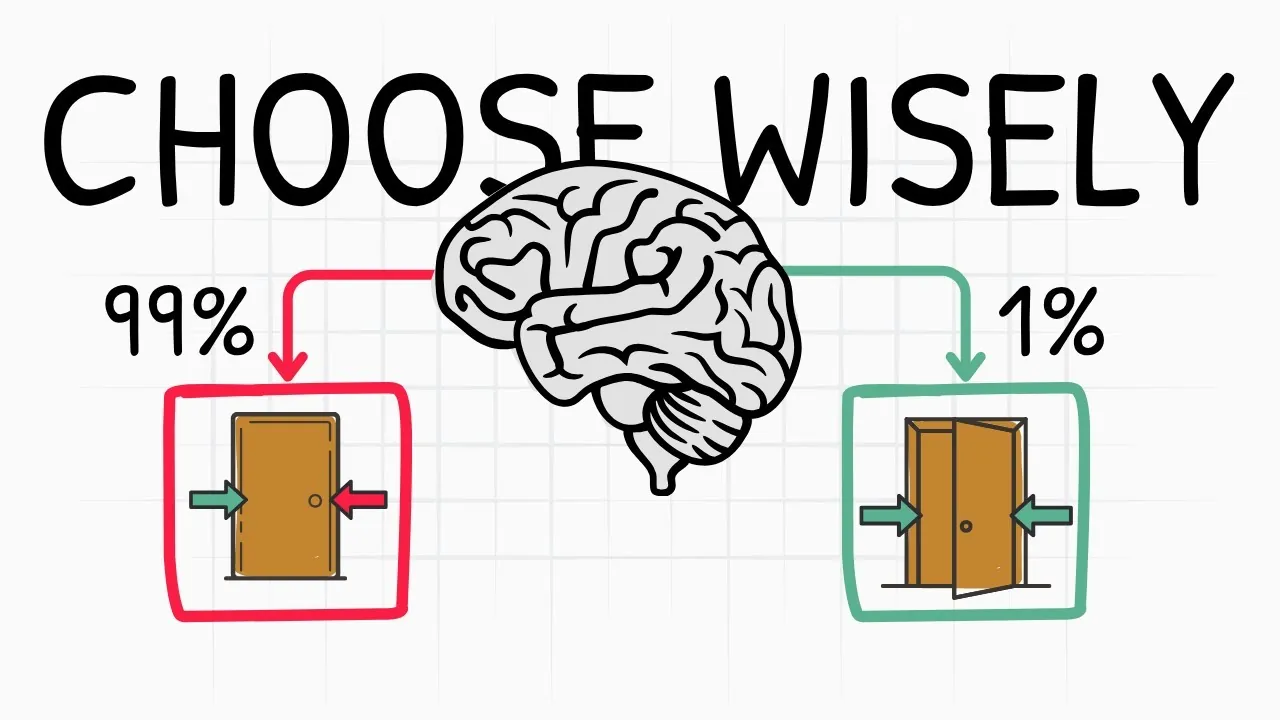
Have you ever found yourself stuck in a loop of endless deliberation, only to realize that the opportunity you were weighing has already passed you by? It’s a frustrating cycle—one that leaves you drained, uncertain, and often no closer to a solution. The truth is, most people overthink decisions that don’t actually require painstaking analysis. In fact, research suggests that nearly 95% of decisions are reversible, meaning they can be adjusted or undone later. Yet, we treat them as if the stakes couldn’t be higher. What if you could break free from this mental gridlock and consistently make faster, smarter choices—without second-guessing yourself at every turn?
In this walkthrough by Value Catcher, you’ll uncover practical strategies to simplify your decision-making process and avoid the traps of overanalysis. From understanding the difference between high-stakes, irreversible choices and low-stakes, flexible ones, to applying proven frameworks like the “two-way door” concept, this guide will equip you with tools to act decisively and confidently. You’ll also learn how to embrace action over perfection, use feedback from quick decisions, and focus your mental energy where it truly matters. By the end, you might just find yourself making decisions faster than 99% of people—without the weight of overthinking holding you back. After all, what’s the worst that could happen?
Faster, Smarter Decision-Making
TL;DR Key Takeaways :
- Distinguish between “one-way doors” (irreversible decisions) and “two-way doors” (reversible decisions) to allocate time and effort effectively.
- Avoid common pitfalls like overanalyzing reversible decisions or getting stuck on trivial choices to conserve mental energy.
- Use decision-making frameworks such as the “two-way door” concept and the “hats, haircuts, and tattoos” analogy to simplify and prioritize decisions.
- Apply the “70% rule” to act with sufficient information, avoiding analysis paralysis and maintaining momentum.
- Break down high-stakes decisions into smaller, reversible steps and use feedback from quick decisions to refine and improve over time.
Understanding Decision Types: One-Way vs. Two-Way Doors
Every decision you encounter can be categorized as either a “one-way door” or a “two-way door.” Recognizing the difference is the first step toward making faster, more effective choices.
- One-Way Doors: These decisions are irreversible and carry significant consequences. Once made, they cannot be undone without considerable effort or cost. Examples include signing a long-term lease, accepting a job offer, or making a major financial investment. Such decisions require careful thought, thorough evaluation, and a deliberate approach.
- Two-Way Doors: These decisions are reversible and allow you to pivot or change course if needed. Examples include trying a new productivity tool, experimenting with a different workout routine, or testing a new marketing strategy. Since the stakes are low, these decisions should be made quickly to avoid wasting time and energy.
By identifying whether a decision is a one-way or two-way door, you can allocate your time and mental resources appropriately, avoiding unnecessary delays and overanalysis.
Common Pitfalls in Decision-Making
Even with a clear understanding of decision types, many people fall into common traps that hinder their ability to decide efficiently. Avoiding these pitfalls can help you stay focused and productive.
- Treating Reversible Decisions as Irreversible: Overanalyzing low-stakes, reversible decisions—such as choosing a restaurant or selecting a temporary software tool—can drain your mental energy. Recognizing that these choices can be adjusted later allows you to act swiftly and move on to more important matters.
- Getting Stuck on Trivial Choices: Spending excessive time on minor decisions, like what to wear or which font to use in a presentation, can lead to decision fatigue. Simplify or automate these choices whenever possible to conserve your mental bandwidth for higher-stakes decisions.
By steering clear of these traps, you can focus your energy on decisions that truly matter, making sure steady progress toward your goals.
Decide Faster Than 99% of People Without Overthinking

Explore further guides and articles from our vast library that you may find relevant to your interests in thinking strategies.
Proven Frameworks for Smarter Decisions
To make decisions more efficiently, you can rely on structured frameworks that simplify the process and provide clarity. Two particularly effective models are the “two-way door” framework and the “hats, haircuts, and tattoos” analogy.
- Two-Way Door Framework: This framework emphasizes the importance of classifying decisions as reversible or irreversible. For reversible decisions, act quickly and adjust later if necessary. For irreversible decisions, take the time to evaluate your options thoroughly before committing. This approach ensures that you allocate your effort where it matters most.
- Hats, Haircuts, and Tattoos Analogy: This model categorizes decisions based on their impact and reversibility:
- Hats: These represent low-cost, easily reversible decisions, such as trying a new app or attending a networking event. They require minimal thought and can be adjusted without significant consequences.
- Haircuts: These are moderately impactful decisions that require some consideration but are not permanent, such as selecting a new marketing strategy or changing a team workflow.
- Tattoos: These symbolize high-cost, long-term decisions that demand careful deliberation, such as purchasing a home or launching a new product line.
These frameworks provide a structured way to approach decisions, making sure that you apply the appropriate level of effort and avoid unnecessary delays.
Action Over Perfection
The majority of decisions—approximately 95%—are reversible. For these, it’s essential to prioritize action over exhaustive planning. Delaying decisions that can be adjusted later often leads to missed opportunities and increased stress. For instance, if you’re considering launching a new business idea, starting with a small pilot program is often more effective than spending months perfecting a plan.
A practical principle to apply here is the “70% rule.” This rule suggests making decisions when you have about 70% of the necessary information. Waiting for complete certainty can lead to analysis paralysis, while acting with partial information allows you to learn, adapt, and refine your approach as you go.
Breaking Down High-Stakes Decisions
Irreversible, high-stakes decisions can feel overwhelming, but breaking them into smaller, reversible steps can make them more manageable. For example, instead of committing to a full-scale product launch, you could start with a limited release to test the market and gather feedback. This approach minimizes risk while providing valuable insights.
Additionally, focus on the potential consequences of being wrong rather than striving for perfection. Ask yourself: What’s the worst that could happen? Often, the risks are less severe than they initially appear, and taking calculated risks can lead to significant rewards.
Learning Through Feedback
Quick, reversible decisions offer a unique advantage: they provide opportunities to gather real-world feedback. Use this feedback to refine your approach and improve future choices. For example, if you implement a new team workflow and encounter challenges, you can adjust the process based on what you’ve learned. This iterative approach fosters continuous improvement without requiring exhaustive upfront planning.
By embracing a feedback-driven mindset, you can make smarter decisions over time, building confidence and adaptability in the process.
Key Strategies for Faster, Smarter Decisions
To summarize, here are the key strategies for making decisions faster and more effectively:
- Classify decisions as one-way or two-way doors to determine the appropriate level of effort.
- Avoid overthinking reversible decisions and focus on taking action quickly.
- Use frameworks like the “two-way door” concept and the “hats, haircuts, and tattoos” analogy to guide your choices.
- Apply the 70% rule to avoid decision paralysis and maintain momentum.
- Break down high-stakes decisions into smaller, reversible steps to reduce risk and gain insights.
- Use feedback from quick decisions to refine your approach and improve over time.
By focusing on action over perfection and adopting a structured, feedback-driven approach, you can make faster, smarter decisions that keep you ahead in both your personal and professional life.
Media Credit: The Value Catcher
Filed Under: Guides
Latest Geeky Gadgets Deals
Disclosure: Some of our articles include affiliate links. If you buy something through one of these links, Geeky Gadgets may earn an affiliate commission. Learn about our Disclosure Policy.
Credit: Source link