According to the IMARC Group report titled “Hardware Wallet Market: Global Industry Trends, Share, Size, Growth, Opportunity and Forecast 2023–2028“, published on March 18, 2023, the global hardware wallet market was valued at $320.5 million in 2022. Looking ahead, the market is projected to reach $1.3 billion by 2028, growing at a compound annual growth rate (CAGR) of 23.1% from 2023 to 2028.
This growing interest comes as no surprise. Hardware wallets offer the highest level of security for interacting with blockchain networks, allowing users to manage their digital assets with confidence. Their intuitive design and ease of use make them accessible to users of all technical backgrounds.
ChangeNOW’s CSO Pauline Shangett, recognizing industry trends and prioritizing user security, asked the internal tech team a simple question: which hardware wallets do you personally use — and why? The conversation that followed was surprisingly insightful, filled with real-world experience and technical depth.
Software developers shared their go-to choices, each supported by real-world experience and technical reasoning. We gathered their insights, highlighting the key features that make these wallets stand out in practical, day-to-day engineering tasks.
Below are five hardware wallets they found particularly compelling from a technical standpoint.
1. Trezor — Prioritizing Full Stack Control
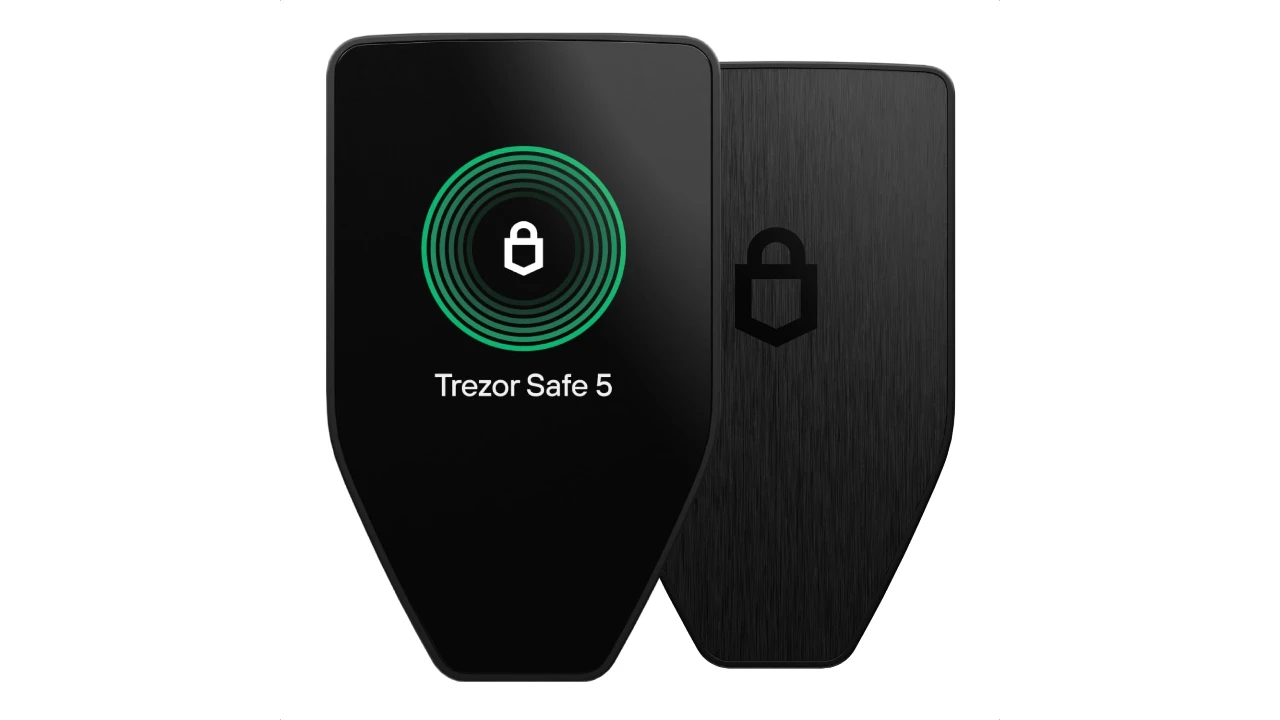
Source: Amazon.com, product image of Trezor Safe 5
Trezor stands out as one of the only mature hardware wallets that offer complete transparency and modifiability. Everything is open, from the client and firmware to the bootloader, protocol specs, and SDK. This makes it uniquely suitable for deep integrations aligned with modern enterprise DevOps practices.
Technical highlights:
- Firmware is written in C and licensed under the LGPL.
- Based on the STM32 microcontroller (used in One and Model T) without a Secure Element, but with a minimized attack surface.
- Supports BIP39, passphrases, and Shamir Backup.
- Integration options include Trezor Connect, Python tooling, and a protobuf-based command schema.
Use cases:
- CI/CD pipelines with automated signing workflows.
- Cold custody setups in physically controlled environments.
- Institutional multi-approval schemes are tied to access policies.
Limitations:
- The absence of a Secure Element in base models can be a concern in systems that require protection against physical attacks. Newer models, such as the Trezor Safe 3 and Safe 5, include an EAL6+ certified SE, addressing this gap.Expert choice: Trezor Safe 5“Trezor Safe 5 feels like a solid upgrade — finally has a secure element, and the touchscreen is a nice usability boost. It’s definitely geared toward users who know how to interpret low-level transaction data. Some parts of the interface take getting used to, but it gives you everything you need to verify what you’re signing.” — Lina Nguyen, Blockchain Engineer
2. Tangem — A Self-Contained Key Storage Module with Immutable Logic
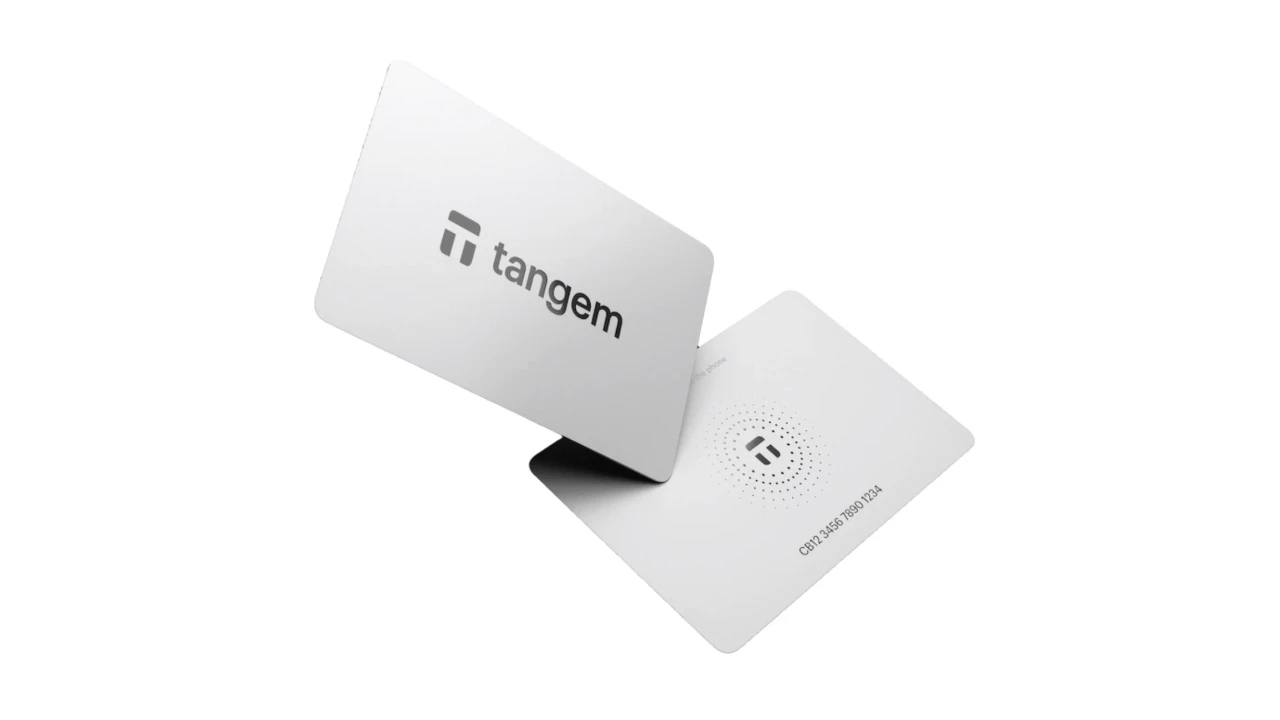
Image source: CryptoNest.co.uk –CryptoNest.co.uk – Tangem Wallet 2.0 (2 Card set)
Tangem takes a different approach: keys are generated and stored entirely within the chip, never leaving the card. The architecture is fully closed, there’s no firmware, and no ability to reprogram the device. This eliminates a broad class of attack vectors but also limits flexibility.
Architecture highlights:
- EAL6+ certified secure chip
- No ports or physical interfaces — NFC-only
- Hardcoded logic — no firmware, no updates
- Mobile SDKs are available for iOS and Android
Use cases:
- KYC-free custody solutions requiring full user autonomy
- Large-scale distribution scenarios with no need for device maintenance
- Environments with strict physical control over device access
Limitations:
- Can’t be integrated into CI/CD or automated workflows
- Not adaptable to custom business logic
- Asset support is broad, over 6k coins and tokens across 78 networks, but limited in depth for certain UTXO-based assets (e.g., Bitcoin, Litecoin, Cardano), where only a single receive/send address is supported. This can impact privacy and transaction management in an advanced setup.Expert choice: Tangem Wallet 2.0“For personal use, I went with Tangem — it’s perfect for hassle-free storage. Keys never leave the chip, the interface is minimal, nothing extra. Sure, it’s not made for DeFi or dev-heavy workflows, but for everyday storage and peace of mind, it really delivers.” — Daniel Haddad, Mobile Developer
3. Ledger – Resilient Integration for High-Load Web3 Interface
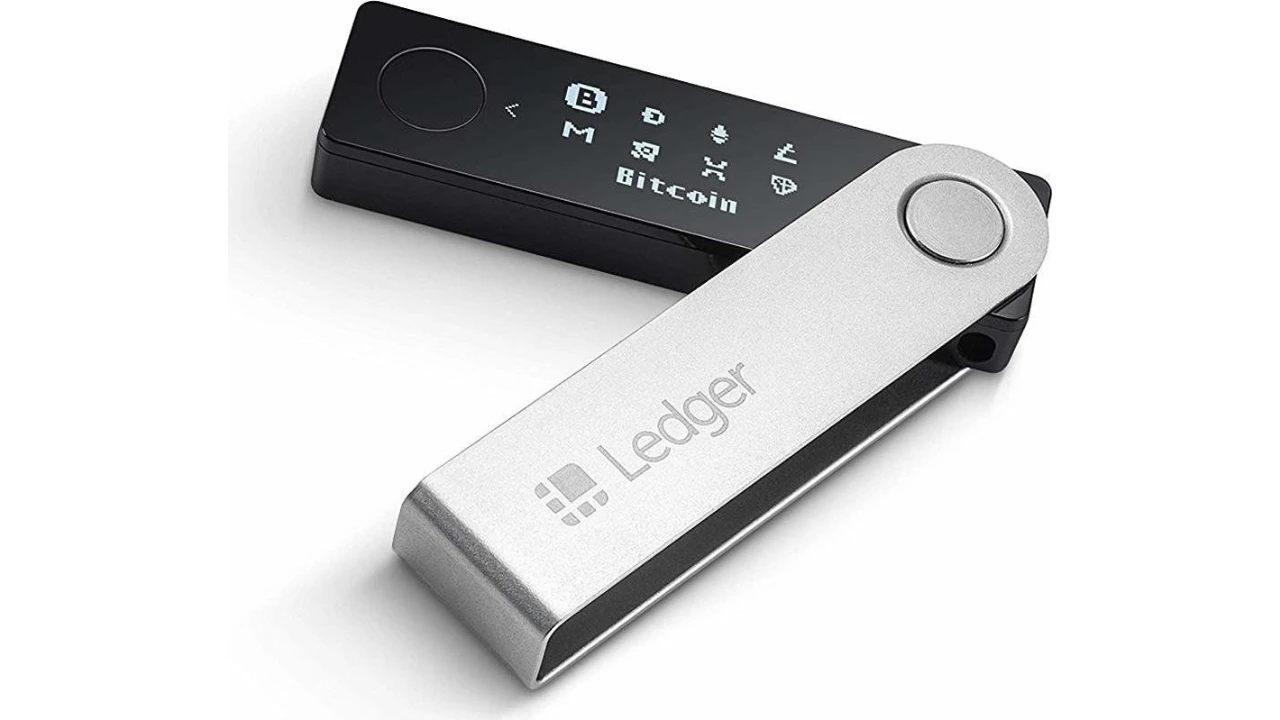
Image source: Skinflint.co.uk – Ledger Nano X product page
Ledger is a closed-source but mature platform. It runs on BOLOS, a custom operating system built around isolation and containerization principles. The device supports a wide range of networks and tokens, is actively maintained, and comes with well-documented SDKs, making it a solid choice for front-end-heavy Web3 applications.
Architecture highlights:
- ST33 Secure Element with EAL5+/EAL6+ certification (model-dependent)
- BOLOS protocol for app and signing isolation
- SDKs available for JavaScript, Python, and Rust
- WebHID and WebUSB support for browser-based dApp integration
- ~95% open-source codebase (UI, apps, tooling); firmware and SE logic remain closed
Use cases:
- Exchange-grade wallets requiring high UX throughput
- Custom Web3 applications needing broad asset support
- Institutional custody stacks, where Ledger acts as a secure, modular signing device
Limitations:
- Firmware is closed-source, not modifiable
- BOLOC runtime and SE logic are proprietary and not customizable
- Cannot be deeply reconfigured beyond supported SDK flows
Expert choice: Ledger Nano X
“The Ledger Nano X has been the go-to hardware wallet for beginners — it was my first cold wallet too, and I used it for 6 years. But let’s be real: it’s 2025, and its limitations are hard to ignore. Maybe the ‘classic choice’ isn’t always the right choice anymore. I can still recommend it, at the very least, it’s a reliable option.” — Karim Diallo, Mobile Developer
4. SafePal — Air-Gapped Cold Storage with Visual Data Transfer
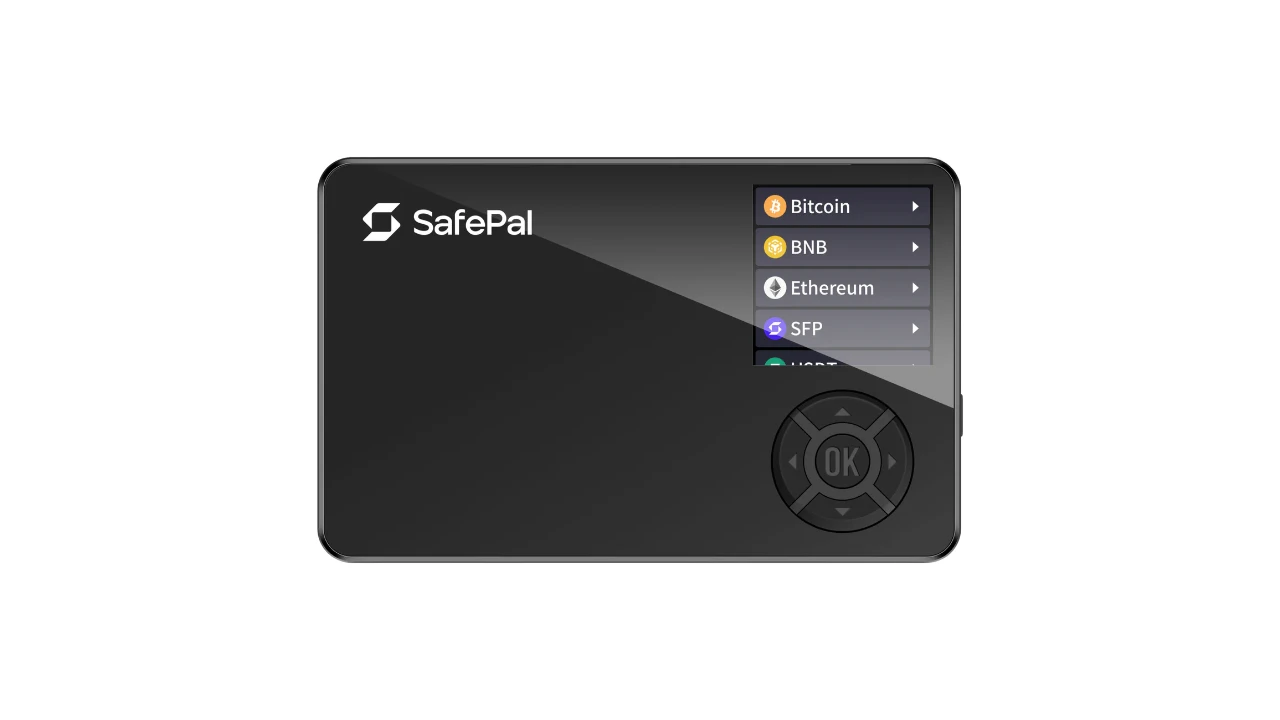
Image source: CryptoNest.co.uk – SafePal S1 product page
SafePal is built around a strict air-gap principle, physically eliminating all network interfaces. Data transfer happens exclusively through visual channels like QR codes, making it well-suited for cold custody setups where isolation and offline access control are critical.
Architecture highlights:
- EAL6+ certified Secure Element chip
- No connectivity interfaces, 100% air-gapped
- Transaction signing via encrypted QR codes
- Companion mobile app available for iOS and Android
Use cases:
- Cold storage with manual transaction signing
- Deployment in physically secured environments
- Users requiring complete offline key management
Limitations:
- Not suitable for integration into automated workflows or CI/CD pipelines
- Closed-source firmware limits transparency and customization
- Lacks SDK support for custom development
Expert choice: SafePal S1
“The SafePal S1 is a solid pick for users who want full air-gapped security without breaking the bank. From a developer’s standpoint, I appreciate the balance it strikes between usability and offline protection. That said, its closed-source firmware and limited transparency can be a drawback for those who care deeply about verifiability.” — Paul Petrov, Embedded Systems Engineer
5. OneKey — Open-Source Stack Built for DevOps
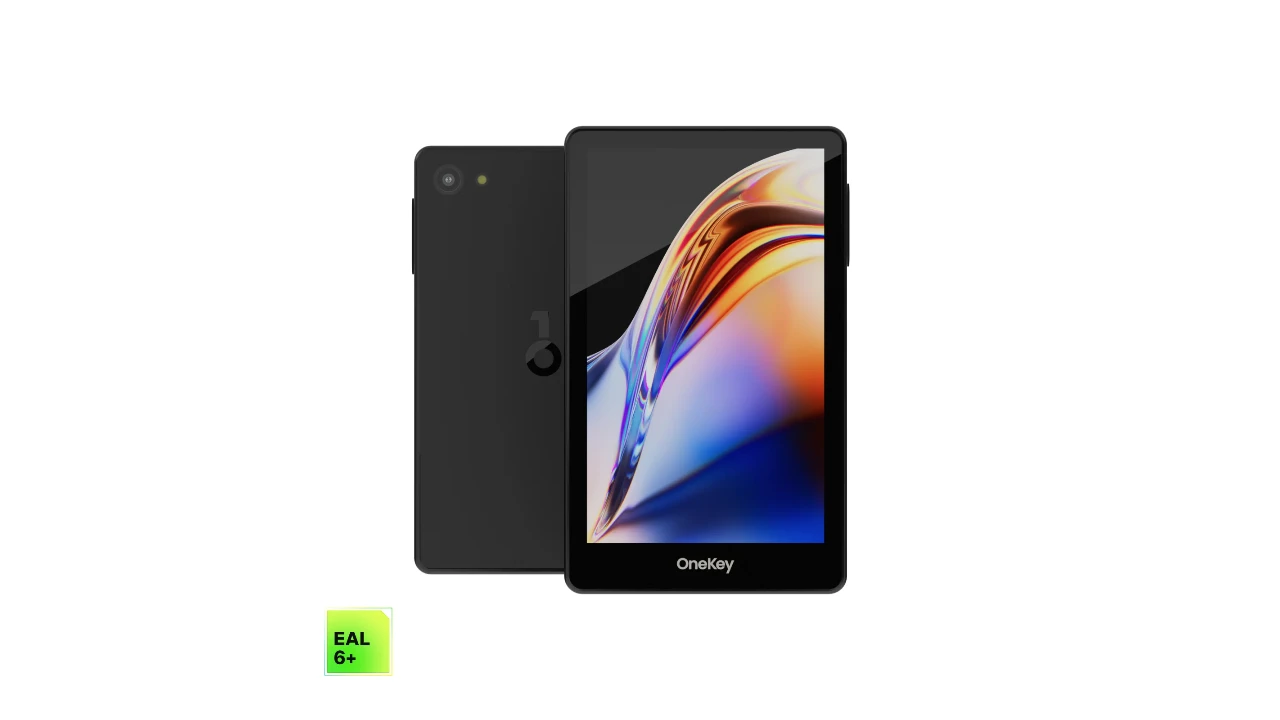
Image source: OneKey – OneKey Pro product page
OneKey is currently the only production-grade hardware wallet besides Trezor that offers a fully open architecture along with protocols geared toward DevOps workflows. It stands out for its broad connectivity options and transparent firmware logic.
Architecture highlights:
- STM32F4 microcontroller paired with an EAL6+-certified Secure Element
- Open-source firmware and UI available on GitHub
- Supports WebUSB, WebHID, and Bluetooth for flexible device compatibility
- CLI tools with Docker support for seamless CI/CD integration
Use cases:
- Environments requiring custom firmware builds and full source code auditability
- CI/CD pipelines where vendor dependency control is a must
- Modular custody systems following a plug-in architecture approach
Expert choice: OneKey Pro
“The hardware and UX on the OneKey Pro are really solid — clean interface, easy to use. That said, it’s still not fully open-source, and it doesn’t show things like call data or hash previews before signing, which would really help with verification. With those additions and a full open-source stack, it could be a top-tier wallet.” — Leo Zhang, Blockchain Engineer
Final Word
Choosing the right hardware wallet goes beyond personal preference; it’s about aligning with your technical and operational priorities. The table below outlines leading options to help you match wallet features with your specific use case, from cold storage and CI/CD automation to mass user distribution and custom dApp integration.
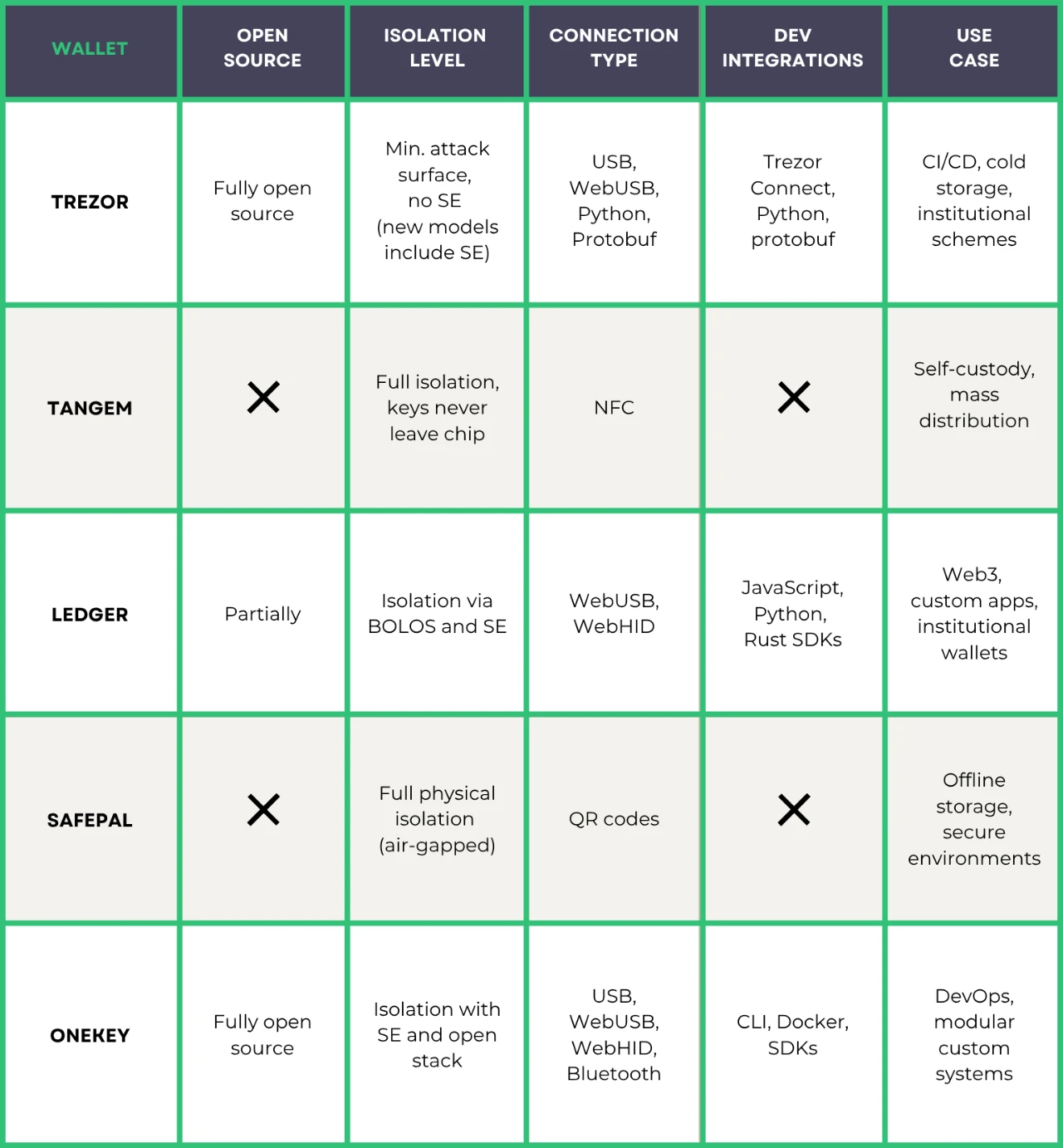
For software engineers, a hardware wallet isn’t just a user interface; it’s an infrastructure module. Security architecture, open-source availability, pipeline integration, and multi-asset support are what really matter in the decision-making process.
Need control and flexibility? ➝ Trezor, OneKey
Looking for simplicity and a UX-first approach? ➝ Tangem
Prioritizing broad support and long-term stability? ➝ Ledger
Focused on full isolation and offline security? ➝ SafePal
The right choice depends on your use case, whether it’s cold custody, CI/CD workflows, mass distribution, or dApp integration.
Filed Under: Technology News
Latest Geeky Gadgets Deals
Disclosure: Some of our articles include affiliate links. If you buy something through one of these links, Geeky Gadgets may earn an affiliate commission. Learn about our Disclosure Policy.
Credit: Source link