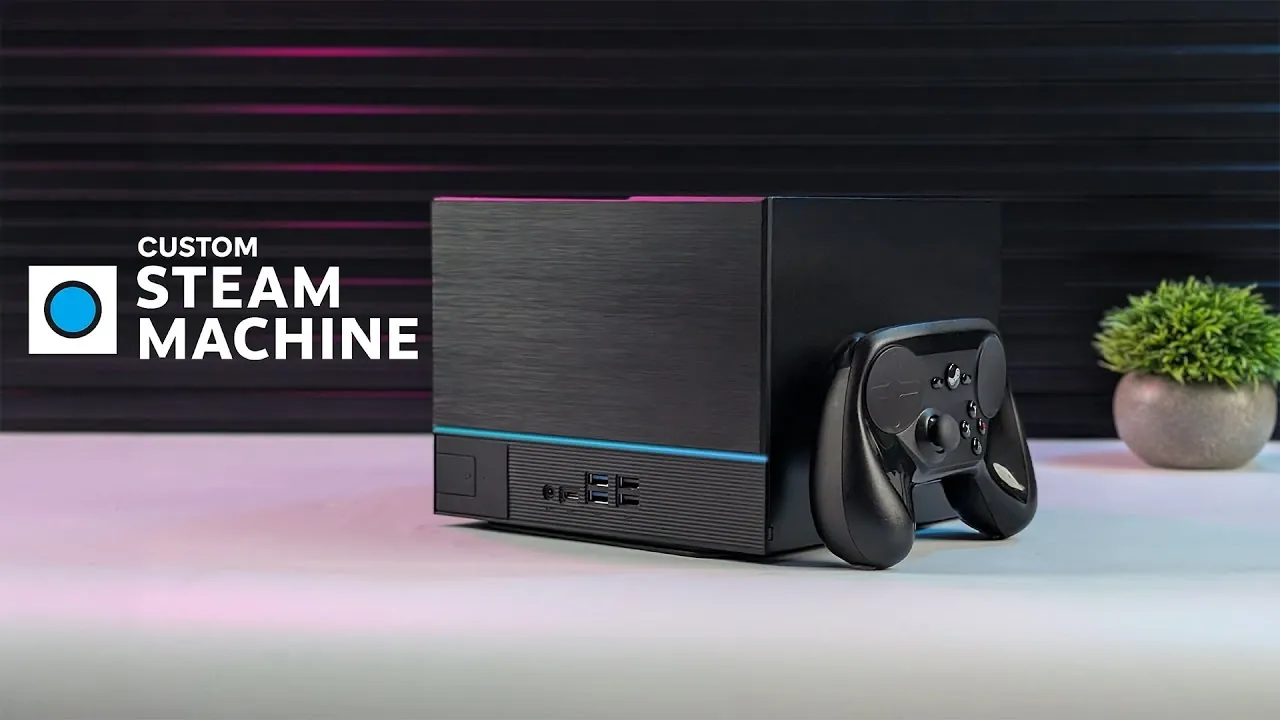
What if you didn’t have to wait for the future to experience the cutting edge of compact gaming? Valve’s highly anticipated 2026 Steam Machine promises to transform the gaming PC world with its sleek design and powerhouse specs, but for some of us, patience isn’t a virtue, it’s a roadblock. That’s why I decided to take matters into my own hands. Armed with a vision and a budget, I set out to build my own version of this elusive machine, crafting a compact gaming PC that delivers impressive performance today. The result? A system that may not match Valve’s rumored Zen 4 CPU or RDNA 3 GPU, but still packs enough punch to handle modern games at 1440p, all without breaking the bank. Why wait for innovation when you can create it yourself?
ETA Prime walks you through the process of building a compact gaming PC inspired by the Steam Machine’s design philosophy. From selecting components like the ASRock DeskMini X300 chassis and Radeon RX6600M GPU to overcoming the challenges of working within a mini-ITX form factor, this journey is as much about creativity as it is about performance. Along the way, you’ll discover the trade-offs involved, like balancing affordability with future-proofing, and see how this build performs in real-world gaming scenarios. Whether you’re a DIY enthusiast or simply curious about what’s possible with today’s hardware, this story might just inspire you to rethink what’s possible in the world of compact gaming. After all, sometimes the best way to predict the future is to build it yourself.
Building a Steam Machine Alternative
TL;DR Key Takeaways :
- Valve’s 2026 Steam Machine is expected to feature advanced hardware, including a Zen 4 Ryzen CPU, RDNA 3 GPU, and 16 GB of RAM, optimized for gaming with Steam OS.
- A custom-built compact gaming PC using the ASRock DeskMini X300 and components like the Ryzen 5 5600 CPU and Radeon RX6600M GPU offers a cost-effective alternative to the Steam Machine.
- Building in a mini-ITX form factor presents challenges, such as limited space, reliance on mobile GPUs, and constraints on cooling and power supply, which impact performance and upgrade potential.
- Performance testing showed the custom build can handle modern games at 1440p with medium to high settings, achieving 50-60 FPS in titles like Elden Ring and Spider-Man 2, though it struggles with ultra settings in demanding games like Cyberpunk 2077.
- While the custom build is a budget-friendly solution, its limitations include older-generation components and reduced future-proofing, making it a trade-off compared to the anticipated Steam Machine’s innovative specifications.
What Makes Valve’s Steam Machine Stand Out?
Valve’s upcoming Steam Machine is expected to set a new standard for compact gaming PCs. Its rumored specifications include a Zen 4 Ryzen CPU with six cores and twelve threads, an RDNA 3 GPU featuring 28 compute units, and 16 GB of RAM. These components, combined with Steam OS, a Linux-based operating system optimized for gaming, promise a powerful yet space-efficient gaming experience.
The appeal lies in its ability to deliver high performance in a sleek, compact form factor. However, replicating this level of performance today requires strategic component selection and a willingness to accept certain trade-offs. By building your own system, you can achieve a comparable experience while staying within a reasonable budget.
Building a Compact Gaming PC: Components and Design
To create a compact gaming PC that aligns with the Steam Machine’s design ethos, the ASRock DeskMini X300 was selected as the foundation. This mini-ITX chassis supports Ryzen 5000 series CPUs, making it a versatile choice for a small yet capable gaming system. Below is a breakdown of the components used in this build:
- CPU: AMD Ryzen 5 5600, a six-core, twelve-thread processor offering excellent performance for its price.
- GPU: Radeon RX6600M, a mobile GPU with 8 GB of VRAM, sourced affordably from AliExpress.
- RAM: 16 GB DDR4 clocked at 3200 MHz, providing sufficient memory for modern gaming needs.
- Storage: Kingston 1 TB PCIe 3.0 M.2 SSD, making sure fast load times and ample storage space.
- Cooling: Stock Wraith Stealth cooler, which balances cooling efficiency and cost.
- Power Supply: 500W unit included with the DeskMini X300, sufficient for the selected components.
While these components don’t match the Steam Machine’s rumored Zen 4 CPU or RDNA 3 GPU, they strike a balance between affordability and performance. This build demonstrates that a compact, budget-friendly gaming PC is achievable with careful planning.
Can a DeskMini X300 with RX6600M Stand in for Valve’s Steam Machine?
Here are more guides from our previous articles and guides related to SteamOS that you may find helpful.
Challenges of Building in a Mini-ITX Form Factor
Building a compact gaming PC comes with unique challenges, particularly when working within the constraints of a mini-ITX form factor. The limited internal space of the ASRock DeskMini X300 necessitated the use of a mobile GPU, such as the Radeon RX6600M, which fits the compact design and reduces costs. However, this choice comes with performance limitations compared to desktop-class GPUs.
Additionally, the reliance on the stock Wraith Stealth cooler and a 500W power supply restricts overclocking potential and limits future upgrade options. These constraints highlight the trade-offs involved in creating a small, cost-effective gaming system. Despite these challenges, the build achieves a commendable balance between size, performance, and affordability.
Performance Testing: Real-World Gaming Results
The custom-built compact gaming PC was tested with several demanding AAA games at 1440p resolution, using FidelityFX Super Resolution (FSR) to enhance performance. The results are as follows:
- Elden Ring: Achieved 50-60 FPS on medium settings with FSR enabled, delivering a smooth and immersive experience.
- Cyberpunk 2077: Maintained 45-55 FPS on medium settings with FSR, though ultra settings proved too demanding.
- Spider-Man 2: Reached 50 FPS on high settings with FSR, showcasing the build’s capability to handle modern titles.
These results demonstrate that the build is capable of running modern games at 1440p with medium to high settings. However, it struggles with ultra settings in graphically intensive titles like Cyberpunk 2077 and experiences occasional frame drops in Linux gaming environments. These limitations stem from the use of a mobile GPU and older-generation components, which, while cost-effective, cannot match the performance of innovative hardware.
Upgrade Potential and Key Observations
This custom build highlights the potential of creating a compact, budget-friendly gaming PC capable of running modern games. However, it also underscores the compromises involved in replicating the Steam Machine’s expected specifications. Key limitations include:
- The GPU’s performance, while adequate, falls short of the RDNA 3 standard expected in the Steam Machine.
- The use of DDR4 RAM and PCIe 3.0 storage limits the system’s future-proofing potential.
For those seeking to enhance this build, upgrading to an ITX RDNA 3 GPU or transitioning to DDR5 RAM could significantly improve performance. However, these upgrades would increase the overall cost, potentially diminishing the build’s value as a budget-friendly alternative. Careful consideration of these factors is essential when planning future upgrades.
A Rewarding Alternative for Compact Gaming Enthusiasts
Building your own compact gaming PC offers a practical and rewarding solution for those eager to experience high-quality gaming without waiting for Valve’s 2026 Steam Machine. While this custom build doesn’t fully replicate the Steam Machine’s rumored specifications, it provides a cost-effective alternative capable of delivering impressive performance at 1440p. By carefully selecting components and optimizing settings with tools like FSR, you can enjoy a seamless gaming experience today, proving that you don’t need to wait until 2026 to embrace compact gaming innovation.
Media Credit: ETA PRIME
Filed Under: Gaming News, Guides
Latest Geeky Gadgets Deals
Disclosure: Some of our articles include affiliate links. If you buy something through one of these links, Geeky Gadgets may earn an affiliate commission. Learn about our Disclosure Policy.
Credit: Source link