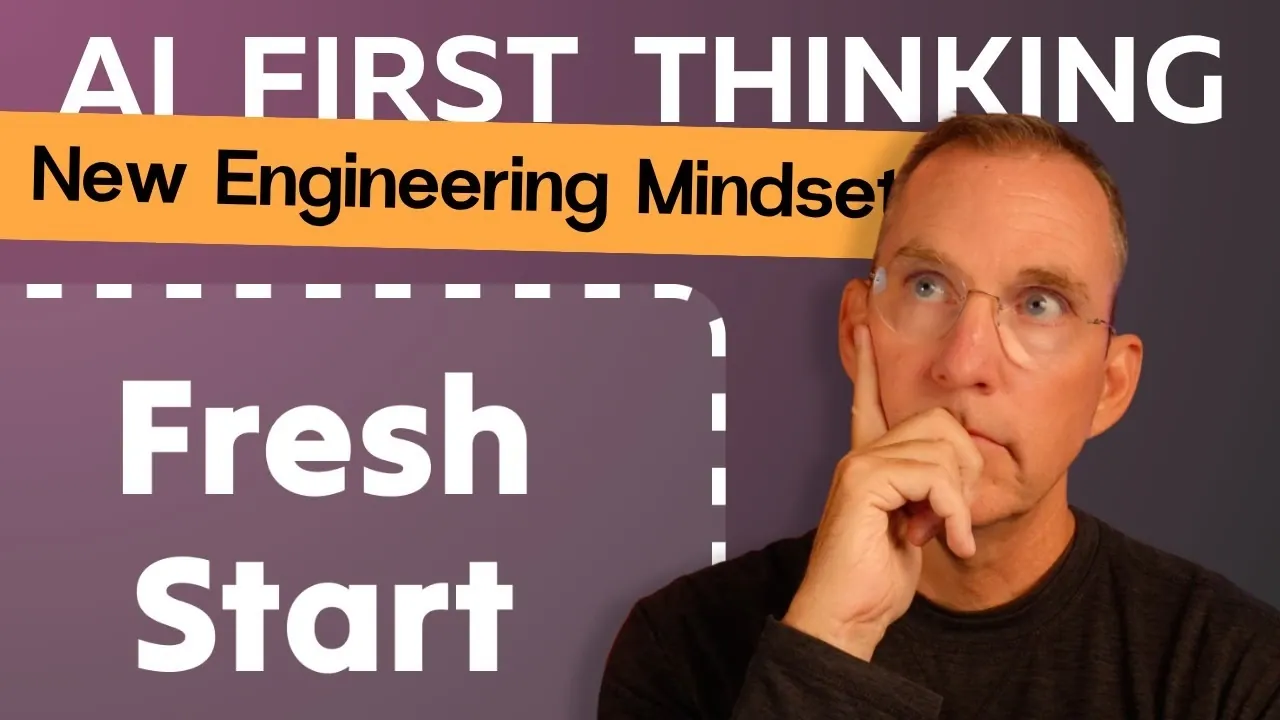
What if the very principles that have guided engineering for decades are no longer enough? Imagine a world where traditional problem-solving methods falter in the face of systems that evolve faster than we can predict. This is the reality engineers face in the age of artificial intelligence. AI doesn’t just demand technical proficiency; it challenges the very mindset with which we approach innovation. To thrive in this era, engineers must pivot from static workflows to a more dynamic, AI-first perspective—one that embraces adaptability, collaboration, and the relentless pace of change. The stakes are high: those who resist this shift risk being left behind, while those who embrace it stand to redefine what’s possible.
In this exploration, Matt Maher uncovers how AI is reshaping the engineering mindset and why traditional practices no longer suffice. You’ll discover the core principles that underpin this transformation, like the power of computational scalability over manual cleverness, and how they can transform your approach to problem-solving. Along the way, we’ll delve into the importance of curiosity, cooperation, and the willingness to experiment in an environment defined by constant evolution. As you read, consider this: are you prepared to rethink how you engineer solutions in a world where AI is both the tool and the challenge?
Adopting an AI-First Mindset
TL;DR Key Takeaways :
- Adopting an “AI-first” mindset is essential for thriving in the rapidly evolving AI landscape, emphasizing adaptability, collaboration, and proactive exploration of new possibilities.
- Traditional engineering methods struggle to keep pace with AI’s dynamic nature, requiring flexible and scalable approaches to remain effective and relevant.
- Rich Sutton’s “The Bitter Lesson” highlights the importance of computational scalability over handcrafted algorithms, allowing superior results through large-scale computation and data utilization.
- The three core principles of AI-first engineering, Compute, Cooperation, and Curiosity, guide the development of adaptive and innovative solutions in AI-driven projects.
- An AI-first mindset fosters iterative experimentation, embraces uncertainty, and positions engineers to capitalize on AI’s fantastic potential while navigating constant change.
Why Rapid Change Demands a New Approach
The rapid evolution of AI technologies is disrupting established workflows and rendering static methodologies inadequate. Tools, models, and techniques are updated at an unprecedented rate, creating a landscape where stability is fleeting. Traditional engineering practices, which rely on predictable and linear systems, often struggle to keep pace with this iterative and fast-moving environment. For you, the challenge lies in adapting to these changes without compromising efficiency, clarity, or the quality of your work.
The need for a new approach stems from the very nature of AI. Unlike conventional systems, AI thrives on data, computation, and continuous improvement. This means that static processes and rigid workflows are ill-suited to the demands of AI-driven projects. To remain effective, you must embrace flexibility and adopt strategies that align with AI’s dynamic nature. This shift not only ensures your relevance in the AI era but also positions you to capitalize on the opportunities it presents.
What It Means to Adopt an AI-First Mindset
Adopting an AI-first mindset involves rethinking how you perceive and interact with AI technologies. Rather than treating AI as a fixed tool or a static system, you must recognize it as a collection of evolving technologies that require constant adaptation. This perspective allows you to embrace the fluidity of AI and adjust your strategies as the technology advances.
An AI-first mindset encourages you to view rapid changes as opportunities rather than obstacles. By doing so, you can refine your workflows, experiment with new approaches, and uncover innovative solutions. This mindset also emphasizes the importance of scalability, collaboration, and curiosity, key attributes that enable you to thrive in an environment defined by constant change and innovation.
New Engineering Mindset for the AI Era

Check out more relevant guides from our extensive collection on AI workflows that you might find useful.
Scaling Over Cleverness: Insights from “The Bitter Lesson”
Rich Sutton’s essay, The Bitter Lesson, provides a critical insight into the evolution of AI development: scaling computational power often outperforms human-designed algorithms. While handcrafted solutions may appear elegant and sophisticated, they are inherently limited by human reasoning and lack the scalability needed to address complex, real-world problems. By prioritizing computational scalability, you can use AI’s raw power to achieve superior results.
This principle underscores the importance of large-scale computation and parallel processing in modern engineering. Instead of relying solely on clever algorithms, you can focus on building systems that use vast amounts of data and computational resources. This approach not only enhances efficiency but also enables you to tackle challenges that were previously considered insurmountable. By embracing the lessons of scalability, you position yourself to unlock AI’s full potential and drive meaningful innovation.
The Three Core Principles of AI-First Engineering
To navigate the complexities of AI engineering, you can rely on three foundational principles: Compute, Cooperation, and Curiosity. These principles serve as a guide for developing a flexible and adaptive approach to working with AI systems.
- Compute: Prioritize computational scalability over manual cleverness. By using parallel processing and large-scale computation, you can explore multiple solutions simultaneously and identify the most effective outcomes. This strategy not only enhances efficiency but also allows you to address problems that traditional methods cannot solve.
- Cooperation: Treat AI as a collaborative partner rather than a standalone tool. Understanding its strengths and limitations enables you to integrate AI into your workflows more effectively. By combining human expertise with AI capabilities, you can develop innovative and robust solutions that address complex challenges.
- Curiosity: Cultivate a mindset of continuous exploration and experimentation. By pushing the boundaries of AI systems, you can discover new possibilities and optimize performance. A curious approach helps you stay ahead of emerging trends and adapt to the evolving AI landscape.
How This Mindset Impacts Your Work
The adoption of an AI-first mindset has profound implications for your daily engineering practices. Static best practices must give way to dynamic and flexible strategies that align with AI’s rapid advancements. Iterative experimentation becomes a cornerstone of your workflow, allowing you to refine your approaches and evolve alongside the technology.
This mindset also encourages you to embrace uncertainty and view challenges as opportunities for growth. By adopting dynamic processes, you can remain agile and responsive in an environment defined by constant change. Whether you are designing new systems, optimizing existing workflows, or exploring uncharted territories, an AI-first approach equips you with the tools and strategies needed to succeed.
Looking Ahead: Thriving in the AI Era
As AI continues to redefine the engineering landscape, your ability to adapt and innovate will be critical to your success. By adopting an AI-first mindset, you can position yourself to thrive in this rapidly evolving environment. Focus on computational scalability, embrace collaboration, and maintain a spirit of curiosity to unlock AI’s full potential.
This approach not only addresses the challenges of rapid change but also enables you to create innovative and scalable solutions. By staying adaptable, proactive, and open to new possibilities, you can navigate the complexities of the AI era and contribute to shaping the future of engineering.
Media Credit: Matt Maher
Filed Under: AI, Guides
Latest Geeky Gadgets Deals
Disclosure: Some of our articles include affiliate links. If you buy something through one of these links, Geeky Gadgets may earn an affiliate commission. Learn about our Disclosure Policy.
Credit: Source link