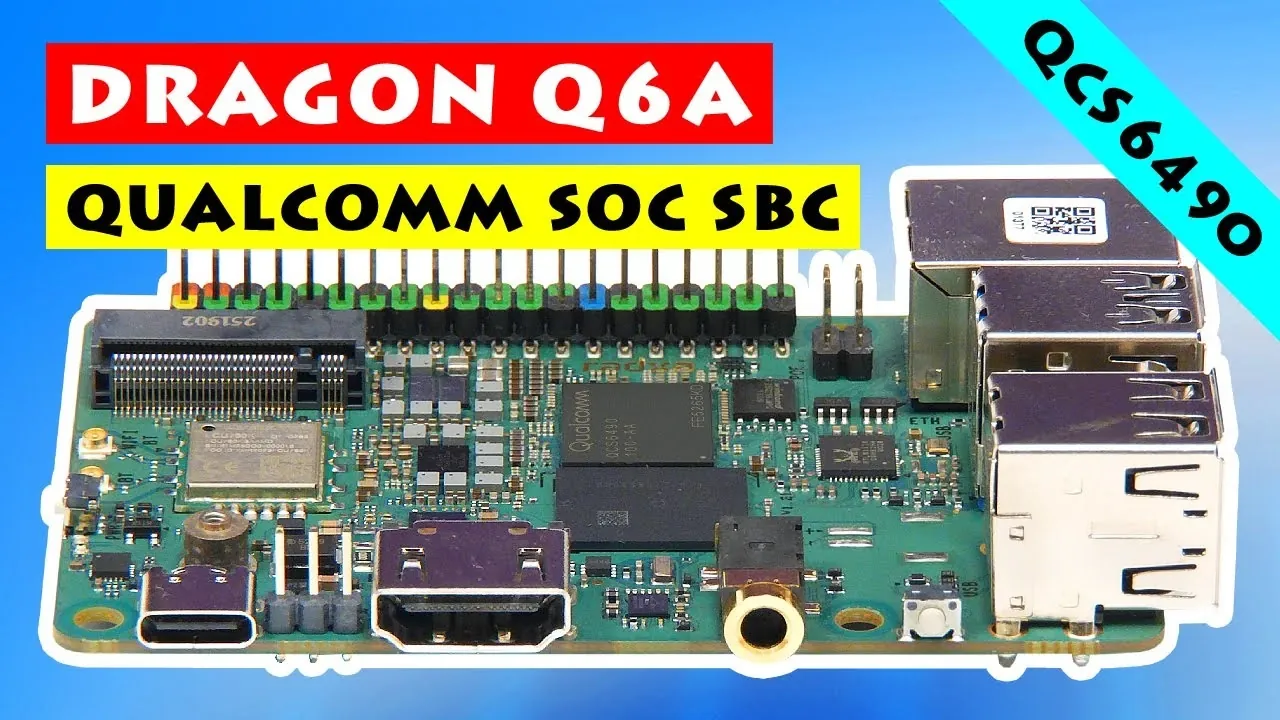
What if you could get the performance of a high-end single-board computer without breaking the bank? The Dragon Q6A, powered by Qualcomm’s QCS6490 SoC, is making waves as a serious contender in the SBC market, offering a blend of power, efficiency, and affordability. In this overview, Explaining Computers explores how this octa-core marvel challenges industry staples like the Raspberry Pi 5, delivering features like 4K video playback, AI processing at 12 TOPS, and seamless multitasking with up to 16 GB of LPDDR5 RAM. Whether you’re building an IoT project, experimenting with Edge AI, or simply seeking a responsive desktop experience, the Dragon Q6A promises to redefine what’s possible in its price range.
In this deep dive, you’ll discover how the Dragon Q6A’s versatile connectivity and expandable design make it a go-to choice for developers, educators, and hobbyists alike. From its Raspberry Pi-compatible form factor to its blazing-fast storage options like UFS modules and NVMe SSDs, the board is packed with features that cater to both performance enthusiasts and budget-conscious users. But it’s not all perfect, there are a few quirks to consider, like the lack of an official cooling solution and ongoing OS development challenges. Could this be the board that balances innovation with practicality? Let’s explore what sets the Dragon Q6A apart and where it might fit into your next project.
Dragon Q6A SBC Overview
TL;DR Key Takeaways :
- The Dragon Q6A SBC, powered by the Qualcomm QCS6490 SoC, offers advanced hardware, including an octa-core Cryo 670 CPU, Adreno 643 GPU, and Hexagon AI processor, making it ideal for IoT, Edge AI, and general-purpose computing.
- It delivers exceptional performance with Geekbench scores of 1174 (single-core) and 3175 (multi-core), surpassing competitors like the Raspberry Pi 5, while maintaining energy efficiency with low power consumption.
- Storage options include UFS modules, NVMe SSDs, and microSD cards, providing flexibility in speed, capacity, and cost for various applications.
- The board supports multiple operating systems, including Radza OS (Ubuntu 24.04-based) and Fedora 42, though some features like audio support in Fedora are still under development.
- Its Raspberry Pi-compatible form factor, 40-pin GPIO header, and versatile connectivity options (Wi-Fi 6, Bluetooth 5.4, Gigabit Ethernet) make it a highly expandable and adaptable platform for developers, hobbyists, and educators.
Key Hardware Features
At the heart of the Dragon Q6A lies the Qualcomm QCS6490 SoC, which powers its impressive capabilities. Its hardware is designed to meet the demands of modern computing while maintaining flexibility for diverse use cases. Key features include:
- Processor: The octa-core Cryo 670 CPU, clocked up to 2.7 GHz, ensures smooth multitasking and efficient performance for demanding workloads.
- Graphics: The Adreno 643 GPU supports advanced graphics rendering and 4K video playback, making it suitable for multimedia applications.
- AI Processing: The Hexagon AI processor delivers up to 12 TOPS (trillion operations per second), allowing efficient machine learning and Edge AI tasks.
- Memory: LPDDR5 RAM options range from 4 GB to 16 GB, with the 8 GB model offering a balanced choice for most users.
- Storage: Flexible storage options include M.2 NVMe SSD, UFS modules, and microSD cards, catering to various performance and capacity needs.
- Connectivity: Equipped with Wi-Fi 6, Bluetooth 5.4, Gigabit Ethernet, and multiple USB ports, including a USB 3.1 OTG port, the board ensures seamless data transfer and network integration.
This combination of hardware makes the Dragon Q6A a powerful and adaptable solution for a wide range of projects, from AI development to multimedia playback.
Performance Highlights
The Dragon Q6A demonstrates exceptional performance in its class, making it a strong contender in the SBC market. Its Geekbench scores of 1174 (single-core) and 3175 (multi-core) highlight its processing power, surpassing competitors like the Raspberry Pi 5 and RK3588-based boards. Despite its high performance, the board remains energy-efficient, consuming just 4.7 watts at idle and 11.8 watts under load. This balance of power and efficiency makes it suitable for tasks such as:
- 4K video playback with smooth rendering.
- Responsive desktop computing for everyday tasks.
- AI-driven applications requiring real-time processing.
The Dragon Q6A’s ability to deliver high performance while maintaining low power consumption ensures it is both cost-effective and environmentally friendly.
Dragon Q6A SBC An Excellent Qualcomm SBC

Learn more about Raspberry Pi 5 by reading our previous articles, guides and features :
Operating System Compatibility
The Dragon Q6A supports multiple operating systems, enhancing its adaptability for various projects. It comes pre-installed with Radza OS, an Ubuntu 24.04-based distribution featuring the KDE Plasma desktop, offering a user-friendly and feature-rich environment. Additionally, Fedora 42 has been tested successfully, although some features, such as audio support, are still under development. This flexibility allows users to tailor the board to their specific needs, whether for development, multimedia, or general-purpose computing.
Storage Performance
The Dragon Q6A offers a range of storage options to suit different performance and capacity requirements. Each option is designed to provide reliable and efficient data handling:
- UFS Module: Achieves the fastest storage speeds at 1155 MB/s, ideal for high-performance applications.
- NVMe SSD: Delivers slightly lower speeds at 1094 MB/s but remains a top-tier option for demanding workloads.
- MicroSD Card: Offers a respectable 77 MB/s, suitable for less intensive tasks or budget-conscious users.
These options allow you to balance speed, capacity, and cost based on your specific project requirements, making sure optimal performance for any application.
Design and Expandability
The Dragon Q6A features a Raspberry Pi-compatible form factor, making it easy to integrate into existing projects and ecosystems. Its thoughtful design includes:
- A 40-pin GPIO header for connecting peripherals and sensors.
- A full-size HDMI port supporting 4K video output at 30 fps for high-quality display connectivity.
- A 3.5 mm audio jack and a real-time clock battery connector for added functionality.
- Flexible power options via USB-C or a 3-pin header, making sure compatibility with various power sources.
- Support for eMMC or UFS modules for onboard storage, enhancing expandability.
This design ensures compatibility with a wide range of accessories, making the Dragon Q6A a versatile and expandable platform for developers, hobbyists, and educators alike.
Limitations to Consider
While the Dragon Q6A offers numerous advantages, it is important to consider its limitations:
- Operating System Development: Some OS images, such as Fedora 42, lack full functionality, with audio support being a notable example. This may require additional development or workarounds for specific use cases.
- Cooling Solutions: The board does not include an official cooling solution, necessitating third-party options for heat management during intensive tasks.
These limitations may require additional planning and investment, depending on your project’s specific requirements.
Applications and Use Cases
The Dragon Q6A is well-suited for a variety of applications, thanks to its powerful hardware and flexible design. Key use cases include:
- IoT and Edge AI: Its AI processing capabilities and energy efficiency make it ideal for smart devices, real-time data processing, and other IoT applications.
- Desktop Computing: The board’s robust hardware supports basic desktop tasks, multimedia playback, and light productivity work.
- Education and Development: With its versatility and affordability, the Dragon Q6A serves as a reliable platform for learning, prototyping, and experimentation.
Whether you are a developer, hobbyist, or educator, the Dragon Q6A provides a solid foundation for innovation across a wide range of fields.
Media Credit: ExplainingComputers
Filed Under: Hardware
Latest Geeky Gadgets Deals
Disclosure: Some of our articles include affiliate links. If you buy something through one of these links, Geeky Gadgets may earn an affiliate commission. Learn about our Disclosure Policy.
Credit: Source link