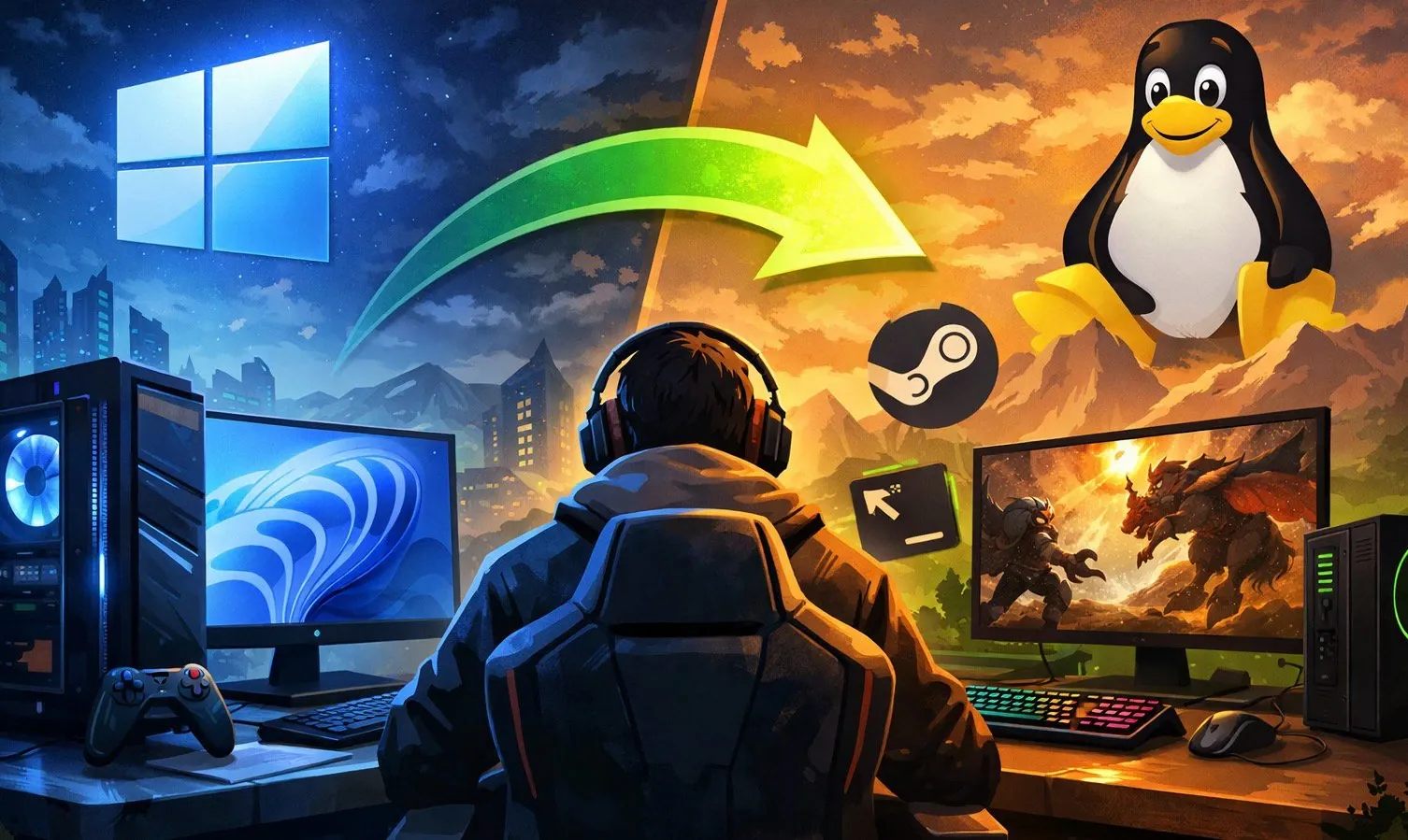
What if the operating system you’ve relied on for years is actually holding you back? Below, NYXTERA breaks down how Linux, once considered a niche option for tech enthusiasts, is rapidly becoming a innovative platform for modern gamers. With Windows 11 facing criticism for its resource-heavy processes, invasive telemetry, and steep hardware requirements, many players are discovering that Linux offers a leaner, faster, and more customizable gaming experience. Add to that the rise of the Steam Deck and new technologies like Proton, and it’s clear that Linux is no longer just an alternative, it’s a serious contender in the gaming world.
In this guide, we’ll explore why so many gamers are making the switch from Windows 11 to Linux and how this shift could redefine your gaming experience. From higher frame rates and smoother gameplay to the surprising ease of setup with gamer-focused Linux distributions, there’s a lot to uncover. Whether you’re frustrated with Windows’ limitations or simply curious about what Linux has to offer, this breakdown will help you understand the benefits, challenges, and possibilities of embracing a new gaming frontier. Could this be the upgrade you didn’t know you needed?
Linux Gaming 2026 Revolution
TL;DR Key Takeaways :
- Linux gaming is gaining traction due to improved performance, compatibility with popular games, and user-friendly distributions, while dissatisfaction with Windows’ resource-heavy processes and telemetry drives gamers to seek alternatives.
- Technological advancements like Valve’s Proton and GE Proton have significantly enhanced Linux gaming, offering a 90% compatibility rate with Steam games and support for advanced graphics technologies like DLSS, FSR 4.0, and XSS.
- The Steam Deck, with over 5.6 million units sold by March 2025, has been instrumental in popularizing Linux gaming, encouraging other manufacturers to adopt Linux-based systems.
- Improved hardware and driver support, particularly from AMD and Nvidia, ensures stable and high-performance gaming on Linux, rivaling Windows-based systems.
- The end of support for Windows 10 and the challenges of Windows 11 have accelerated the shift to Linux, which offers better gaming performance, greater user control, and a cost-effective, open source alternative.
Windows 11 Performance Challenges
Windows has long been the dominant platform for gaming, but its performance inefficiencies are becoming increasingly apparent. Background processes such as telemetry, Windows Defender, and other system services consume a significant portion of system resources. These processes often lead to reduced frame rates, inconsistent gameplay, and a less-than-optimal gaming experience.
In contrast, Linux offers a more streamlined and efficient operating environment. By running only the processes you specify, Linux ensures better resource allocation. This results in higher frame rates, smoother gameplay, and a more responsive gaming experience. For gamers seeking to maximize performance, Linux provides a clear advantage over Windows.
Linux Gaming’s Growing Popularity
The popularity of Linux gaming has surged in recent years, driven by technological advancements and a growing community of gamers. For example, Steam’s Linux market share increased from 2% in October 2024 to 3.2% in November 2025, marking a 60% growth in just one year. English-speaking gamers are at the forefront of this trend, with one in four making the switch from Windows to Linux.
This growth is not coincidental. It is supported by the development of Linux gaming technologies, the rise of Linux-based gaming devices, and the increasing dissatisfaction with Windows. As more gamers recognize the benefits of Linux, its adoption continues to accelerate, reshaping the gaming landscape.
Switch from Windows 11 to Linux for Gaming

Check out more relevant guides from our extensive collection on Linux gaming that you might find useful.
Technological Breakthroughs in Linux Gaming
Recent innovations have significantly improved the gaming experience on Linux, making it a viable alternative to Windows. A key factor in this transformation is Proton, a compatibility layer developed by Valve. Proton enables Windows games to run on Linux, and its latest version, Proton 10, released in November 2025, introduced substantial enhancements. These include improved performance, reduced stuttering, and expanded support for platforms like the Epic Games Store.
Additionally, the release of GE Proton 10-26 in December 2025 brought support for advanced graphics technologies such as DLSS (Nvidia), FSR 4.0 (AMD), and XSS (Intel). With a 90% compatibility rate, the majority of Steam games now run seamlessly on Linux. These advancements have made Linux a practical and attractive option for gamers who value performance and compatibility.
The Steam Deck’s Role in Linux Adoption
The Steam Deck, a Linux-powered handheld gaming device, has played a pivotal role in popularizing Linux gaming. By March 2025, over 5.6 million units had been sold, all running the Linux-based Steam OS. This success has demonstrated the potential of Linux as a gaming platform and has encouraged other manufacturers to adopt Linux for their devices.
In April 2025, Valve expanded Steam OS to third-party manufacturers, leading to the release of new handheld gaming devices from brands like Lenovo, HP, and Asus. These developments have not only increased Linux’s presence in the gaming market but also highlighted its versatility and scalability as a platform.
Improved Hardware and Driver Support
One of the key factors driving the adoption of Linux for gaming is the significant improvement in hardware and driver support. AMD CPUs dominate the Linux gaming market, holding a 73.6% share due to their reliable open source drivers. Nvidia has also made strides by releasing open kernel modules in 2024, which have enhanced compatibility and performance on Linux systems.
These advancements ensure that gamers can enjoy stable and high-performance hardware support on Linux. Whether using AMD, Nvidia, or Intel hardware, Linux now provides a robust foundation for gaming, rivaling the performance of Windows-based systems.
Ease of Use for Gamers
Modern Linux distributions have made gaming on Linux more accessible than ever before. Distributions such as Nobara OS, Pop OS, and Basite OS are specifically designed with gamers in mind. These operating systems come preconfigured with automatic driver installations, optimized settings, and minimal setup requirements.
In many cases, setting up Linux for gaming is faster and simpler than configuring Windows. With Steam pre-installed on these distributions, gamers can start playing their favorite titles almost immediately after installation. This ease of use has been instrumental in attracting new users to the platform.
The Impact of Windows 10’s End of Support
The end of support for Windows 10 in October 2025 has further accelerated the shift to Linux. Windows 11’s stricter hardware requirements, increased telemetry, and resource-heavy processes have left many users searching for alternatives. Linux offers a free, open source solution that provides better gaming performance, greater user control, and no intrusive background processes.
For gamers who are unwilling or unable to upgrade to Windows 11, Linux presents a compelling option. Its combination of performance, flexibility, and cost-effectiveness makes it an attractive choice for those looking to move away from the Windows ecosystem.
The Future of Gaming on Linux
Linux gaming has evolved from a niche option into a competitive alternative to Windows. With advancements in compatibility, performance, and ease of use, Linux is now a viable choice for gamers of all levels. The growing support from hardware and software developers, coupled with the rise of Linux-powered devices, underscores its potential to reshape the gaming industry.
As more gamers recognize the benefits of Linux, its adoption is expected to continue growing. Whether through improved hardware support, innovative gaming technologies, or user-friendly distributions, Linux is poised to play an increasingly significant role in the future of gaming.
Media Credit: NYXTERA
Filed Under: Gaming News, Linux News, Top News
Latest Geeky Gadgets Deals
Disclosure: Some of our articles include affiliate links. If you buy something through one of these links, Geeky Gadgets may earn an affiliate commission. Learn about our Disclosure Policy.
Credit: Source link