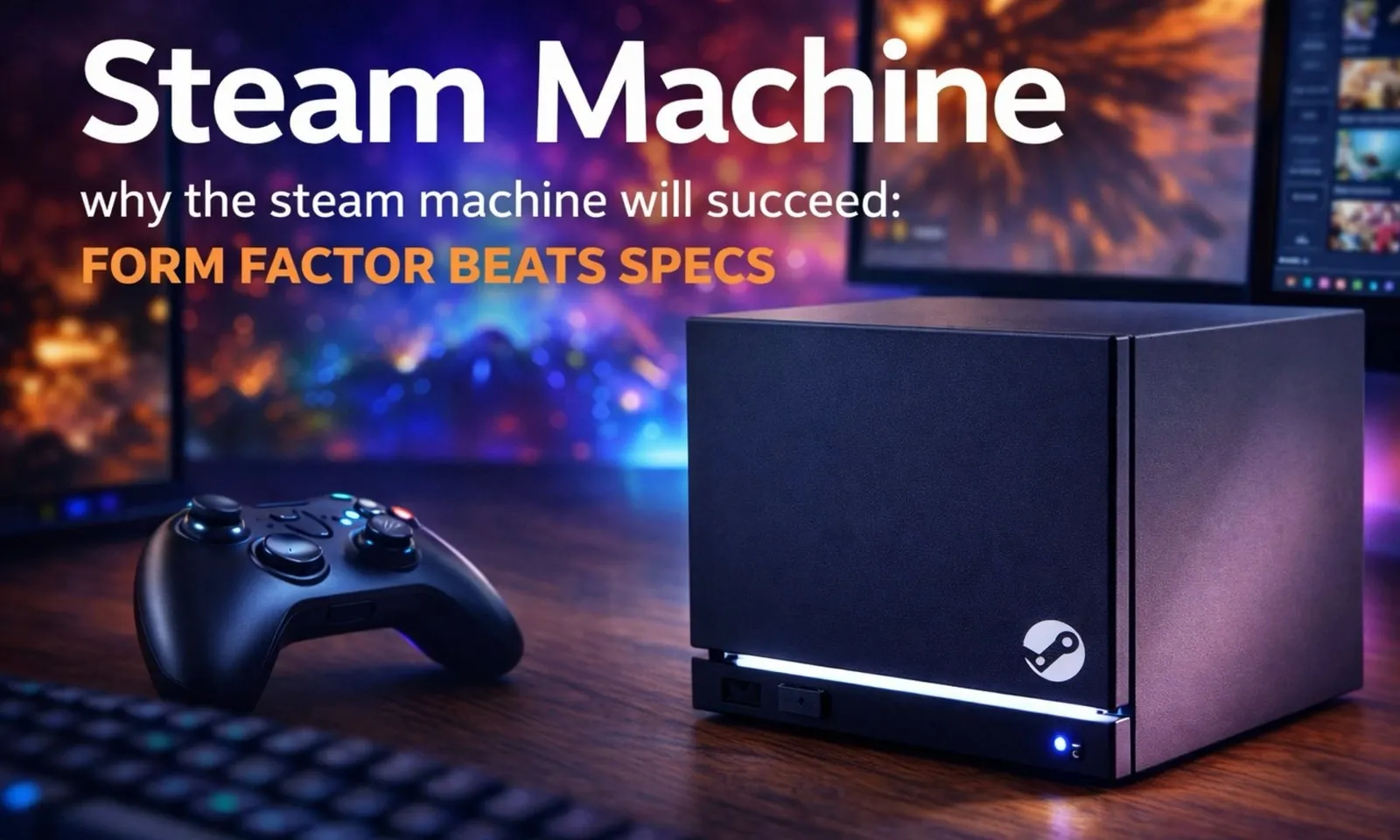
What if the future of living room gaming wasn’t about chasing the highest specs but instead about creating a seamless, console-like experience? In this overview, Joshua Keith explores how the Steam Machine, a compact gaming PC designed for the living room, could redefine what gamers expect from their setups. Unlike traditional gaming PCs that dominate with raw power, the Steam Machine shifts the focus to form factor, simplicity, and integration. It’s a bold move in an industry obsessed with performance benchmarks, but one that taps into a growing demand for devices that prioritize convenience and compatibility over complexity.
This overview dives into why the Steam Machine’s living room-friendly design and controller-first interface could make it a fantastic option for casual and dedicated gamers alike. You’ll discover how its minimalist aesthetic, quiet operation, and reliance on the Steam OS ecosystem create a unique blend of PC flexibility and console ease. But is this enough to win over a market divided between high-end PCs and budget-friendly consoles? By the end, you’ll have a deeper understanding of whether this device is the perfect fit for your entertainment setup, or just another ambitious experiment in gaming history.
Who is the Steam Machine For?
TL;DR Key Takeaways :
- The Steam Machine emphasizes user experience and living room compatibility, offering a console-like gaming experience with a compact, quiet, and minimalist design tailored for home theater setups.
- It targets gamers who prioritize convenience and aesthetics over raw hardware power, appealing to those who want a streamlined, living room-friendly alternative to traditional PCs and consoles.
- Powered by Steam OS, a Linux-based operating system, it simplifies gaming by providing access to the Steam library, compatibility with Windows games via Proton, and avoiding the complexities of traditional PC setups.
- Priced between $600–$700, the Steam Machine positions itself as a premium option for living room gaming, offering flexibility through an open ecosystem that allows users to install other game stores or operating systems.
- Challenges include limited compatibility with certain anti-cheat systems and higher pricing for some models, but its unique focus on form factor and user experience makes it a compelling choice for a niche audience.
The Steam Machine is not aimed at gamers who demand the highest performance specifications. Instead, it caters to users who already own capable gaming PCs but desire a streamlined, living room-friendly setup. Research indicates that 37% of potential buyers are interested in the Steam Machine despite not requiring a hardware upgrade. This reflects a growing demand for devices that prioritize simplicity, compact design, and integration with home theater systems. For these users, the Steam Machine offers a compelling solution, eliminating the complexity of traditional PCs while maintaining the flexibility of a gaming computer.
Form Factor: Designed for the Living Room
The Steam Machine’s compact and quiet design is tailored specifically for living room environments. Unlike traditional gaming PCs, which are often bulky and noisy, the Steam Machine fits seamlessly alongside TVs and other home theater components. Its minimalist aesthetic avoids the flashy, gamer-centric designs commonly associated with PCs, making it a better fit for modern living spaces. The controller-first interface further enhances its appeal, allowing users to enjoy a console-like experience without the need for a keyboard and mouse in most scenarios. This thoughtful design ensures that the Steam Machine integrates effortlessly into any living room setup.
Why the Steam Machine Will Succeed

Dive deeper into Steam Machine with other articles and guides we have written below.
Steam OS: Simplifying the Gaming Experience
At the heart of the Steam Machine is Steam OS, a Linux-based operating system designed to simplify gaming. Steam OS provides direct access to the extensive Steam library, bypassing the complexities of Windows, such as frequent updates, driver conflicts, and unnecessary software. With Proton, a compatibility layer that enables Windows games to run on Linux, the Steam Machine ensures broad support for most titles. This combination of simplicity and compatibility makes it an attractive option for gamers who want a hassle-free experience without sacrificing access to their favorite games.
Pricing and Market Positioning
Valve has positioned the Steam Machine in the $600–$700 price range, targeting a specific audience. While some may compare it to consoles, the Steam Machine is fundamentally a PC optimized for living room gaming. Unlike consoles, Valve does not subsidize hardware costs, making lower price points impractical. Despite this, surveys reveal that 63% of respondents are interested in purchasing the device, demonstrating its strong appeal within its target market. This pricing strategy reflects Valve’s focus on delivering a premium, living room-friendly gaming experience rather than competing directly with budget-friendly consoles.
Performance: Built for Living Room Gaming
The Steam Machine is optimized for TV gaming, addressing common issues such as noise, size, and setup complexity that traditional PCs often face in living room environments. It offers a superior gaming experience compared to docking a Steam Deck, delivering six times the performance. While it may not match the raw power of high-end gaming PCs, its focus on living room optimization makes it a practical and unique choice for users who value convenience and integration over maximum performance.
Flexibility Through an Open Ecosystem
One of the Steam Machine’s standout features is its open ecosystem. Unlike consoles, it allows users to install other game stores or even replace Steam OS with Windows if desired. This flexibility ensures that gamers are not locked into Steam-exclusive purchases and can continue using their existing game libraries. By offering this level of control, the Steam Machine sets itself apart from closed systems, giving users the freedom to customize their gaming experience to suit their preferences.
Challenges and Limitations
Despite its strengths, the Steam Machine faces several challenges. Limited compatibility with certain anti-cheat systems, such as those used by Riot Games and Battlefield 6, could deter some users. Additionally, its pricing, particularly for models exceeding $700, may restrict its appeal to a broader audience. Addressing these issues will be critical for the Steam Machine’s long-term success. Valve will need to work closely with developers to improve compatibility and consider strategies to make the device more accessible to a wider range of gamers.
A Unique Option in the Gaming Landscape
The Steam Machine is not designed to compete directly with consoles or high-performance gaming PCs. Instead, it fills a niche for users seeking a polished, living room-friendly gaming experience. By focusing on form factor, user experience, and the Steam OS ecosystem, it offers a distinctive value proposition. While challenges remain, demand data suggests a promising market for the device. For those who prioritize convenience, design, and integration, the Steam Machine represents a compelling choice in the evolving gaming landscape.
Media Credit: Joshua Keith
Filed Under: Gaming News, Technology News, Top News
Latest Geeky Gadgets Deals
Disclosure: Some of our articles include affiliate links. If you buy something through one of these links, Geeky Gadgets may earn an affiliate commission. Learn about our Disclosure Policy.
Credit: Source link