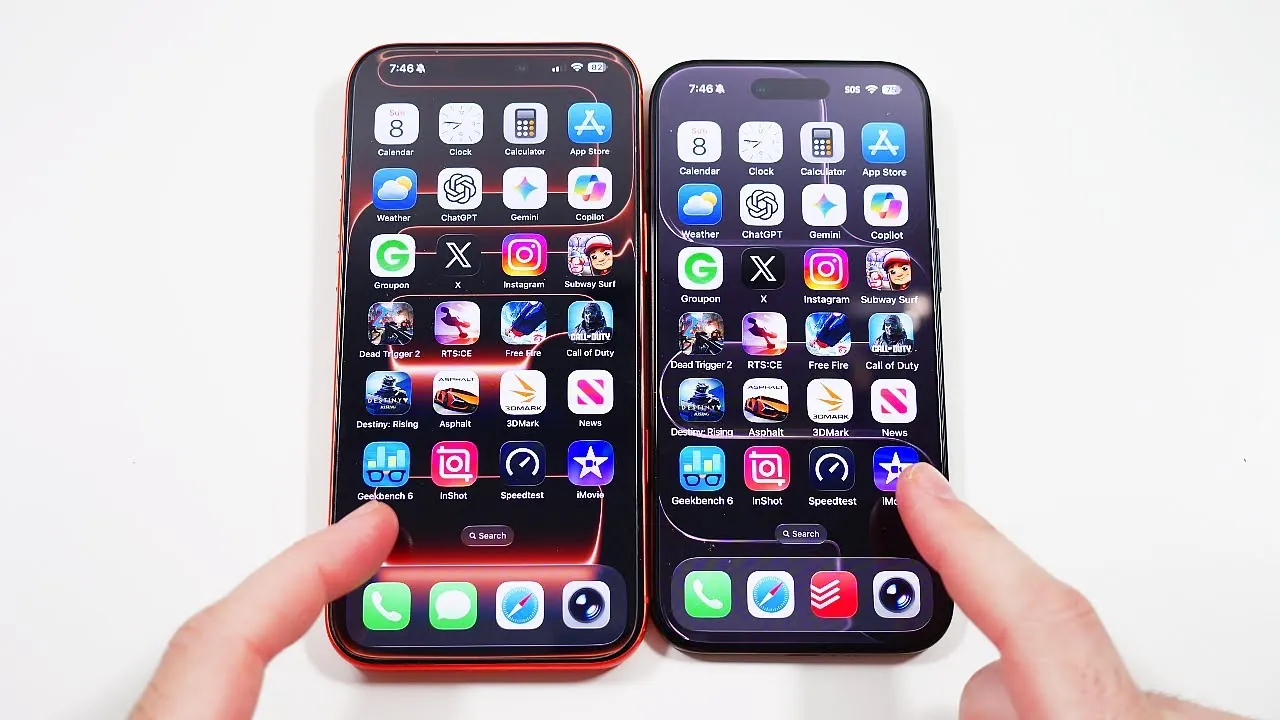
When comparing the iPhone 17 Pro Max and the iPhone Air, you’re looking at two devices that share an innovative foundation but diverge in design, performance under pressure, and overall usability. Both models are powered by the advanced A19 Pro chip and come equipped with 12GB of RAM, making sure smooth multitasking and fast app responsiveness. However, their distinct engineering and design choices cater to different user preferences, making it essential to assess which device aligns with your specific needs. The video below from Nick Ackerman compares the two handsets side by side.

Performance: A19 Pro Chip and Multitasking Power
At the heart of both devices lies the A19 Pro chip, a processor designed for exceptional speed and energy efficiency. Combined with 12GB of RAM, both the iPhone 17 Pro Max and iPhone Air deliver seamless multitasking, quick app launches, and reliable performance in everyday tasks. Benchmark tests reveal that both devices excel in single-core and multi-core operations, offering top-tier results across the board.
However, the iPhone 17 Pro Max distinguishes itself in sustained performance during resource-intensive activities such as gaming, video rendering, or editing. Thanks to its advanced thermal management system, the Pro Max maintains peak performance over extended periods without overheating. This makes it a more suitable choice for users who frequently engage in demanding tasks or require consistent performance under heavy workloads.
Thermal Management: Handling Heat Under Pressure
Thermal management plays a crucial role in determining how well a device performs during prolonged use. The iPhone 17 Pro Max is equipped with an advanced heat dissipation system, which ensures that the device remains cooler even during extended gaming sessions or video editing tasks. This feature allows the Pro Max to sustain its performance without throttling, making it an excellent choice for power users and professionals.
In contrast, the iPhone Air, while capable of handling moderate workloads, tends to heat up near the camera module during prolonged use. This can lead to slight performance throttling, especially during activities that push the device’s limits. For users who prioritize consistent performance in demanding scenarios, the Pro Max offers a clear advantage.
Design and Build: Portability vs. Durability
The design of each device reflects its intended purpose and target audience. The iPhone Air is sleek, lightweight, and highly portable, making it an ideal choice for users who value mobility and convenience. Its slim profile is perfect for those who are constantly on the go, but this compact design comes with trade-offs, including reduced thermal efficiency and a smaller battery capacity.
On the other hand, the iPhone 17 Pro Max adopts a more robust design, featuring a thicker and heavier build. This added bulk allows for improved heat dissipation and a larger battery, making it a more durable and long-lasting option. Additionally, the Pro Max features a multi-camera system with advanced photography capabilities, catering to users who prioritize high-quality photos and videos. In contrast, the iPhone Air’s single-camera setup is designed for simpler photography needs, appealing to users who prefer a straightforward approach to capturing moments.
Battery Life: Longevity Matters
Battery life is a critical factor for many users, and the iPhone 17 Pro Max outshines the iPhone Air in this regard. Its larger battery, combined with efficient thermal management, provides significantly longer usage times. This makes the Pro Max a reliable choice for users who need their device to last through long workdays, travel, or extended entertainment sessions.
While the iPhone Air is energy-efficient, its smaller battery means more frequent recharging during heavy use. For users who prioritize portability over battery longevity, this trade-off may be acceptable. However, for those who need a device that can keep up with demanding schedules, the Pro Max offers a clear advantage.
Everyday Performance: What to Expect
In routine tasks such as browsing the web, managing apps, and using social media, both devices deliver smooth and responsive performance thanks to the A19 Pro chip and 12GB of RAM. However, differences become more apparent in scenarios that require sustained performance.
The iPhone 17 Pro Max excels in activities like gaming, video rendering, and multitasking under heavy workloads. Its superior thermal management ensures that performance remains consistent, even during prolonged use. Meanwhile, the iPhone Air provides a more affordable alternative for users who prioritize portability and are willing to compromise on advanced features such as thermal efficiency and multi-camera functionality.
Choosing the Right Device: What Matters Most to You?
Deciding between the iPhone 17 Pro Max and the iPhone Air ultimately comes down to your individual needs and priorities. Each device offers distinct advantages tailored to different user preferences.
- iPhone Air: Designed for users who value portability, affordability, and simplicity. Its lightweight design and lower price point make it an excellent choice for general use, such as browsing, social media, and light multitasking.
- iPhone 17 Pro Max: Built for power users and professionals who demand sustained performance, advanced thermal management, extended battery life, and superior camera capabilities. It’s the ideal choice for those who frequently engage in resource-intensive tasks or require a device that can handle heavy workloads with ease.
By carefully evaluating your priorities—whether it’s portability, performance, or cost-effectiveness—you can confidently choose the device that best complements your lifestyle and daily routine. Both the iPhone 17 Pro Max and the iPhone Air are exceptional devices, each offering a unique set of features to meet the diverse needs of modern users.
Master A19 Pro chip with the help of our in-depth articles and helpful guides.
Source & Image Credit: Nick Ackerman
Filed Under: Apple, Apple iPhone, Top News
Disclosure: Some of our articles include affiliate links. If you buy something through one of these links, Geeky Gadgets may earn an affiliate commission. Learn about our Disclosure Policy.
Credit: Source link