
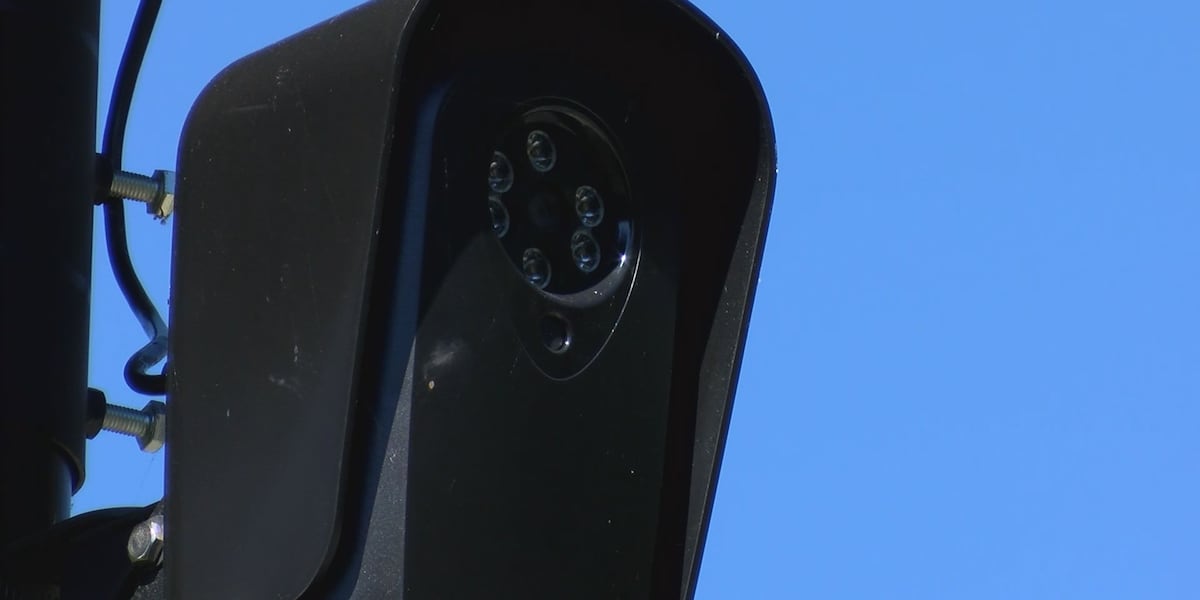
ATLANTA, Ga. (Atlanta News First) — The Atlanta City Council is weighing an ordinance that would establish strict oversight, public reporting rules and privacy protections for surveillance technology used across the city.
The proposed measure shifts how Atlanta city agencies acquire and operate surveillance tools. The new measure would require oversight to be based on a technology’s surveillance power, sensitivity and civil liberties risks rather than its purchase price alone.
According to a draft of the ordinance introduced Monday, all surveillance technologies would be classified into three distinct tiers:
- Level I (Routine or Low-Risk): Systems with minimal privacy or civil liberties risks, which can be approved administratively through standard city information technology and cybersecurity reviews.
- Level II (Material Surveillance): Tools that expand surveillance capabilities or create material privacy and data-governance risks, requiring a detailed Surveillance Impact Report and a binding Surveillance Use Policy reviewed by an oversight panel.
- Level III (High-Impact Surveillance): Technologies capable of tracking, profiling, or biometric identification, such as facial recognition. These require impact reports, use policies, panel review, public notice, a public hearing, and formal approval by the City Council prior to deployment.
To evaluate proposals, the ordinance establishes a seven-member Surveillance Technology Review Panel. The panel would be made up of three City Council committee chairs, one community appointee chosen by the mayor, one community appointee chosen by the council president, an independent technical expert appointed by the ACLU of Georgia, and the chair or executive director of the Atlanta Citizen Review Board.
The measure also sets stricter boundaries on data handling. Tech vendors, contractors, and third parties would be legally prohibited from selling, licensing, monetizing, or sharing city surveillance data for their own independent purposes.
The city would also be barred from entering public-private agreements that grant private entities commercial rights to municipal surveillance data.
For ongoing monitoring, the proposal requires the Atlanta Police Department to conduct mandatory monthly internal audits of its system access and search activity for all Level II and Level III technologies.
APD would report audit findings, systemic concerns, and any confirmed or suspected violations quarterly to the City Council.
High-impact Level III systems would undergo an independent technical audit at least once a year, managed under the direction of the City Auditor.
The proposed ordinance introduced Monday also says that credible allegations or audit findings indicating material misuse of Level II or Level III systems should be referred to the Atlanta Citizen Review Board for investigation.
The city would publish an inventory of covered surveillance systems and require a review before emergency or temporary event cameras could become permanent.
If approved, city departments would have 90 days to provide an inventory of all surveillance systems currently owned or operated to Atlanta Information Management for classification.
Agencies would then have 180 days to draft retroactive impact reports and use policies for all existing Level II and Level III systems.
This ordinance introduction comes shortly after the Atlanta Police Department updated its standard operating procedures, after an internal audit flagged 79 Flock camera searches (less than 1 percent of all searches) for review.
Atlanta Mayor Andre Dickens has previously set a goal of full council approval within 60 days of the ordinance’s introduction.
PREVIOUS COVERAGE
Atlanta mayor proposes surveillance oversight rules after 79 Flock searches flagged
Flock worker calls police on ANF chief investigator filming public camera installation
Are you being tracked? How to find Flock cameras or see if you’ve been searched in metro Atlanta
Georgia woman files class action suit against Flock Safety
Copyright 2026 WANF. All rights reserved.