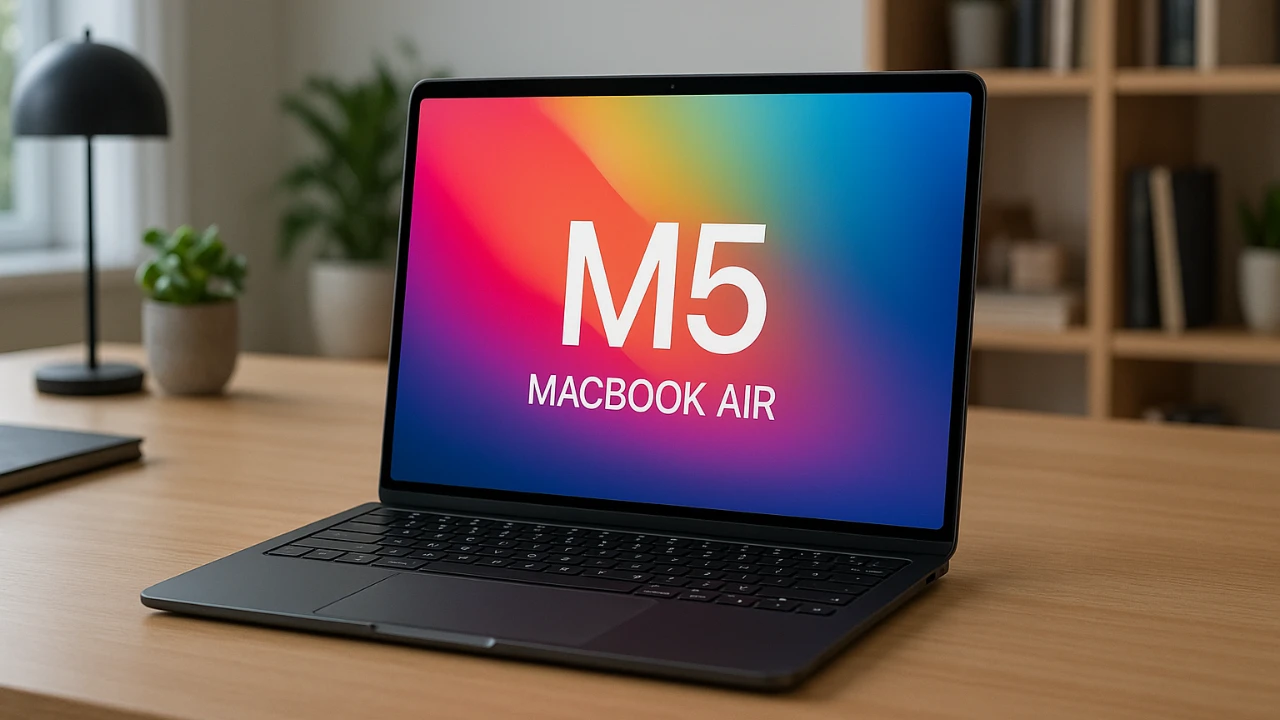
Apple’s upcoming M5 MacBook Air, anticipated for release in early 2026, represents a strategic shift rather than a technological revolution. While it may not introduce new features, its significance lies in Apple’s evolving focus on affordability and accessibility. This release is expected to bring modest upgrades, but its true impact will be felt in the pricing adjustments of earlier models, making high-performance laptops more accessible to budget-conscious buyers. By examining the M5 MacBook Air’s features, technological advancements, and Apple’s broader strategy, it becomes clear why this release is pivotal. The video below from SaranByte gives us more details about the device.

M5 MacBook Air: Familiar Design with Subtle Refinements
The M5 MacBook Air will continue Apple’s tradition of prioritizing refinement over reinvention. This approach ensures a balance between performance improvements and maintaining the familiar design that users have come to appreciate. Key aspects of the M5 MacBook Air include:
- Processor: The M5 chip, built on TSMC’s advanced N3P nodes, will offer slightly enhanced processing power and energy efficiency compared to its predecessor, the M4 chip.
- Design: The chassis will remain consistent with the M2 model, signaling no major redesigns or new hardware features in this iteration.
- Display: OLED technology will not be included, as Apple has delayed its adoption due to high production costs and lukewarm market reception of OLED-equipped iPad Pro models.
Instead of OLED, Apple is focusing on future display technologies, such as Oxide TFT LCD, which is expected to debut in 2027. This technology promises improved brightness, color accuracy, motion clarity, and battery life at a lower cost, aligning with Apple’s strategy of balancing innovation with affordability.
Apple’s Incremental Silicon Strategy
Apple’s silicon development remains a cornerstone of its product evolution, and the M5 chip exemplifies this approach. By using TSMC’s N3P fabrication process, the M5 chip will deliver incremental improvements in performance and energy efficiency. While these advancements may appear modest, they reflect Apple’s commitment to gradual, consistent innovation.
This strategy marks a shift in Apple’s product development philosophy, emphasizing refinement over frequent, sweeping changes. The company’s approach can be summarized as follows:
- Focusing on incremental silicon enhancements to improve performance and efficiency.
- Introducing occasional major updates, such as redesigns or display upgrades, to maintain competitiveness in the market.
By adopting this measured approach, Apple ensures its devices remain accessible to a broad range of users while maintaining the high-quality standards expected of its products.
Future Display Innovations and OLED Delays
Although the M5 MacBook Air will not feature significant display advancements, Apple’s long-term roadmap includes the introduction of Oxide TFT LCD technology in 2027. This next-generation display technology is expected to deliver several benefits:
- Enhanced brightness and color consistency for a superior viewing experience.
- Improved battery life and motion clarity, optimizing performance for everyday use.
- A cost-effective alternative to OLED, making advanced display technology more accessible.
Apple’s decision to delay OLED integration in the MacBook Air lineup until at least 2029 reflects a cautious approach. High production costs and underwhelming sales of OLED-equipped iPad Pro models have prompted the company to reassess its strategy. By focusing on Oxide TFT LCD technology, Apple aims to deliver meaningful display improvements without compromising affordability.
Affordability and Accessibility: A Strategic Advantage
One of the most significant outcomes of the M5 MacBook Air’s release will be the impact on the pricing of earlier models. As the M5 enters the market, models like the M4 and M3 MacBook Air are expected to see price reductions, creating opportunities for budget-conscious buyers to access high-performance laptops at more affordable price points.
For example, the M4 MacBook Air already offers excellent performance, battery life, and design, making it a compelling choice for most users. With anticipated price drops, these models will become even more attractive, broadening their appeal to a wider audience.
Apple’s pricing strategy underscores its commitment to inclusivity. By maintaining older models at reduced prices, the company ensures that its products remain accessible to a diverse customer base without sacrificing quality or performance.
Why the M5 MacBook Air Represents More Than Just a New Product
The M5 MacBook Air may not redefine the laptop market, but its importance lies in its role within Apple’s broader strategy. By focusing on incremental updates, affordability, and accessibility, Apple is positioning itself to meet the needs of a diverse range of users while laying the groundwork for future innovations.
For consumers, the release of the M5 MacBook Air represents more than just a new addition to the MacBook lineup. It signals an opportunity to take advantage of price reductions on earlier models, making high-quality laptops more attainable. In the long term, Apple’s approach to silicon advancements, display technology, and product design will continue to shape the MacBook Air lineup, making sure steady progress toward a future that balances innovation with accessibility.
Here are additional guides from our expansive article library that you may find useful on M5 MacBook Air.
Source & Image Credit: SaranByte
Filed Under: Apple, Laptops, Top News
Latest Geeky Gadgets Deals
Disclosure: Some of our articles include affiliate links. If you buy something through one of these links, Geeky Gadgets may earn an affiliate commission. Learn about our Disclosure Policy.
Credit: Source link