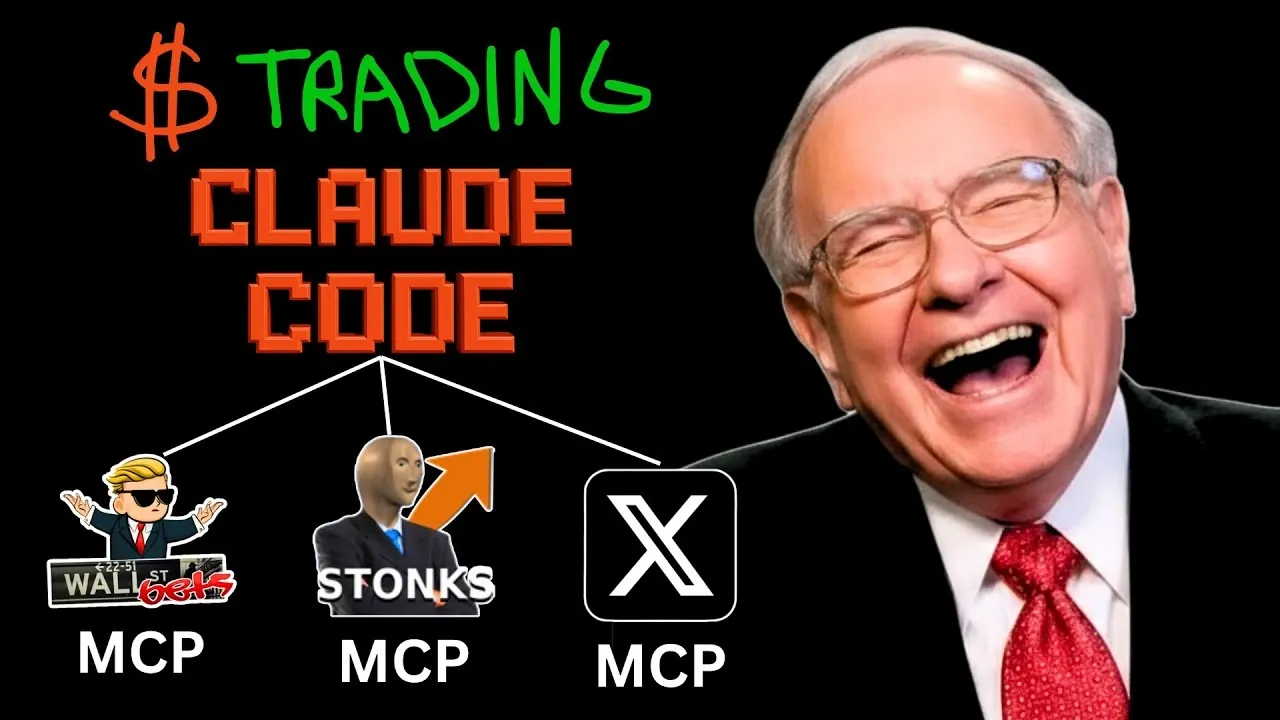
What if you handed over $1,000 to an AI and let it trade stocks for a week? Would it outperform human intuition or crash and burn in the chaos of the market? This isn’t just a thought experiment, it’s a bold test of how far artificial intelligence has come in navigating the unpredictable world of stock trading. Armed with tools like sentiment analysis from Reddit forums and real-time market data, this AI agent is designed to exploit volatility and make calculated moves. But here’s the twist: it’s not targeting the safe, steady giants like Apple or Google. Instead, it’s diving headfirst into high-risk, high-reward territory, where smaller, volatile stocks dominate the game. The stakes? A $1,000 portfolio and the question of whether machine-driven strategies can truly outsmart the market.
In this week-long experiment by All About AI, they uncover the inner workings of this AI trading agent: how it processes massive datasets in real time, its approach to risk management, and the surprising insights it gleans from platforms like WallStreetBets. You’ll discover not just the trades it makes but the challenges it faces, like filtering noise from sentiment data and navigating the double-edged sword of use. Whether you’re a skeptic of AI’s financial prowess or someone intrigued by its potential, this deep dive offers a rare glimpse into the intersection of innovative technology and the volatile world of trading. After all, when a machine plays the market, it’s not just about numbers, it’s about redefining what’s possible.
AI Stock Trading Experiment
TL;DR Key Takeaways :
- The AI trading agent managed a $1,000 portfolio over one week, using sentiment analysis and volatility signals to identify and execute trades in high-risk CFD markets.
- It prioritized smaller, high-volatility stocks like Beyond Meat and SoFi, using tools such as Yahoo Finance, Reddit sentiment data, and platforms like ApeWisdom.io for market insights.
- The AI employed advanced risk management strategies, including stop-loss and take-profit mechanisms, to mitigate losses and maintain disciplined trading practices.
- Challenges included reliance on noisy sentiment data, risks associated with use, and the impact of unpredictable external market factors, highlighting areas for algorithm refinement.
- Future plans involve expanding into cryptocurrency trading with HyperLiquid APIs, enhancing adaptability, and conducting regular performance reviews to improve the AI’s trading capabilities.
How the AI Trading Agent Operates
The AI trading agent is built on a foundation of sophisticated algorithms designed to process vast amounts of data and identify trading opportunities. Its workflow begins with aggregating data from multiple sources, including:
- Yahoo Finance: Real-time market data and stock price movements.
- Reddit sentiment data: Insights from forums like WallStreetBets, where retail traders discuss trending stocks.
- ApeWisdom.io and Swaggy Stocks: Platforms that track trending stocks and provide sentiment analysis.
By analyzing sentiment data, the AI evaluates the mood and opinions expressed in online discussions, focusing on stocks with high interest and potential volatility. The strategy prioritizes smaller, high-volatility stocks over large-cap companies like Google or Apple, which typically exhibit more stable price movements. This approach aligns well with CFD trading, where use amplifies both potential gains and risks.
The Technology Powering the AI
The AI agent relies on a robust technological infrastructure to ensure efficient and timely trade execution. Key components of this system include:
- Cloud Computing: Provides the computational power needed for real-time data processing and seamless execution of workflows.
- MCP Servers: Handle the heavy computational demands of sentiment analysis and stock data retrieval, making sure the AI can process large datasets quickly.
- HyperLiquid APIs (Planned): Future integration for cryptocurrency trading, offering access to liquidity pools and low-latency execution in highly volatile markets.
This infrastructure enables the AI to process data efficiently and make rapid decisions in fast-moving markets, a critical factor for success in trading. The planned integration of cryptocurrency trading tools further highlights the system’s adaptability and potential for expansion.
I Just Gave An AI Agent $1,000 to Trade Stocks

Explore further guides and articles from our vast library that you may find relevant to your interests in AI Agents.
Initial Trades and Risk Management Strategies
During its first week, the AI agent selected two stocks for trading: Beyond Meat and SoFi. These stocks were chosen based on their high volatility, identified through sentiment analysis and market data. To maximize potential returns, the AI employed use, 5x for Beyond Meat and 2.5x for SoFi. While use can amplify gains, it also increases exposure to losses, making effective risk management a top priority.
To mitigate potential losses, the AI implemented stop-loss and take-profit mechanisms. These predefined thresholds automatically closed trades once a certain loss or profit level was reached. This disciplined approach minimized emotional decision-making and ensured consistent execution of trades. By adhering to these strategies, the AI demonstrated a structured approach to managing the inherent risks of used trading.
Challenges and Insights from the Experiment
The experiment highlighted both the strengths and limitations of AI-driven trading. While the AI successfully identified and executed trades, several challenges emerged:
- Dependence on Sentiment Data: Sentiment analysis from platforms like Reddit can be inconsistent and noisy. Not all sentiment correlates with actual market movements, requiring the AI to filter out irrelevant or misleading information.
- Use Risks: The use of use, while increasing potential returns, also magnifies losses. This underscores the importance of precise and disciplined risk management strategies.
- External Market Factors: Unpredictable events such as breaking news or sudden market shifts can significantly influence outcomes, highlighting the role of external variables in short-term trading.
These challenges underscore the need for continuous refinement of the AI’s algorithms and strategies. By addressing these limitations, the AI can improve its performance and adaptability in dynamic market conditions.
Future Developments and Expansion Plans
Looking ahead, the experiment aims to enhance the AI agent’s capabilities and broaden its scope. One key area of focus is cryptocurrency trading, which offers high volatility and operates 24/7. By integrating HyperLiquid APIs, the AI will gain access to advanced trading tools, liquidity pools, and low-latency execution, allowing it to capitalize on opportunities in the crypto market.
Regular performance reviews will be conducted at the end of each trading week. These evaluations will provide valuable insights into the AI’s progress, highlight areas for improvement, and guide future developments. The ultimate goal is to create a robust, adaptable trading system capable of navigating diverse market conditions and delivering consistent results.
This experiment serves as a stepping stone toward understanding the potential of AI-driven trading. By using advanced computational tools, sentiment analysis, and disciplined risk management, the AI demonstrates its ability to operate in dynamic markets. With ongoing improvements and a focus on adaptability, the AI has the potential to evolve into a powerful tool for both stock and cryptocurrency trading. The lessons learned from this initial phase will inform future refinements and open new opportunities in the ever-evolving financial landscape.
Media Credit: All About AI
Filed Under: AI, Guides
Latest Geeky Gadgets Deals
Disclosure: Some of our articles include affiliate links. If you buy something through one of these links, Geeky Gadgets may earn an affiliate commission. Learn about our Disclosure Policy.
Credit: Source link