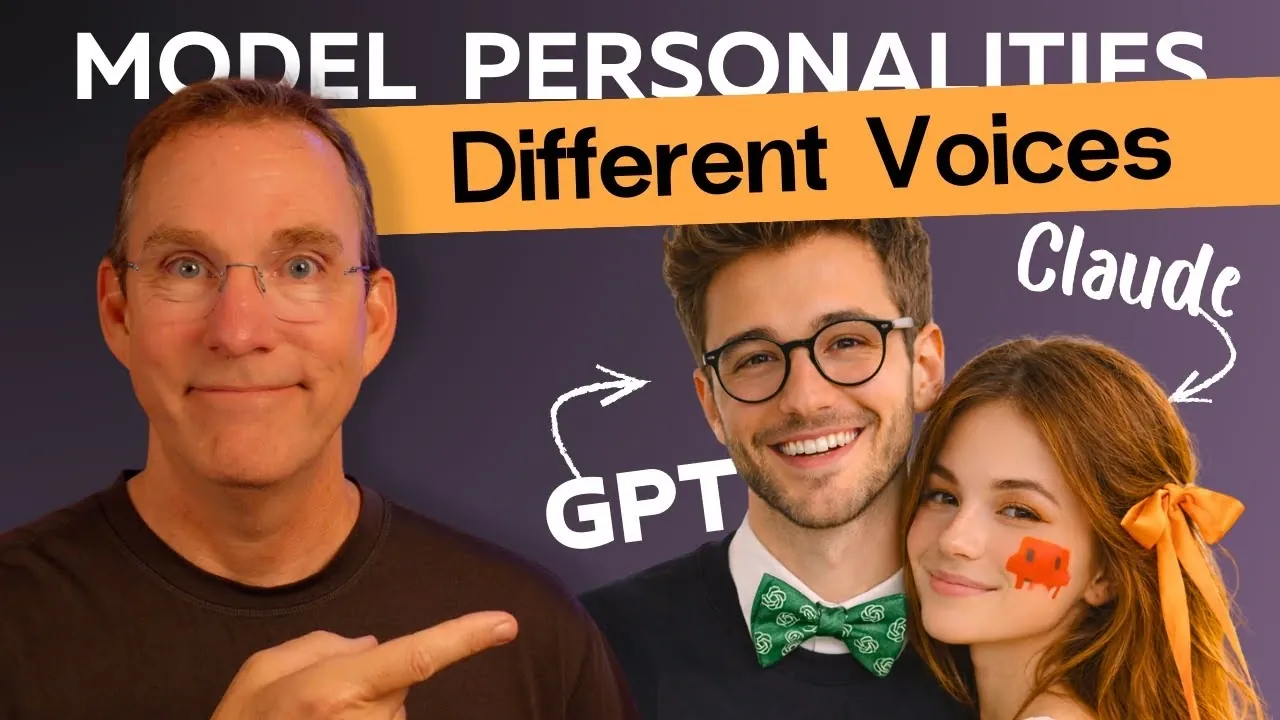
What if a single sentence could completely reshape the quality of an AI’s response? Below, Matt Maher breaks down the intriguing contrasts between ChatGPT vs Claude, two leading AI models with distinct approaches to prompt language. Claude often feels like a natural conversationalist, while ChatGPT excels with more structured input. But here’s the challenge: if you’re not aligning your prompts with their unique strengths, you might be missing out on their full potential. This breakdown highlights why understanding these differences isn’t just useful, it’s fantastic.
By exploring this guide, you’ll learn practical strategies to craft prompts that play to each model’s strengths. Discover why Claude’s conversational ease feels so intuitive and how ChatGPT’s precision can be unlocked with thoughtful phrasing. You’ll also gain insights into refining your approach and comparing outputs effectively. Whether you’re aiming to boost creativity, streamline productivity, or simply achieve better results, this exploration will change how you think about engaging with AI. Sometimes, the smallest adjustments lead to the most impactful breakthroughs.
Optimizing Prompts for AI
TL;DR Key Takeaways :
- AI models like ChatGPT and Claude differ in architecture and training, requiring model-specific prompt tuning to achieve optimal results.
- Effective prompts should include key components such as intent, guardrails, and examples to guide AI responses toward desired outcomes.
- Claude excels at generating conversational and natural responses with minimal tuning, while ChatGPT offers flexibility but often requires more structured prompts.
- Tools like Flow Prompter enable users to compare outputs, refine prompts, and iteratively improve AI-generated responses for better alignment with objectives.
- Prompt engineering and iterative refinement are essential for maximizing AI potential, enhancing applications like recommendation systems and conversational assistants.
Why Model-Specific Prompt Tuning Matters
AI models interpret and respond to prompts based on their unique design, training data, and underlying algorithms. For instance, Claude often excels at producing conversational and natural responses with minimal effort, while ChatGPT may require more precise and structured prompts to achieve comparable fluidity. These differences highlight the importance of tailoring your prompts to the specific model you are using.
To optimize your results, consider the following steps:
- Identify the strengths and limitations of the model to understand its capabilities and constraints.
- Experiment with various prompt structures to determine which formats yield the best responses.
- Use tools to compare outputs and refine your approach based on performance.
By recognizing the nuances of each model, you can craft prompts that align with their capabilities, making sure more accurate, relevant, and contextually appropriate responses.
Essential Components of Effective Prompts
Creating an effective prompt is not merely about asking a question; it involves deliberate planning and attention to specific elements that influence the AI’s response. These components play a critical role in guiding the model toward producing outputs that meet your expectations.
- Intent: Clearly define the purpose or tone of the response. For example, specify whether the output should be formal, conversational, instructional, or analytical.
- Guardrails: Establish boundaries for the response. This may include specifying what the AI should avoid, such as controversial topics, or mandating certain elements to include, like specific keywords or formats.
- Examples: Provide patterns or sample outputs for the AI to emulate. For instance, if you want a summary, include an example of the desired length and style.
Incorporating these elements into your prompts ensures that the AI has clear guidance, resulting in outputs that are more aligned with your goals.
ChatGPT vs Claude Prompt Writing Guide

Dive deeper into AI prompt writing with other articles and guides we have written below.
Flow Prompter: A Tool for Prompt Refinement
Flow Prompter is a specialized application designed to streamline the process of prompt engineering. It allows users to compare outputs from multiple AI models side-by-side, making it easier to identify differences and refine prompts for better results. This tool is particularly valuable for those seeking to maximize the efficiency and accuracy of their AI interactions.
Key features of Flow Prompter include:
- Evaluators: Tools that assess the quality of AI responses based on predefined criteria, offering objective feedback to help you identify areas for improvement.
- Assistants: Features that suggest prompt refinements based on the model’s performance, helping you iteratively improve your approach.
By using Flow Prompter, you can systematically adjust your prompts to achieve high-quality, model-specific results. This iterative refinement process is essential for making sure that the AI’s outputs align with your expectations and objectives.
The Role of Evaluation and Iteration
Refining AI-generated outputs is an ongoing, iterative process. Evaluation tools play a pivotal role in identifying the strengths and weaknesses of a response. For example, an evaluator might highlight that a response is overly verbose, lacks the desired tone, or fails to address the prompt’s intent. Based on this feedback, you can adjust your prompt and test the results again.
This cycle of evaluation and iteration fosters continuous improvement, allowing you to fine-tune the AI’s performance over time. The more you refine your prompts, the closer the AI’s outputs will align with your specific needs and expectations.
Understanding Model-Specific Strengths
Each AI model has unique strengths that influence how it processes and responds to prompts. Claude, for example, is particularly adept at generating conversational and natural responses with minimal tuning, making it an excellent choice for tasks requiring fluid dialogue. ChatGPT, on the other hand, offers greater flexibility and adaptability but often requires more precise and structured prompts to achieve similar results.
Recognizing these differences is crucial for selecting the right model for your specific use case. By tailoring your approach to the model’s strengths, you can enhance the quality and relevance of the AI’s outputs, making sure that they meet your objectives effectively.
Flow Editing: A Collaborative Approach
Flow editing is a dynamic method of working with AI that emphasizes real-time collaboration. Instead of crafting a single, static prompt, you iteratively refine the AI’s output by providing feedback, adjusting parameters, and testing new variations. This approach fosters adaptability and allows you to work alongside the AI to achieve your desired results.
Flow editing is particularly useful for complex tasks where flexibility and precision are essential. By engaging in this collaborative process, you can harness the full potential of the AI, making sure that its outputs are both accurate and contextually appropriate.
Practical Applications: Enhancing Recommendation Systems
One practical application of these techniques is in developing personalized recommendation systems. For instance, you can use AI to generate tailored suggestions for movies, books, or products. By adjusting your prompts to include specific intent (e.g., “suggest family-friendly movies”), guardrails (e.g., “avoid R-rated content”), and examples (e.g., “recommendations similar to Pixar films”), you can create highly engaging and relevant recommendations.
This approach not only improves the quality of the recommendations but also enhances the user experience by making the AI feel more intuitive and responsive. Whether you are building a recommendation engine for entertainment, e-commerce, or education, these strategies can help you deliver more personalized and effective results.
Maximizing AI Potential Through Prompt Engineering
Working with AI models like ChatGPT and Claude requires a nuanced understanding of their differences, strengths, and limitations. By focusing on prompt engineering, using tools like Flow Prompter, and incorporating key components such as intent, guardrails, and examples, you can optimize the quality of AI-generated responses. Whether you are refining a conversational assistant, enhancing a recommendation system, or tackling complex tasks, these strategies will enable you to unlock the full potential of AI technologies and achieve better outcomes.
Media Credit: Matt Maher
Filed Under: AI, Guides
Latest Geeky Gadgets Deals
Disclosure: Some of our articles include affiliate links. If you buy something through one of these links, Geeky Gadgets may earn an affiliate commission. Learn about our Disclosure Policy.
Credit: Source link