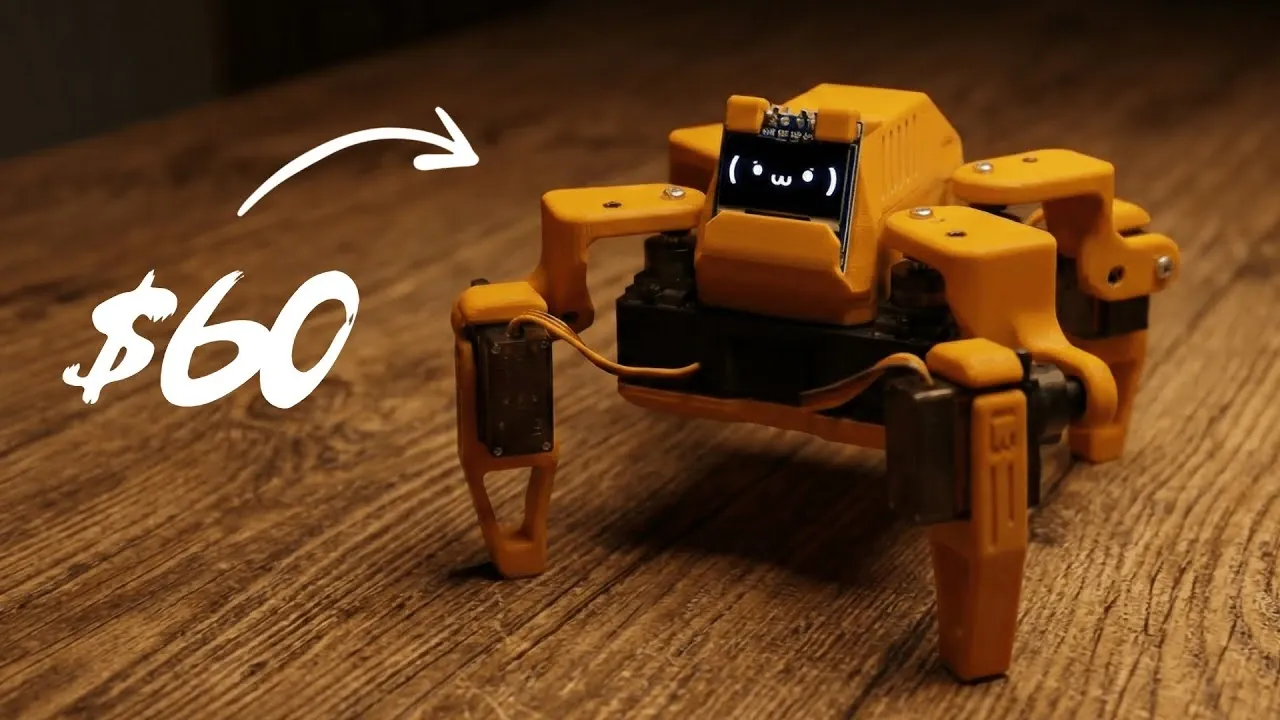
Have you ever dreamed of building your own walking robot but felt overwhelmed by the complexity or cost? Dorian Todd explores how the Sesame Project makes robotics more accessible than ever, offering a step-by-step approach to creating a tiny, four-legged robot from scratch. With just $50–$60 and some basic materials, you can bring this expressive, customizable robot to life. Imagine holding a fully functional machine you built yourself, one that walks, turns, and even displays emotions. It’s not just a project; it’s an invitation to dive into the exciting world of robotics, no matter your skill level. This guide breaks down the process into approachable steps, making it possible for anyone to get started.
In this walkthrough, you’ll discover how Sesame’s open source design and modular components make it a playground for creativity. From 3D printing the parts to programming its movements, every aspect of the robot is designed to be both engaging and educational. Whether you’re a curious beginner or a seasoned maker, you’ll find opportunities to experiment, customize, and innovate. What could you create with a platform this versatile? By the end, you’ll not only have a walking robot but also a deeper understanding of how robotics can be both fun and empowering.
Affordable Open source Robotics
TL;DR Key Takeaways :
- Sesame is an affordable, customizable, and accessible open source robotics platform, allowing users to build a four-legged walking robot for just $50–$60.
- The robot features a modular design powered by eight servo motors, optimized for 3D printing, and supports customization for various skill levels and applications.
- It is controlled via a Wi-Fi-based interface or Python-based Sesame Studio software, with an OLED display for visual feedback and expressions.
- Sesame is powered by a 3S lithium polymer battery and managed by an ESP32 S2 Mini microcontroller, with optional custom PCB integration for advanced functionality.
- As an open source project, all CAD files, firmware, and documentation are freely available on GitHub, fostering collaboration, creativity, and continuous innovation.
What Makes Sesame Unique?
Sesame stands out due to its focus on three primary goals:
- Keeping costs low to make robotics more accessible to everyone.
- Making sure dynamic and expressive functionality for a wide range of applications.
- Providing comprehensive documentation to simplify the building process.
Its modular design allows you to customize both appearance and functionality, making it suitable for users with varying levels of expertise. Whether you’re a beginner or an experienced maker, Sesame offers a practical and enjoyable way to engage with robotics.
How Sesame Works: Design and Features
At its core, Sesame is a compact, four-legged robot powered by eight servo motors. These motors enable a variety of movements, including walking, turning, and performing expressive gestures. The design is optimized for 3D printing, making sure that the assembly process is both cost-effective and straightforward.
Key features of Sesame include:
- Modular components that allow for easy customization and experimentation.
- A lightweight yet durable structure that balances flexibility and strength.
- Support for alternative configurations to meet specific project requirements.
This flexibility makes Sesame an ideal platform for learning, prototyping, or simply experimenting with robotics. Its design encourages creativity, allowing you to adapt the robot to your unique needs and ideas.
Build a Tiny Walking Robot From Scratch

Explore further guides and articles from our vast library that you may find relevant to your interests in humanoid robots.
Power and Electronics
Sesame is powered by a 3S lithium polymer battery, which provides sufficient energy for extended operation. The robot’s electronics are managed by an ESP32 S2 Mini microcontroller, which handles motor control and connectivity. For advanced users, a custom PCB can be integrated to enhance motor control and expand functionality.
An OLED display is also included in the design, offering visual feedback and customizable expressions. This feature adds a layer of personality to the robot, making it more engaging and interactive. Whether you’re programming it to display emotions or providing status updates, the OLED display enhances the overall user experience.
Control and Firmware
Controlling Sesame is designed to be intuitive and user-friendly. A Wi-Fi-based interface allows you to send commands and create animations through a simple HTML/CSS control panel. For those seeking more precise control, the Sesame Studio software, developed in Python, enables you to design motor animations with ease.
The servo motors are controlled using PWM signals, and the firmware is optimized to prevent power-related issues. This ensures smooth and reliable operation, even during complex movements. Whether you’re experimenting with basic commands or designing intricate animations, Sesame’s control system is both robust and accessible.
Open source Accessibility
One of Sesame’s most significant advantages is its open source nature. All CAD files, firmware, and documentation are freely available on GitHub, empowering users to:
- Modify and improve the design to suit their specific needs.
- Collaborate with others to enhance the project and share ideas.
- Experiment with new concepts and contribute innovations to the community.
This open source approach fosters a sense of collaboration and creativity, making Sesame a valuable tool for both beginners and experienced developers. By sharing resources and ideas, the project encourages continuous improvement and innovation.
How Sesame Came to Life
The inspiration for Sesame originated from a similar robot, but limitations in accessibility and affordability prompted a complete redesign. Over the course of four months, the design underwent iterative prototyping to achieve the project’s goals of affordability, functionality, and simplicity.
The result is a robot that strikes a balance between these elements, making it suitable for a wide range of users. Whether you’re a student exploring robotics for the first time or a developer looking for a flexible platform, Sesame offers a compelling solution.
What’s Next for Sesame?
While Sesame is already a robust and versatile platform, there are plans to further enhance its capabilities. Future improvements include:
- Exploring alternative power sources to improve efficiency and runtime.
- Expanding the modularity of the design to allow for greater customization.
- Incorporating parametric design principles to simplify modifications and upgrades.
These planned enhancements aim to make Sesame even more versatile and appealing to a broader audience. By continuously evolving the design, the project ensures that it remains relevant and valuable to users at all skill levels.
Why Sesame Matters
Sesame is more than just a walking robot, it’s a gateway to the world of robotics. Its open source files, modular design, and detailed documentation empower users to build, modify, and experiment with ease.
For beginners, Sesame offers an accessible way to learn the fundamentals of robotics, from assembly to programming. For experienced developers, it provides a flexible platform for prototyping and innovation. By lowering the barriers to entry, Sesame makes robotics more inclusive and encourages creativity, collaboration, and exploration.
Media Credit: Dorian Todd
Filed Under: DIY Projects, Guides
Disclosure: Some of our articles include affiliate links. If you buy something through one of these links, Geeky Gadgets may earn an affiliate commission. Learn about our Disclosure Policy.
Credit: Source link