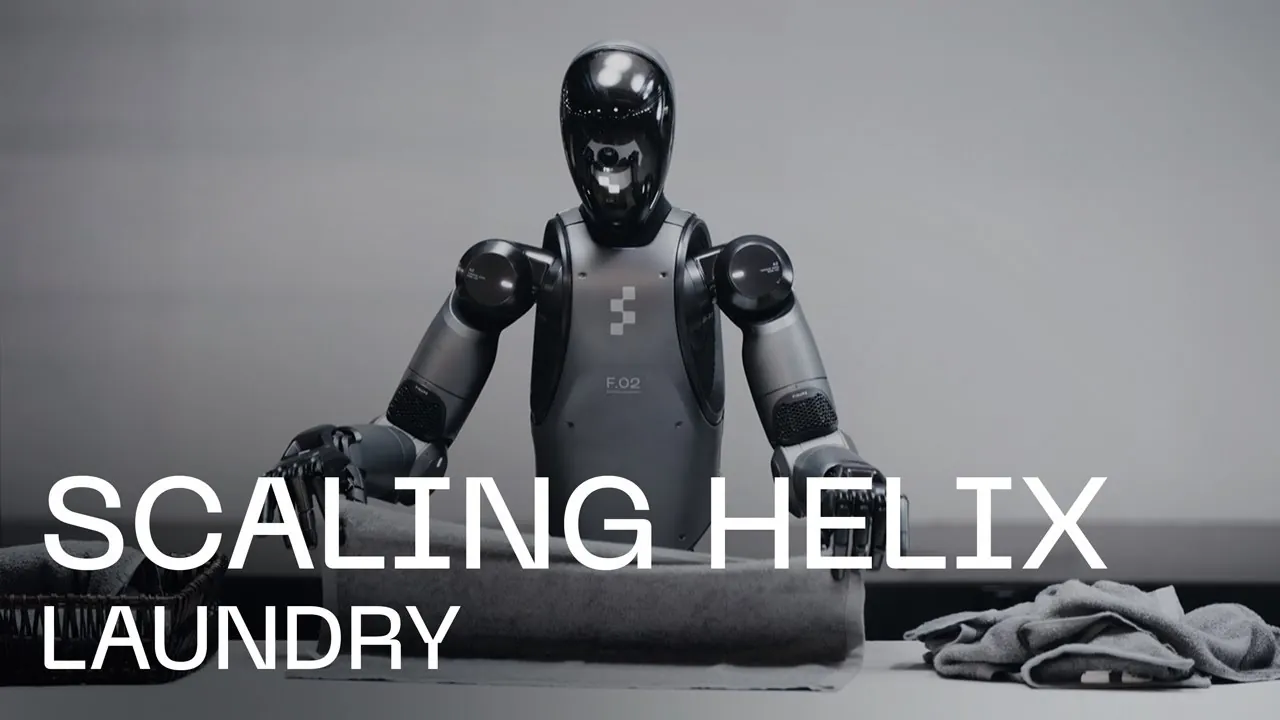
What if a robot could not only see and understand the world around it but also respond to your commands with the precision and adaptability of a human? Imagine instructing a humanoid robot to “set the table for dinner,” and watching as it seamlessly collaborates with another robot to arrange plates, glasses, and cutlery, without a single pre-programmed step. This is no longer the realm of science fiction. With the advent of Helix, a new Vision-Language-Action (VLA) model, humanoid robots are stepping into a new era of intelligence and utility. By unifying vision, natural language understanding, and real-time action, Helix redefines what robots can achieve in unstructured, real-world environments, from assisting in daily household tasks to performing intricate, collaborative actions.
Figure the creators of Helix explores how the Vision-Language-Action model combines innovative neural network architecture with practical design principles to create robots that are not only highly capable but also adaptable and energy-efficient. You’ll discover how its zero-shot generalization enables robots to handle unfamiliar objects and tasks, and how its decoupled system architecture balances high-level planning with precise motor control. Whether it’s threading a needle, organizing a cluttered kitchen, or working in tandem with other robots, Helix’s capabilities signal a fantastic leap in humanoid robotics. As we delve into its features, consider this: could Helix be the key to making robots indispensable partners in our daily lives?
Helix: Transforming Humanoid Robotics
TL;DR Key Takeaways :
- Helix integrates vision, language understanding, and action into a unified Vision-Language-Action (VLA) model, allowing robots to perform complex tasks, adapt to new scenarios, and collaborate effectively in real-world environments.
- It achieves precise upper-body control, allowing robots to handle delicate objects, maintain balance, and execute fine motor tasks, making it suitable for tasks requiring both strength and dexterity.
- Helix supports seamless multi-robot collaboration, allowing robots to autonomously divide tasks and work together efficiently without task-specific training, enhancing teamwork in dynamic settings.
- The system excels in zero-shot generalization, allowing robots to interact with unseen objects and perform tasks they were not explicitly trained for, making sure adaptability in unpredictable environments.
- Helix employs a unified neural network and decoupled architecture for efficient real-time control, energy efficiency, and scalability, making it a practical and sustainable solution for household and commercial robotics.
Precision in Upper-Body Control
Helix is the first VLA model capable of achieving continuous, high-frequency control of a humanoid robot’s entire upper body. This includes the precise coordination of wrists, fingers, torso, and head, allowing robots to perform tasks that require both strength and finesse. The system’s advanced dexterity allows robots to handle a wide range of activities, such as:
- Grasping fragile objects without causing damage.
- Maintaining balance through dynamic posture adjustments.
- Executing fine motor tasks, such as threading a needle or assembling intricate components.
This level of control is critical for handling irregularly shaped or delicate items, making Helix an essential tool for tasks that demand both precision and adaptability. Its ability to combine strength with subtlety ensures that robots can operate effectively in environments where human-like dexterity is required.
Collaborative Multi-Robot Functionality
One of Helix’s most notable features is its ability to enable seamless collaboration between multiple robots. By using identical model weights, two or more robots can work together on shared tasks without requiring task-specific training. For example, you could instruct two robots to “prepare a meal together,” and they would autonomously divide the workload, demonstrating synchronized actions and efficient task execution. This capability unlocks a range of collaborative applications, including:
- Assembling furniture as a coordinated team.
- Setting a table collaboratively for a meal.
- Performing household chores in tandem, such as cleaning or organizing.
By using natural language prompts, Helix eliminates the need for extensive pre-programming, making multi-robot collaboration more accessible and practical. This feature is particularly valuable in scenarios where teamwork and adaptability are essential.
Helix: Vision-Language-Action Model in Action

Below are more guides on humanoid robots from our extensive range of articles.
Adaptability to New Objects and Tasks
Helix excels in zero-shot generalization, allowing robots to interact with thousands of unseen objects and perform tasks they were not explicitly trained for. Its Vision-Language Model (VLM) interprets natural language commands and applies them to unfamiliar scenarios. For instance, commands like “Pick up the glass vase” or “Organize the books by size” are executed seamlessly, even when the robot encounters new items. This adaptability is especially beneficial in household settings, where robots must navigate:
- Delicate ceramics and glassware.
- Irregularly shaped tools or objects.
- Unpredictable layouts and dynamic environments.
This capability ensures that Helix-equipped robots can function effectively in diverse and ever-changing conditions, making them versatile and reliable assistants in daily life.
Unified Neural Network for Efficiency
At the core of Helix is a unified neural network that eliminates the need for task-specific fine-tuning. Unlike traditional systems that rely on separate modules for different tasks, Helix employs a single set of neural network weights. This architecture integrates:
- Vision-Language Model (VLM): Responsible for high-level planning and decision-making.
- Visuomotor Policy: Converts plans into real-time, continuous actions.
This streamlined design reduces computational overhead while maintaining robust performance. By simplifying the system architecture, Helix ensures that robots can execute complex tasks efficiently, making it a practical solution for real-world applications.
Energy Efficiency and Scalability
Helix is designed with scalability and energy efficiency as core principles. Operating on low-power embedded GPUs, it achieves impressive performance despite being trained on just 500 hours of data. Key advantages of this design include:
- Low energy consumption, allowing continuous operation in real-world settings.
- Cost-effective design, enhancing commercial viability for household robotics.
- Scalability for widespread deployment across various environments.
This efficiency ensures that Helix-equipped robots are both practical and sustainable, paving the way for their integration into everyday life. By balancing performance with resource efficiency, Helix sets a new standard for intelligent robotics.
Decoupled System Architecture
Helix employs a decoupled system design, optimizing performance by separating high-level planning from real-time control. Its architecture consists of two main components:
- System 2 (S2): A Vision-Language Model (VLM) operating at 7-9 Hz, responsible for scene understanding and decision-making.
- System 1 (S1): A visuomotor policy running at 200 Hz, making sure precise, real-time control of movements.
This separation allows each system to function at its ideal timescale. For example, while S2 interprets a command like “Organize the kitchen,” S1 handles the precise execution, such as stacking plates or opening drawers. This balanced approach ensures that Helix can combine speed with adaptability, making it highly effective in complex, real-world scenarios.
Emergent Capabilities and Real-World Applications
Helix demonstrates emergent capabilities that extend beyond its training data. It can interpret abstract commands like “Pick up the dessert item,” combining semantic understanding with precise motor control. This ability to act on high-level instructions makes Helix particularly suited for unstructured environments, such as homes filled with diverse objects and unpredictable layouts. Potential applications include:
- Assisting the elderly or individuals with disabilities in daily tasks.
- Automating household chores, such as cleaning, organizing, and cooking.
- Supporting collaborative tasks in shared spaces, such as offices or workshops.
By unifying vision, language, and action, Helix establishes a new benchmark for intelligent robotics. Its innovative design and real-world applicability highlight the potential for humanoid robots to become indispensable tools in daily life. Helix paves the way for a future where robots are intuitive, adaptable, and seamlessly integrated into our homes, offering practical solutions to everyday challenges.
Media Credit: Figure
Filed Under: AI, Top News
Latest Geeky Gadgets Deals
Disclosure: Some of our articles include affiliate links. If you buy something through one of these links, Geeky Gadgets may earn an affiliate commission. Learn about our Disclosure Policy.
Credit: Source link