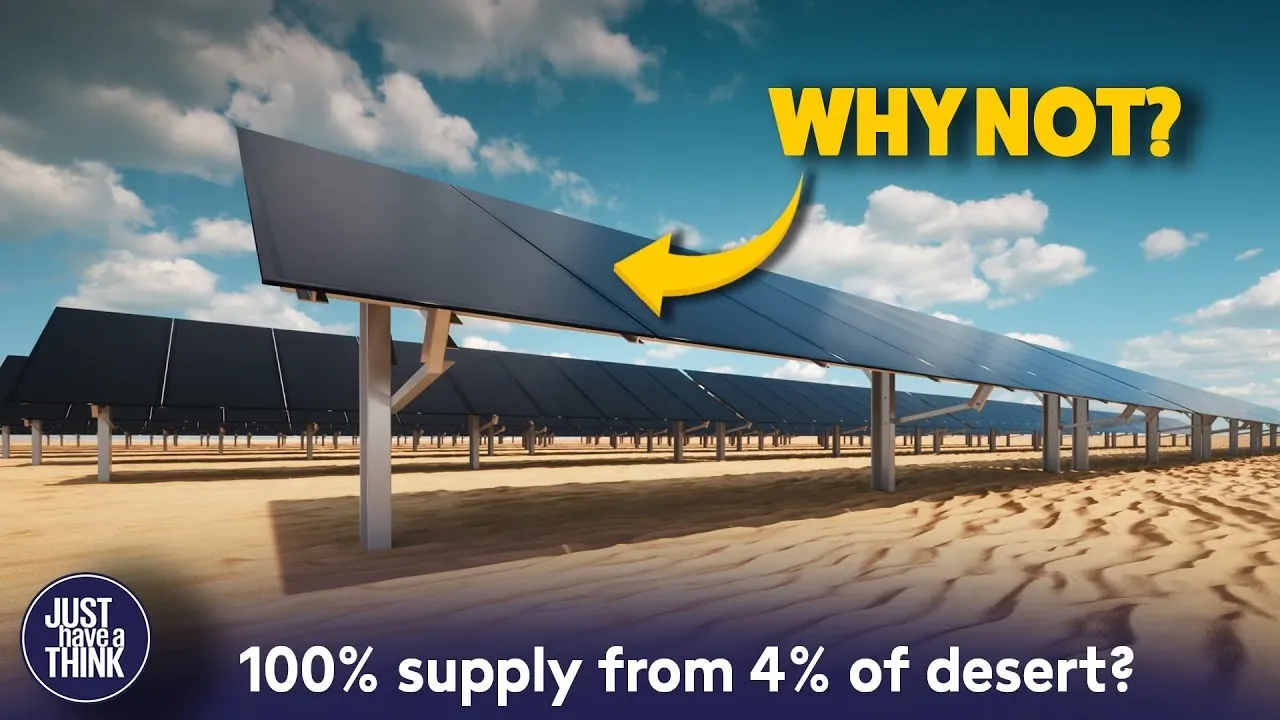
Why aren’t the world’s deserts blanketed with solar panels, transforming barren landscapes into hubs of renewable energy? Below, Just Have a Think takes you through how deserts, seemingly perfect candidates for solar farms with their endless sunlight and open spaces, present a surprising mix of opportunities and challenges. While the idea of converting these vast, sun-drenched regions into powerhouses of clean energy might sound like a no-brainer, the reality is far more complex. From disrupting fragile ecosystems to altering local climates, the environmental trade-offs of large-scale solar installations in deserts are significant and often overlooked. This overview explores the delicate balance between harnessing solar energy and preserving the unique biodiversity of these harsh yet vibrant landscapes.
As you read on, you’ll discover why deserts, despite their potential, are not the straightforward solution they might seem. What happens when solar panels change the temperature of the soil beneath them? Could they actually help regreen degraded areas, or do they risk accelerating desertification? And what innovative designs, like agrivoltaics, are emerging to address these challenges? By unpacking the ecological and logistical hurdles, this guide sheds light on the intricate dance between renewable energy ambitions and environmental stewardship, leaving you to consider: can we truly have both?
Why Deserts Seem Ideal for Solar Farms
TL;DR Key Takeaways :
- Deserts are considered ideal for large-scale solar farms due to their abundant sunlight, minimal cloud cover, and vast unused land, but they also host fragile ecosystems that could be disrupted by such projects.
- Solar farms can impact soil health, microclimates, and biodiversity, potentially altering desert ecosystems through changes in soil moisture, temperature, and vegetation patterns.
- While solar farms pose risks like ecosystem disruption and harmful microclimates, they can also offer benefits such as reducing soil erosion, promoting vegetation growth, and improving soil health when designed sustainably.
- Innovative solutions like agrivoltaics (combining solar panels with agriculture) and adaptive designs (elevated panels or strategic placement) can help balance energy production with environmental preservation.
- Future sustainability of desert solar farms depends on scientific monitoring, ecological planning, and collaborative policies to minimize ecological harm while maximizing renewable energy potential.
The global demand for renewable energy is driving an unprecedented expansion of solar power. By 2050, solar capacity is expected to reach 80 terawatts, requiring approximately 800,000 square kilometers of land, an area larger than many countries. Large-scale solar farms are central to achieving this growth due to their efficiency and cost-effectiveness. Deserts, with their high solar irradiance, minimal cloud cover, and sparse human populations, seem like the perfect candidates for such installations.
However, the sheer scale of land required for these projects introduces significant challenges. Deserts are not barren wastelands; they are home to unique ecosystems that are finely tuned to their harsh environments. Large solar farms can disrupt these ecosystems, altering soil conditions, vegetation, and wildlife habitats. Understanding these potential consequences is critical to balancing the benefits of renewable energy with the need to preserve ecological integrity.
Environmental Impacts of Solar Farms
The installation of solar farms in deserts can lead to profound environmental changes, both positive and negative. Key impacts include:
- Soil Health and Microclimates: Solar panels can alter soil moisture levels, temperature, and nutrient distribution, creating new microclimates. While some areas may benefit from these changes, others could experience disruptions that harm native plant and animal species.
- Wind and Albedo Effects: Large solar installations can modify natural wind patterns and change the Earth’s surface reflectivity (albedo). These changes can lead to localized warming or cooling, potentially affecting weather patterns and desert ecosystems.
- Biodiversity Disruption: The shading created by solar panels can hinder the growth of native plants and disrupt soil microbial communities. These changes can ripple through the ecosystem, affecting insects, animals, and other organisms that depend on the desert’s unique conditions.
These environmental impacts highlight the complexity of integrating solar farms into deserts and underscore the need for careful planning and management.
Why Desert Solar Panels Aren’t Everywhere

Take a look at other insightful guides from our broad collection that might capture your interest in solar power and energy technology.
Potential Environmental Benefits
Despite the challenges, solar farms can also provide environmental benefits when designed with sustainability in mind. Some of the potential advantages include:
- Regreening Deserts: Solar panels can reduce soil erosion by shielding the ground from wind and retaining moisture. This can promote the growth of vegetation in degraded areas, potentially aiding in desert restoration.
- Improved Soil Health: In certain cases, the shaded conditions beneath solar panels have been linked to healthier soils, with increased microbial activity and biodiversity.
These benefits suggest that solar farms, if carefully planned and managed, could serve as tools for ecological restoration in some desert regions.
Challenges and Risks
The risks associated with large-scale solar installations in deserts are significant and must be addressed to ensure their sustainability. Key concerns include:
- Disruption of Native Ecosystems: The construction and operation of solar farms can disturb native plant species, soil microbial communities, and wildlife, leading to ecological imbalances.
- Harmful Microclimates: Changes in soil composition, temperature, and albedo can create localized conditions that exacerbate desertification rather than mitigate it.
These risks emphasize the importance of selecting appropriate sites and employing designs that minimize ecological harm while maximizing energy production.
The Role of Soil Carbon Storage
One often-overlooked factor in the development of solar farms is their impact on soil carbon storage. Soil plays a critical role in the global carbon cycle, with mineral-associated organic matter (MAOM) serving as a long-term reservoir for carbon. Solar panels can influence soil carbon dynamics in different ways, depending on the local environment. For example, in arid regions, shading from panels may help retain moisture and promote carbon storage, while in other areas, changes in soil temperature and composition could have the opposite effect. Understanding these interactions is essential to maximizing the climate benefits of solar energy while minimizing unintended consequences.
Innovative Solutions: Agrivoltaics and Adaptive Design
Emerging technologies and innovative approaches offer promising solutions to balance energy production with environmental sustainability. Two notable strategies include:
- Agrivoltaics: This approach combines solar energy production with agriculture by installing semi-transparent or elevated solar panels over crops. By optimizing light, temperature, and moisture conditions, agrivoltaics can enhance both energy generation and agricultural productivity, creating a dual-use system that benefits farmers and energy producers alike.
- Adaptive Design: Solar farms can be tailored to local conditions to minimize environmental impacts. For example, elevated panels can allow for vegetation growth underneath, while strategic placement of panels can preserve critical habitats and migration corridors for wildlife.
These innovations demonstrate the potential for synergy between renewable energy development and sustainable land use, offering a path forward that benefits both people and the planet.
Future Considerations
As the world continues to embrace solar energy, a thoughtful and adaptive approach will be essential to ensure its long-term sustainability. Key strategies for achieving this balance include:
- Scientific Monitoring: Ongoing research is crucial to understanding the long-term ecological impacts of solar farms and identifying best practices for their design and operation.
- Ecological Planning: Careful site selection and design can help minimize disruptions to local ecosystems while maximizing energy production.
- Policy and Collaboration: Governments, researchers, and industry leaders must work together to establish guidelines and regulations that prioritize both energy efficiency and environmental health.
Deserts hold immense potential for solar power, but harnessing this resource responsibly requires a nuanced and collaborative approach. By balancing the need for renewable energy with the imperative to protect fragile ecosystems, it is possible to unlock the full potential of solar energy while safeguarding the planet’s most vulnerable landscapes.
Media Credit: Just Have a Think
Filed Under: Design News, Technology News, Top News
Latest Geeky Gadgets Deals
Disclosure: Some of our articles include affiliate links. If you buy something through one of these links, Geeky Gadgets may earn an affiliate commission. Learn about our Disclosure Policy.
Credit: Source link