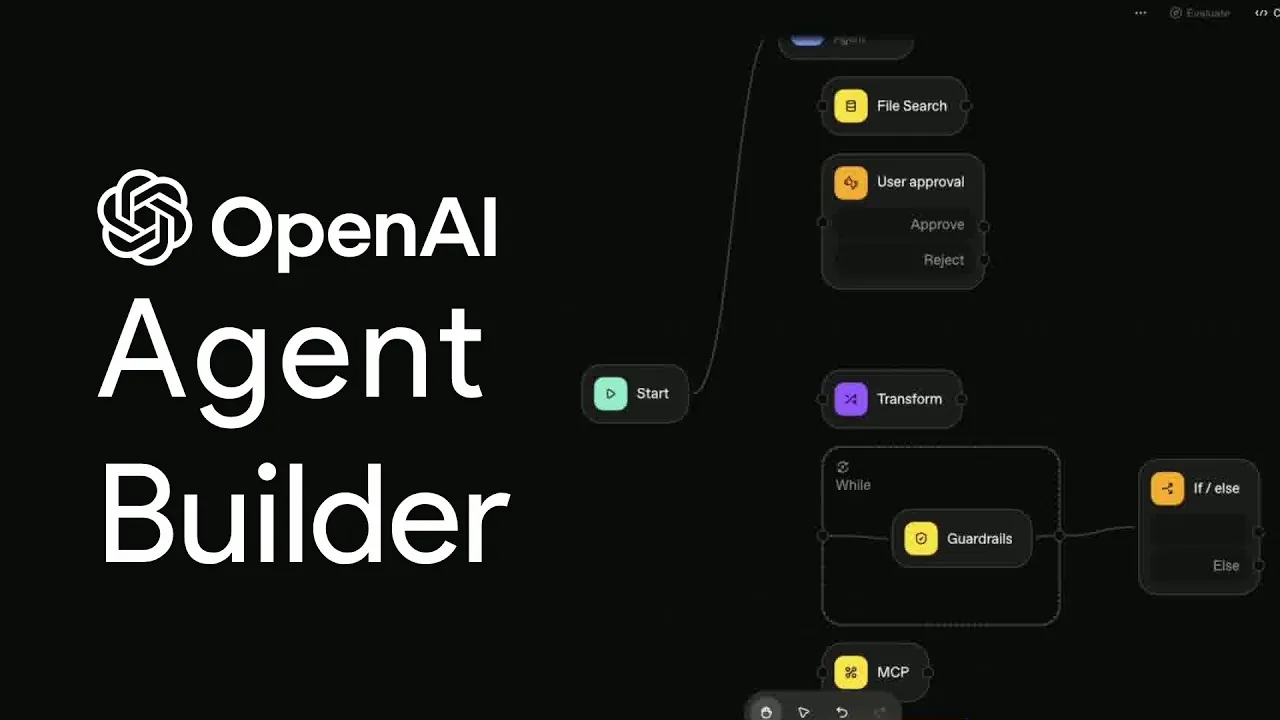
What if creating a sophisticated AI agent was as simple as arranging building blocks on a digital canvas? With OpenAI’s Agent Builder, this vision is no longer a distant dream but a tangible reality. Gone are the days when designing an AI solution required deep coding expertise or weeks of development time. Instead, this innovative tool enables users, from seasoned developers to curious newcomers, to craft intelligent agents using an intuitive drag-and-drop interface. Whether you’re building a customer service bot, a specialized knowledge assistant, or even a themed travel guide, the Agent Builder promises to transform the way we approach AI development by making it more accessible, efficient, and customizable than ever before.
In this feature, Sam Witteveen explains how OpenAI’s Agent Builder is reshaping the AI development landscape. You’ll discover its powerful customization capabilities, seamless integration options, and built-in safeguards that ensure both functionality and reliability. From using pre-built templates to creating agents tailored to niche applications, the platform offers tools that cater to a wide range of needs and expertise levels. But the story doesn’t end with its features, its limitations and reliance on OpenAI’s ecosystem raise important questions about flexibility and independence. Could this be the future of AI development, or does it come with trade-offs worth considering? Let’s unpack the possibilities and challenges of this new tool.
OpenAI Agent Builder Overview
TL;DR Key Takeaways :
- OpenAI’s Agent Builder simplifies AI development with an intuitive drag-and-drop interface, allowing users of varying expertise to design workflows, integrate tools, and implement safeguards efficiently.
- Advanced features like classification agents, external tool integration, and built-in safety guardrails enhance the functionality, precision, and security of AI agents.
- The platform supports extensive customization, including the use of custom data, JSON schemas, and system prompts, making it ideal for creating domain-specific and branded AI agents.
- Deployment is streamlined through the Agent SDK, allowing seamless integration into existing systems and the flexibility to refine workflows over time.
- While highly capable, the platform’s reliance on OpenAI’s proprietary ecosystem and lack of open source flexibility may limit its suitability for some projects requiring greater independence or customization.
Streamlined Workflow Design
At the heart of the Agent Builder is its user-friendly drag-and-drop interface, which enables you to design workflows efficiently. This interface eliminates the need for extensive coding expertise, making it accessible to a broader audience. Pre-built templates serve as a convenient starting point, allowing you to quickly set up workflows for common use cases. Additionally, the platform incorporates conditional logic nodes, such as if-else statements, allowing dynamic decision-making within workflows.
By reducing the technical barriers to entry, the Agent Builder ensures that users with varying levels of expertise can create functional and effective AI agents. This streamlined approach not only saves time but also fosters creativity by allowing you to focus on the design and functionality of your agents rather than the underlying technical complexities.
Advanced Features for Enhanced Functionality
OpenAI’s Agent Builder is equipped with a suite of advanced features designed to enhance the capabilities and reliability of your AI agents. These features include:
- Classification Agents: These agents efficiently route user queries to the appropriate workflows, making sure accurate and contextually relevant responses.
- Tool Integration: The platform supports integration with tools such as file search, vector stores, and external APIs, allowing seamless interaction with external systems and data sources.
- Safety Guardrails: Built-in safeguards, including moderation tools, jailbreak prevention, and hallucination control, ensure that agents operate within predefined boundaries, minimizing the risk of unintended or harmful behavior.
These features collectively enhance the adaptability, precision, and security of the agents you create. Whether you’re building a customer service assistant or a domain-specific knowledge base, these tools provide the flexibility needed to meet your objectives.
Building AI Agents with OpenAI’s Drag-and-Drop Tool
Below are more guides on AI assistants from our extensive range of articles.
Customization and Data Handling
One of the standout features of the Agent Builder is its extensive customization capabilities. You can tailor agents to specific needs by uploading custom data, such as markdown files, to create a vector-based search system. This functionality is particularly beneficial for building domain-specific agents that incorporate proprietary knowledge into their responses.
The platform also excels in handling structured data. By supporting JSON schemas, it ensures consistent, machine-readable outputs that align with your requirements. Additionally, system prompts allow you to define the tone, style, and behavior of your agent, making sure it aligns with your brand or project objectives. This level of customization makes the Agent Builder a powerful tool for creating agents that are both functional and contextually appropriate.
Illustrative Use Case: A Westworld-Themed Travel Agent
To highlight the platform’s potential, consider the example of a Westworld-themed travel agent. This agent could classify user queries into categories such as Westworld-related, general travel inquiries, or unrelated topics. By using a custom vector store, the agent could provide detailed and immersive information about the fictional park while politely redirecting unrelated requests.
This example demonstrates the flexibility of the Agent Builder in addressing niche applications. Whether you’re creating a themed assistant or a specialized knowledge base, the platform’s capabilities allow you to design agents that cater to unique and specific user needs.
Deployment and Integration
Once your agent is fully developed, OpenAI’s Agent SDK simplifies the deployment process. You can publish your agent and integrate it into existing systems seamlessly, making sure a smooth transition from development to implementation. The platform also allows you to export workflows, providing the flexibility to refine and adapt your agent as your requirements evolve over time.
This ease of deployment and integration makes the Agent Builder a practical choice for businesses and developers looking to incorporate AI solutions into their operations. Whether you’re deploying an agent for internal use or integrating it into a customer-facing application, the platform’s tools and features ensure a streamlined process.
Limitations and Considerations
While the Agent Builder offers numerous advantages, it is important to consider its limitations to ensure it aligns with your specific needs. Key considerations include:
- Dependency on OpenAI’s Ecosystem: Many features, such as file search and safety guardrails, rely on OpenAI’s proprietary framework. This dependency may limit the platform’s applicability in scenarios requiring greater independence or compatibility with other ecosystems.
- Lack of Open source Flexibility: Developers seeking extensive customization or independence may find open source alternatives more suitable for their projects.
Understanding these limitations is essential for making informed decisions about the platform’s suitability for your use case. While the Agent Builder excels in many areas, its reliance on proprietary frameworks may not align with every project’s requirements.
Future Potential
The OpenAI Agent Builder holds significant promise as a leading tool for AI agent development. Its intuitive design and powerful features make it a strong contender in the rapidly evolving field of AI. However, its reliance on proprietary frameworks raises important questions about interoperability and openness to broader integrations.
As the platform continues to evolve, its ability to balance ease of use with flexibility will likely determine its long-term impact. By addressing these challenges and expanding its capabilities, the Agent Builder has the potential to become an indispensable tool for developers and businesses alike.
Media Credit: Sam Witteveen
Filed Under: AI, Technology News, Top News
Latest Geeky Gadgets Deals
Disclosure: Some of our articles include affiliate links. If you buy something through one of these links, Geeky Gadgets may earn an affiliate commission. Learn about our Disclosure Policy.
Credit: Source link