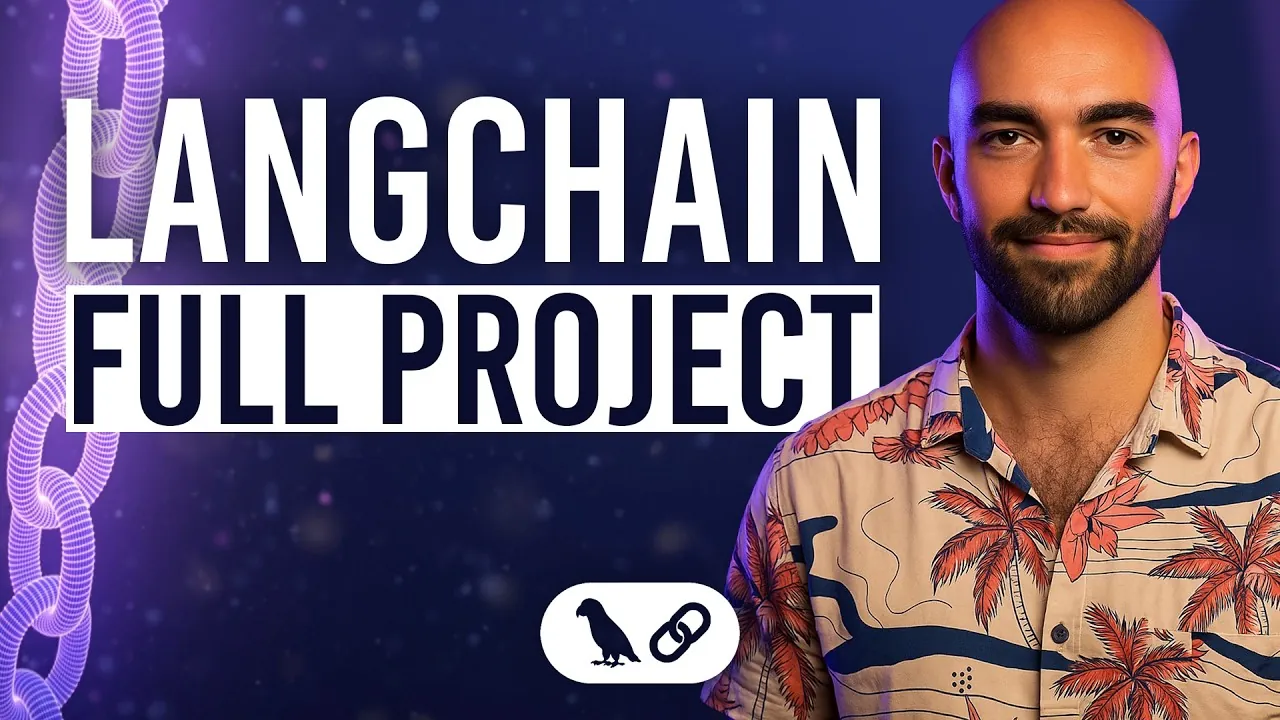
What if you could build a conversational AI agent that not only answers complex questions but also integrates seamlessly with external tools, streams real-time responses, and delivers structured outputs—all in one cohesive system? The idea might sound ambitious, but with the right tools and guidance, it’s entirely achievable. In this step-by-step overview, James Briggs takes you through the process of creating an end-to-end AI agent using LangChain, FastAPI, and asynchronous programming. Whether you’re an AI enthusiast or a seasoned developer, this project offers a unique opportunity to dive into the innovative of conversational AI design, blending technical precision with creative problem-solving.
James Briggs shows you how to build a robust backend API, configure LangChain for dynamic tool integration, and implement real-time token streaming for a truly interactive user experience. Along the way, you’ll discover how to use asynchronous programming to handle multiple tasks efficiently and explore how modular design ensures your application remains adaptable to future needs. By the end, you won’t just have a functional AI agent—you’ll gain a deeper understanding of the principles that make conversational systems reliable, scalable, and engaging. This isn’t just about building software; it’s about crafting a system that feels alive, responsive, and ready to meet modern user expectations.
Building AI Chat Applications
TL;DR Key Takeaways :
- Develop a conversational AI application using LangChain, FastAPI, and asynchronous programming to handle complex queries, integrate tools, and deliver real-time, structured responses.
- Set up a robust development environment by cloning the repository, configuring API keys, and verifying dependencies to ensure seamless integration with external tools.
- Build a FastAPI backend with asynchronous operations, including a streaming API endpoint for real-time responses and efficient task handling.
- Implement core AI agent logic with LangChain, using parallel processing and structured output generation for accurate and transparent responses.
- Design the application for extensibility and modularity, allowing easy addition of new tools, features, and configurations to adapt to evolving requirements.
Key Objectives of the Project
The primary aim of this project is to develop a conversational AI application that excels in the following areas:
- Answering complex queries with precision and relevance.
- Using external tools to enhance functionality and provide enriched responses.
- Streaming real-time responses for an engaging and dynamic user experience.
- Generating structured outputs to ensure clarity and transparency in responses.
The backend is built using FastAPI, chosen for its speed and robust support for asynchronous programming. This ensures the application can handle multiple tasks simultaneously, maintaining efficiency and responsiveness.
Preparing Your Development Environment
Before beginning development, it is essential to set up your environment correctly to avoid potential issues during implementation. Follow these steps:
- Clone the project repository and install the required dependencies using Python’s package manager (pip).
- Configure environment variables, such as API keys for OpenAI and the SER API, to enable secure and seamless integration with third-party services.
- Verify dependency installation to ensure all required libraries and tools are correctly set up, minimizing runtime errors.
Proper configuration lays the foundation for smooth communication between your application and external tools, making sure a seamless development process.
Build a Powerful Real-Time Conversational AI Agent

Take a look at other insightful guides from our broad collection that might capture your interest in AI-powered conversational agents.
Developing the Backend API
The backend API serves as the core of your application, managing data flow and interactions between the AI agent and external tools. Built with FastAPI, the API is designed to support asynchronous operations for efficient task handling. Key features include:
- A streaming API endpoint that delivers real-time responses to the frontend, enhancing user interactivity.
- Integration of FastAPI’s `StreamingResponse`, which streams tokens as they are generated, providing a smooth and interactive user experience.
Asynchronous programming is a critical component of the backend, allowing the system to handle multiple tasks concurrently without delays or bottlenecks.
Implementing Core Agent Logic
The AI agent, configured using LangChain tools, is the heart of the application. Its execution logic is designed to maximize efficiency and transparency. Key aspects include:
- Parallel processing of multiple tool calls using Python’s `asyncio.gather`, reducing response times and improving performance.
- Structured output generation, which provides users with clear and detailed answers, including information about the tools used during the process.
This approach ensures the agent delivers accurate and transparent responses, creating a seamless and trustworthy user experience.
Integrating and Managing External Tools
Tool integration is a defining feature of this project, allowing the AI agent to perform a wide range of tasks. The application incorporates:
- An asynchronous SER API tool for handling web search queries efficiently.
- Custom tools, such as a calculator, to address specific user needs.
Both synchronous and asynchronous tools are managed uniformly, simplifying the codebase and enhancing maintainability. This modular design allows developers to easily add new tools as requirements evolve.
Enhancing Interactivity with Real-Time Streaming
Real-time token streaming is a key feature that enhances user interactivity by providing immediate feedback as the AI processes queries. The following techniques are employed:
- Streaming tokens to the frontend using FastAPI’s `StreamingResponse`, making sure users receive responses incrementally.
- Executing multiple tool calls in parallel with `asyncio.gather`, significantly reducing response times.
- Structured token processing to improve the clarity and usability of responses on the frontend.
These techniques work together to create a responsive and user-friendly application, making sure a smooth and engaging experience.
Frontend Integration and User Interaction
The frontend, built using Node.js and npm, provides a responsive and intuitive interface for interacting with the AI agent. Users benefit from:
- Real-time responses displayed as they are generated, enhancing engagement and interactivity.
- Access to structured outputs, including detailed information about tool usage and response generation.
The modular design of the frontend ensures it can easily accommodate additional tools and features, making the application adaptable to future requirements.
Making sure Reliability with Robust Error Handling
Error handling is a critical aspect of maintaining application reliability. The system includes mechanisms to address potential issues, such as:
- Fallbacks for failed API calls or unexpected inputs, making sure the application continues to function smoothly.
- Graceful degradation, which minimizes disruptions and maintains a consistent user experience even in the face of errors.
These measures ensure the application remains dependable and user-friendly, even when encountering edge cases or unexpected scenarios.
Designing for Extensibility and Modularity
The project is built with flexibility and scalability in mind, allowing developers to adapt and expand the application as needed. Key benefits of the modular architecture include:
- Seamless addition of new tools and features without disrupting existing functionality.
- Support for experimentation with different configurations to tailor the application to specific use cases.
This design philosophy encourages innovation and ensures the application remains relevant and adaptable as requirements evolve.
By combining LangChain, FastAPI, and asynchronous programming, this guide provides a comprehensive framework for building advanced conversational AI applications. The modular and extensible design ensures the system can grow and adapt to meet future demands. As you continue to develop your application, consider exploring additional tools and features to further enhance its capabilities and deliver an exceptional user experience.
Media Credit: James Briggs
Filed Under: AI, Guides
Latest Geeky Gadgets Deals
Disclosure: Some of our articles include affiliate links. If you buy something through one of these links, Geeky Gadgets may earn an affiliate commission. Learn about our Disclosure Policy.
Credit: Source link