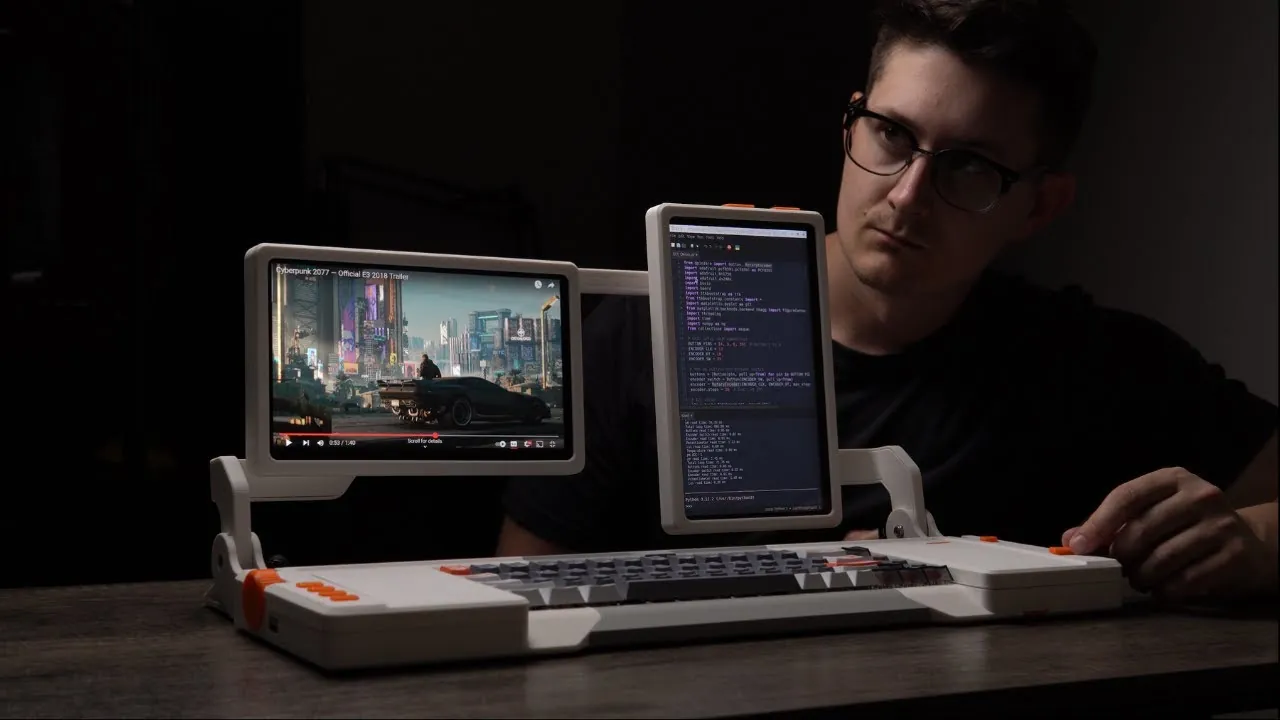
What if your next DIY project wasn’t just another gadget, but a statement—a sleek, retro-futuristic device that turns heads and redefines functionality? Enter the dual-screen cyberdeck, a marvel of design and engineering that blends the charm of science fiction aesthetics with the innovative versatility of modern computing. Built around a Raspberry Pi and brought to life with 3D-printed components, this portable, modular creation isn’t just a tool—it’s a canvas for creativity and innovation. Whether you’re a seasoned maker or a curious beginner, this cyberdeck challenges the boundaries of what’s possible in DIY electronics, offering a rare combination of practicality and visual appeal.
SECTOR 07 takes you through the unique design philosophy and technical ingenuity behind this cyberdeck, from its dual rotating screens to its programmable inputs and sensor integration. You’ll discover how its modular, open source framework enables users to customize, upgrade, and adapt the device to their specific needs. Along the way, we’ll uncover how this project bridges the gap between retro inspiration and modern utility, creating a platform that’s as functional as it is inspiring. What could you achieve with a device that’s as bold and adaptable as your imagination?
DIY Dual-Screen Raspberry Pi Cyberdeck
TL;DR Key Takeaways :
- The dual-screen cyberdeck combines retro-futuristic design with advanced functionality, offering a modular and portable platform for DIY electronics enthusiasts.
- Constructed with 3D-printed components and custom circuit boards, the device is lightweight, durable, and highly customizable, encouraging user innovation.
- Key features include dual rotating screens, programmable inputs, a mechanical keyboard, and an external GPIO header for sensor integration and prototyping.
- Powered by a Raspberry Pi, the cyberdeck supports real-time data processing and compatibility with I2C sensors, making it ideal for scientific and technical applications.
- Open source documentation, including design files and schematics, enables users to replicate, modify, and expand the project, fostering creativity and collaboration in the DIY community.
What is a Cyberdeck?
Cyberdecks are compact, customizable computers inspired by the science fiction aesthetic, designed to perform tasks such as field computing, sensor integration, or data visualization. These devices combine portability, modularity, and distinctive visual appeal to create tools that are both functional and eye-catching. This particular project exemplifies the concept by integrating dual screens, programmable inputs, and sensor compatibility into a cohesive, user-friendly device. Whether for technical experimentation or practical use, cyberdecks offer a creative and adaptable approach to modern computing.
Design Goals: Balancing Form and Function
The cyberdeck was developed with three primary objectives: practicality, ease of assembly, and a retro-futuristic aesthetic. Each component, from the 3D-printed chassis to the electronic interfaces, was carefully designed to ensure usability and adaptability. The result is a sleek, portable device that balances form and function, making it suitable for a variety of applications, including data analysis, field experiments, and creative projects. This thoughtful design approach ensures that the cyberdeck is not only visually appealing but also highly functional and accessible to users of varying skill levels.
Raspberry Pi Cyberdeck : Sleek Design, Ultimate Functionality

Find more information on Raspberry Pi 5 by browsing our extensive range of articles, guides and tutorials.
3D Printing and Modular Assembly
The cyberdeck’s structure is entirely 3D-printed, allowing for precise customization and iterative design improvements. This approach ensures that the device is both lightweight and durable, while also allowing users to modify or replicate the design with ease. Key features of the 3D-printed structure include:
- Snap-Fit Parts: Components are designed to fit together seamlessly, making sure durability and simplifying the assembly process.
- Modular Design: The modular structure allows for quick upgrades or repairs, enhancing the device’s long-term usability.
- Lightweight Materials: The use of lightweight plastics improves portability without compromising structural integrity.
By providing open source design files, the project encourages users to replicate, modify, and personalize their own cyberdeck, fostering creativity and innovation within the DIY community.
Custom Electronics and GPIO Integration
At the heart of the cyberdeck is a Raspberry Pi, chosen for its versatility and extensive GPIO (General Purpose Input/Output) capabilities. Custom-designed circuit boards streamline the assembly process and enhance the device’s functionality. These boards are responsible for:
- Power Distribution: Making sure stable and efficient energy management for all components.
- Connectivity: Supporting seamless integration with external devices and peripherals.
- Sensor Integration: Allowing compatibility with a wide range of sensors for various applications.
The GPIO pins provide users with the flexibility to connect sensors, buttons, and displays, making the cyberdeck highly adaptable for different projects. This integration of custom electronics ensures that the device is not only functional but also capable of supporting advanced experimentation and development.
Key Features of the Cyberdeck
The cyberdeck includes several innovative features that enhance its usability and versatility, making it a powerful tool for a wide range of applications. These features include:
- Dual Screens: Two rotating displays support both portrait and landscape orientations, offering flexibility for tasks such as coding, data visualization, or media playback.
- Programmable Inputs: Buttons, a rotary encoder, and a linear slider provide customizable controls for various applications, from gaming to sensor calibration.
- Mechanical Keyboard: A compact keyboard with interactive LED modes delivers tactile feedback and visual customization, enhancing the user experience.
- External GPIO Header: An accessible header simplifies sensor integration and prototyping, making it easier to expand the device’s capabilities.
- Quick-Release Mechanism: The Raspberry Pi can be easily removed for upgrades or standalone use, adding to the device’s modularity and convenience.
These features make the cyberdeck a versatile and user-friendly tool, suitable for both beginners and experienced makers.
Sensor Integration and Real-Time Data Processing
The cyberdeck’s compatibility with I2C sensors significantly broadens its potential applications. Users can integrate sensors for monitoring light, temperature, humidity, or even pH levels, making it ideal for scientific experiments, environmental monitoring, or data collection. The Raspberry Pi’s processing power enables real-time data visualization, providing immediate insights and enhancing the device’s utility for both hobbyists and professionals. This capability makes the cyberdeck a valuable tool for projects that require accurate and timely data analysis.
Open source Documentation: Empowering Innovation
To encourage replication and customization, all design files, schematics, and assembly instructions are available as open source resources. This transparency allows users to adapt the cyberdeck to their specific needs, whether by modifying the design, adding new features, or integrating additional sensors. By sharing these resources, the project fosters collaboration and innovation within the DIY electronics community, empowering users to explore new possibilities and push the boundaries of what can be achieved with a cyberdeck.
Expanding the Potential of DIY Electronics
This dual-screen cyberdeck demonstrates the possibilities of combining 3D printing, custom electronics, and programming into a single, functional device. Its modular design, programmable features, and sensor compatibility make it a versatile tool for a wide range of applications, from technical experimentation to creative projects. By sharing the project as open source, it invites others to explore, modify, and expand upon the concept, driving further advancements in the world of DIY electronics. This cyberdeck is not just a device—it is a platform for innovation, creativity, and collaboration.
Media Credit: SECTOR 07
Filed Under: DIY Projects, Hardware, Top News
Latest Geeky Gadgets Deals
Disclosure: Some of our articles include affiliate links. If you buy something through one of these links, Geeky Gadgets may earn an affiliate commission. Learn about our Disclosure Policy.
Credit: Source link