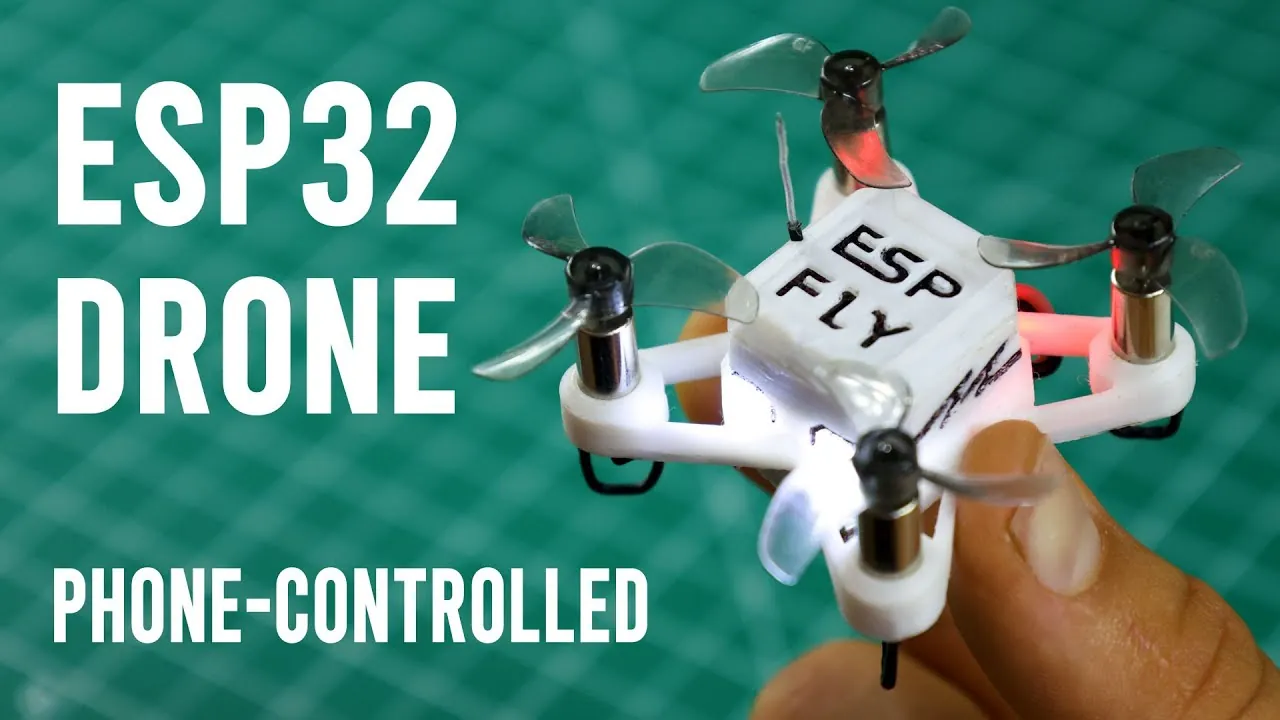
Have you ever imagined building a drone so small it could rest comfortably in the palm of your hand, yet powerful enough to soar through the air with precision, all controlled from your smartphone? Meet the ESP-FLY, a DIY marvel powered by the versatile ESP32 microcontroller. This isn’t just another drone project; it’s a gateway to blending creativity, engineering, and innovative technology into a compact, affordable package. Whether you’re a seasoned tech tinkerer or a curious beginner, the ESP-FLY offers an exciting challenge that’s as rewarding as it is fun. At just 25 grams, this lightweight wonder proves that big ideas can come in small, high-flying packages.
In the video below Max Imagination takes you through how to design, build, and program the smallest ESP32 drone while exploring its innovative features, from customizable smartphone controls to optional FPV camera integration. You’ll learn how to craft a durable frame using either 3D printing or manual methods, optimize weight for peak performance, and configure firmware tailored to your flying style. With a focus on accessibility and affordability, this project is perfect for anyone eager to dive into the world of DIY drones. By the end, you won’t just have a drone, you’ll have a deeper understanding of how technology and creativity can take flight.
DIY ESP32 Drone Guide 2025
TL;DR Key Takeaways :
- The ESP-FLY is a lightweight, customizable drone weighing just 25 grams (including the battery), designed for both beginners and advanced users with a focus on simplicity and affordability.
- The drone’s frame can be constructed using 3D printing with downloadable STL files or manually crafted using PVC, making it accessible to users with varying resources.
- Powered by the ESP32 microcontroller, the ESP-FLY features a custom PCB, motion sensors, motor drivers, and a 250mAh battery, offering a flight time of approximately 5.5 minutes.
- Programming is done using the ESP-IDF framework and Espressif’s ESP-drone firmware, with control options via a smartphone app or advanced Crazyflie client software for experienced users.
- Optional FPV camera integration provides a live video feed for immersive flying, while the total project cost is estimated at $37, supported by free resources like Gerber files, STL files, and detailed guides.
The design of the ESP-FLY emphasizes efficiency and ease of construction, making sure that both beginners and experienced builders can successfully assemble it. Here’s how you can approach the design and build process:
- Frame Design: Use Autodesk Fusion 360 to design a 50mm closed-body frame. If you have access to a 3D printer, downloadable STL files ensure precise fabrication. For those without a 3D printer, the frame can be manually crafted using PVC, guided by detailed blueprints.
- Weight Optimization: Keeping the drone lightweight is crucial for optimal performance. The frame and components are designed to minimize weight, with the drone weighing just 18 grams without the battery.
Designing and Building the DIY ESP-FLY

Here are additional guides from our expansive article library that you may find useful on drones.
Essential Components and Assembly
The ESP-FLY relies on a carefully selected set of components to achieve its compact and functional design. Each component plays a critical role in making sure the drone’s performance and reliability:
- Microcontroller: The ESP32 serves as the brain of the drone, offering robust processing power and connectivity. It is supported by a custom-designed PCB for seamless integration.
- PCB Design: Use AI-assisted PCB design software to create Gerber files for manufacturing or etching your board. SMD soldering is required to assemble the compact components onto the PCB.
- Additional Parts: The drone uses motion sensors, motor drivers, LEDs, coreless motors, propellers, and a 250mAh battery. These components are widely available and budget-friendly, making the build accessible to most users.
Frame Construction: 3D Printing or Manual Crafting
The frame of the ESP-FLY can be constructed using two main methods, depending on the tools and resources available to you:
- 3D Printing: Download STL files from platforms like Cults 3D to ensure precise dimensions and compatibility with the drone’s components. This method is ideal for those with access to a 3D printer.
- Manual Construction: For those without a 3D printer, the frame can be crafted manually using PVC. Detailed blueprints and step-by-step instructions make this a cost-effective and straightforward alternative.
Programming and Firmware Configuration
The ESP-FLY’s functionality is powered by Espressif’s ESP-drone firmware, which is optimized for the ESP32 microcontroller. Programming the drone involves configuring the firmware and customizing it to suit your needs:
- Framework: Use the ESP-IDF framework to configure and customize the firmware. This allows you to tailor the drone’s behavior and performance to your preferences.
- Control Options: The drone can be controlled via a smartphone app, available for both iOS and Android. The app allows you to customize joystick settings for a personalized flying experience.
- Advanced Features: For experienced users, the Crazyflie client software provides additional control and configuration options, allowing more complex applications and experiments.
Performance and Flight Capabilities
The ESP-FLY is designed to deliver stable and responsive flight, even in challenging conditions. Its performance highlights include:
- Thrust-to-Weight Ratio: With a thrust-to-weight ratio of 2.7:1, the drone offers reliable agility and performance, making it suitable for various flight scenarios.
- Battery Life: Powered by a 250mAh battery, the drone achieves a flight time of approximately 5.5 minutes. This is ideal for short recreational flights or experimental testing.
- Control System: The smartphone-based control system ensures ease of use, while advanced users can fine-tune settings for enhanced performance and precision.
Optional FPV Camera Integration
For those seeking an immersive flying experience, the ESP-FLY can be equipped with a 3g micro FPV camera. This optional feature provides a live video feed compatible with 5.8GHz FPV goggles, allowing you to navigate tight spaces or explore open areas with ease. The FPV setup enhances the drone’s functionality and adds an exciting dimension to its capabilities.
Affordability and Accessibility
The ESP-FLY is an affordable project, with an estimated cost of $37 for components (excluding shipping). To make the building process easier, you’ll find a wealth of free resources available:
- Gerber files, STL files, and blueprints for the frame and PCB design.
- A detailed step-by-step written guide available on Elektor Labs.
- Widely available components that are budget-friendly and easy to source from online or local suppliers.
Exploring the Potential of the ESP-FLY
The ESP-FLY is more than just a drone; it’s a platform for learning and innovation. Whether you’re a beginner eager to explore the basics of drone technology or an advanced user looking for a customizable and compact platform, the ESP-FLY offers something for everyone. Its lightweight design, smartphone control, and optional FPV capabilities showcase the potential of modern technology and DIY ingenuity. By building the ESP-FLY, you’ll not only create a functional drone but also gain valuable skills in engineering, programming, and design.
Media Credit: Max Imagination
Filed Under: DIY Projects, Guides, Hardware
Latest Geeky Gadgets Deals
Disclosure: Some of our articles include affiliate links. If you buy something through one of these links, Geeky Gadgets may earn an affiliate commission. Learn about our Disclosure Policy.
Credit: Source link