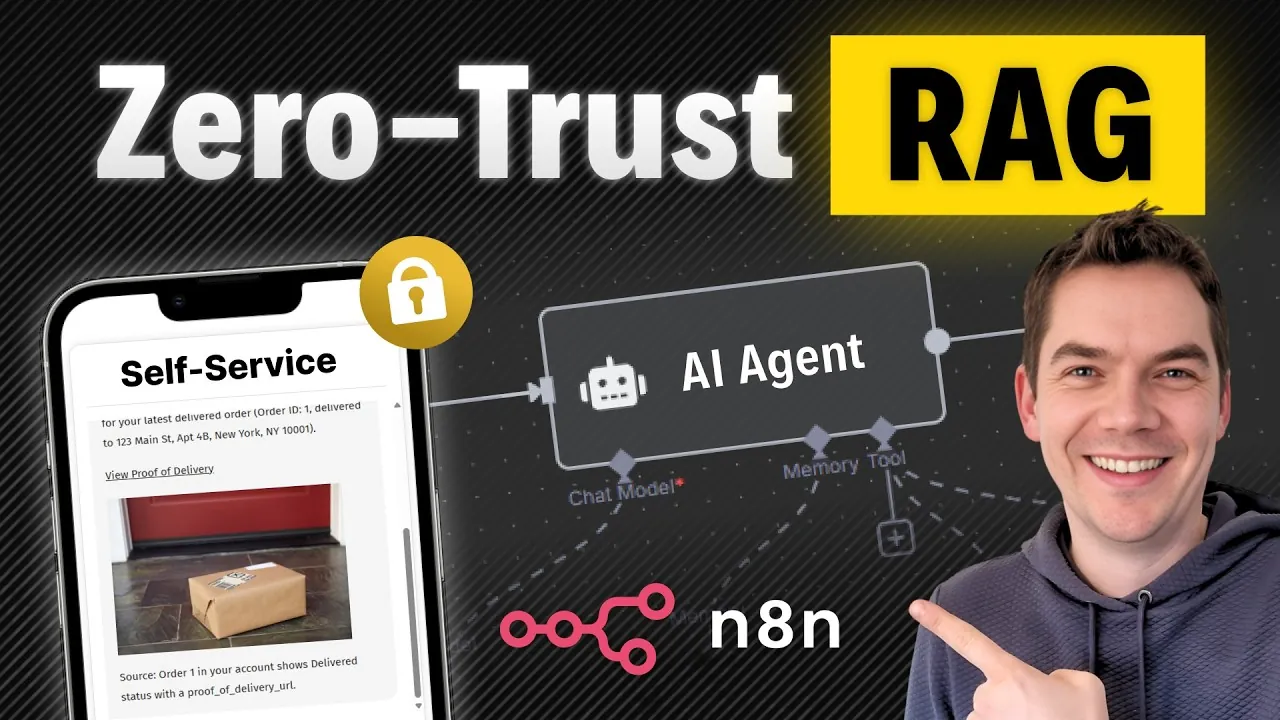
What if the AI agent you built could securely handle multiple users, each interacting with their own personalized data, without ever compromising privacy or trust? In an era where data breaches and privacy violations dominate headlines, crafting such a system might feel like threading a needle in a storm. Yet, with tools like n8n, a powerful workflow automation platform, this vision is not only achievable but scalable. The challenge lies in striking the perfect balance between accessibility and security, making sure user-specific data remains isolated, encrypted, and protected from prying eyes. Whether you’re building an AI-driven customer support bot or a personalized e-commerce assistant, the stakes are high, but so are the rewards.
Below AI Automators take you through the essential steps to design a secure multi-user AI agent using n8n, focusing on data isolation, role-based access control (RBAC), and compliance with stringent privacy regulations like GDPR. You’ll uncover how to use tools like Supabase for secure data management, implement defense-in-depth strategies, and adopt best practices like input validation and credential rotation. But this isn’t just about ticking off a security checklist, it’s about building trust with your users while creating a system that’s both resilient and efficient. By the end, you’ll have a roadmap to not only safeguard sensitive information but also to inspire confidence in your AI-powered solutions. After all, security isn’t just a feature, it’s the foundation of innovation.
Secure Multi-User AI Agent
TL;DR Key Takeaways :
- Designing a secure multi-user AI agent in n8n requires robust architecture, data isolation, and role-based access control (RBAC) to ensure data integrity and prevent unauthorized access.
- Key security measures include using proxy servers, JSON Web Tokens (JWT), Row-Level Security (RLS), encryption, and multi-factor authentication (MFA) to mitigate risks like data breaches and unauthorized access.
- Adopting the principle of least privilege and defense-in-depth strategies, such as database-level security policies and secure identity providers, enhances system security and limits potential damage from breaches.
- Compliance with data privacy regulations like GDPR and CCPA is critical, achieved through practices such as zero data retention, data residency compliance, and data anonymization to protect user privacy.
- Best practices for securing AI applications include HTTPS/TLS encryption, input validation, rate limiting, logging and monitoring, credential rotation, and regular software updates to ensure system reliability and safety.
Key Components of Multi-User AI Agent Architecture
A multi-user AI agent is designed to deliver personalized responses by securely accessing user-specific data, such as purchase histories or support tickets. Unlike multi-tenant systems, which separate data by organization, multi-user systems isolate data for individual users within a shared environment. This distinction requires a strong architectural foundation to ensure data integrity and prevent unauthorized access.
To achieve this, workflows in n8n must be designed to securely fetch and process user data. For example, integrating n8n with a database like Supabase allows you to retrieve user-specific information while enforcing strict access controls. This ensures that users can only interact with their own data, even in a shared system. Additionally, incorporating role-based access control (RBAC) further strengthens the system by limiting permissions based on user roles.
Addressing Security Risks and Challenges
Building a secure AI agent involves addressing critical risks, such as data breaches and unauthorized access. Sensitive information, including user credentials and customer IDs, must be protected from exposure. To mitigate these risks, consider implementing the following strategies:
- Proxy Server: Use a proxy server to mediate communication between the front end and back end, making sure sensitive data is not directly exposed.
- JSON Web Tokens (JWT): Use JWTs for request authentication and expiration to prevent replay attacks and unauthorized access.
- Row-Level Security (RLS): Enable RLS in databases like Supabase to restrict data access based on user roles or identifiers.
These measures create a layered defense system, reducing vulnerabilities and safeguarding user data. Additionally, encrypting sensitive data at rest and in transit further enhances security by protecting it from interception or unauthorized access.
Build a Secure Multi-User AI Agent in n8n

Here are additional guides from our expansive article library that you may find useful on n8n projects.
Principle of Least Privilege and Defense in Depth
The principle of least privilege is a fundamental concept in secure system design. By granting only the minimum permissions necessary for a specific task, you can limit the potential impact of a security breach. For instance, configure database access to allow read-only permissions for specific tables instead of granting unrestricted access through service role keys. This approach ensures that even if credentials are compromised, the damage is contained.
In addition to least privilege, adopting a defense-in-depth strategy is essential. This involves implementing multiple layers of security measures to protect the system. Examples include:
- Enforcing database-level security policies to complement application logic.
- Using secure identity providers, such as Supabase Auth, to manage authentication and access control.
- Implementing multi-factor authentication (MFA) for sensitive operations to add an extra layer of security.
By combining these strategies, you can significantly reduce the risk of unauthorized access and enhance the overall security of your AI agent.
Making sure Compliance with Data Privacy Regulations
Compliance with data privacy regulations, such as GDPR and CCPA, is critical when handling personally identifiable information (PII). To meet these requirements and protect user data, adopt the following practices:
- Zero Data Retention: Avoid storing sensitive data unnecessarily by implementing zero data retention policies with large language model (LLM) providers.
- Data Residency: Ensure data is stored and processed in compliance with regional regulations to avoid legal complications.
- Data Anonymization: Anonymize sensitive data before sending it to AI systems to reduce compliance risks and protect user privacy.
These practices not only ensure regulatory compliance but also demonstrate a commitment to user data protection, fostering trust and confidence among users.
Best Practices for Securing AI Applications
To further enhance the security and reliability of your AI agent, follow these best practices:
- HTTPS/TLS Encryption: Encrypt communication between users and your system to protect data in transit.
- Input Validation and Sanitization: Validate and sanitize user inputs to prevent SQL injection and other attacks.
- Rate Limiting: Implement rate limiting to prevent abuse and reduce the risk of denial-of-service attacks.
- Logging and Monitoring: Continuously monitor system activity to detect anomalies and respond to potential threats.
- Credential Rotation: Regularly rotate credentials to mitigate the impact of compromised keys.
- Software Updates: Keep your software up to date to address known vulnerabilities and improve system stability.
These measures form a comprehensive security framework, making sure the safety and reliability of your application.
Licensing and Legal Considerations
When using n8n for commercial applications, it is important to review its licensing terms. The sustainable use license and enterprise license may have specific implications for customer-facing AI agents. Clarify these terms to ensure compliance and avoid potential legal issues. Additionally, consider consulting with legal experts to verify that your implementation aligns with both licensing requirements and applicable regulations.
Building a Reliable and Secure System
Developing a secure multi-user AI agent in n8n requires a combination of thoughtful architecture, robust security measures, and strict compliance with data privacy regulations. By implementing strategies such as data isolation, the principle of least privilege, and defense in depth, you can create a system that protects user data while delivering personalized AI responses. Adopting best practices for securing applications and understanding licensing requirements ensures your solution meets both technical and legal standards, providing a reliable and trustworthy experience for users.
Media Credit: The AI Automators
Filed Under: AI, Guides
Latest Geeky Gadgets Deals
Disclosure: Some of our articles include affiliate links. If you buy something through one of these links, Geeky Gadgets may earn an affiliate commission. Learn about our Disclosure Policy.
Credit: Source link