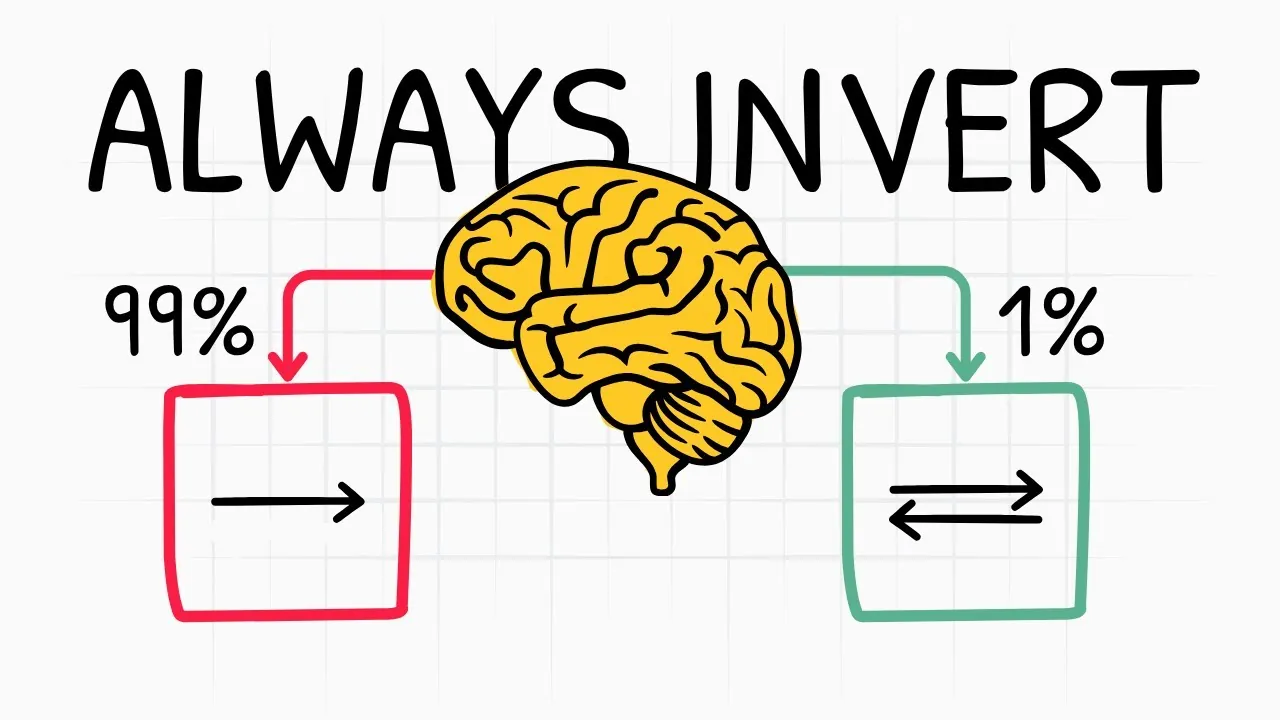
What if the secret to getting ahead wasn’t about doing more, but about avoiding the wrong moves altogether? Imagine standing at the edge of a maze, not searching for the entrance but tracing your way backward from the exit. This is the essence of inversion, a mental model that flips conventional thinking on its head. Instead of asking how to succeed, it challenges you to ask: “What could go wrong?” This counterintuitive approach has been used by some of history’s greatest minds to solve complex problems, sidestep failure, and uncover hidden opportunities. It’s not about pessimism—it’s about clarity. And in a world obsessed with forward progress, thinking backwards might just be the edge you’ve been missing.
In this guide by Value Catcher, you’ll discover how inversion simplifies decision-making and helps you avoid costly mistakes in work, relationships, and even health. You’ll learn how this mindset, rooted in both philosophy and history, can be applied to modern challenges—from improving your personal habits to tackling high-stakes professional dilemmas. Along the way, we’ll explore compelling examples, like how a WWII statistician saved lives by focusing on what wasn’t there, and practical steps to integrate inversion into your daily life. By the end, you might find yourself questioning not just how to succeed, but how to avoid failure—and that shift could change everything.
Mastering Inversion Thinking
TL;DR Key Takeaways :
- Inversion is a mental model that involves reversing traditional thinking by focusing on potential failures instead of solely aiming for success, helping to identify risks and avoid mistakes.
- Abraham Wald’s WWII analysis of aircraft damage exemplifies inversion, as he identified vulnerabilities by considering what was missing rather than what was visible, leading to life-saving insights.
- Inversion can be applied in various areas, such as work (e.g., failure premortems), relationships (avoiding harmful behaviors), and health (eliminating detrimental habits), to improve outcomes and decision-making.
- The concept has philosophical roots in Stoicism, where practices like “premeditation of evils” prepared individuals for challenges by envisioning worst-case scenarios, fostering resilience and rationality.
- Inversion simplifies complex problems by clarifying priorities and focusing on what to avoid, making it a proactive strategy for achieving success and minimizing costly mistakes in personal and professional contexts.
What Is Inversion?
Inversion is the process of reversing your usual way of thinking to gain a fresh perspective. Instead of asking, “How can I succeed?” you ask, “What could cause me to fail?” By focusing on potential pitfalls, you can uncover blind spots and anticipate challenges that might otherwise go unnoticed. This method forces you to think critically and approach problems from a new angle, often leading to more effective and innovative solutions.
This mental model is not about negativity or pessimism. Instead, it is a proactive strategy that helps you identify and eliminate obstacles, making sure a clearer path toward your goals. By embracing inversion, you can make more informed decisions and reduce the likelihood of failure.
Historical Example: Abraham Wald and WWII
One of the most compelling examples of inversion comes from World War II. Statistician Abraham Wald was tasked with analyzing returning aircraft to determine where additional armor was needed. At first glance, it seemed logical to reinforce the areas with visible damage. However, Wald approached the problem differently. He realized that the planes that didn’t return likely suffered fatal hits in the undamaged areas of the surviving aircraft.
By focusing on what was missing—rather than what was visible—Wald identified the true vulnerabilities. His recommendation to reinforce the overlooked areas saved countless lives. This story demonstrates how thinking backwards can lead to new insights and solutions, even in high-stakes situations.
Get Ahead of 99% of People by Thinking Backwards

Here is a selection of other guides from our extensive library of content you may find of interest on thinking methods.
How to Apply Inversion
Inversion is a versatile tool that can be applied in various ways, depending on the problem you are addressing. Here are two primary approaches:
- Start with the End in Mind: Begin by visualizing your desired outcome and work backwards to identify the steps needed to achieve it. For example, solving a maze is often easier when you trace it from the finish line to the starting point.
- Focus on the Opposite of Your Goal: Instead of asking how to succeed, ask what actions or decisions would lead to failure. By identifying and avoiding these pitfalls, you can improve your chances of success significantly.
This dual approach allows you to tackle challenges from multiple angles, making sure a more comprehensive understanding of the problem and its potential solutions.
Where Can You Use Inversion?
Inversion is not limited to specific fields or situations. Its principles can be applied across various aspects of life to improve decision-making, strengthen relationships, and enhance overall well-being. Below are some practical examples of how inversion can be used effectively:
1. Work and Decision-Making
In professional settings, inversion helps you anticipate risks and address them before they escalate into problems. For instance, conducting a “failure premortem” involves imagining that a project has failed and then identifying the reasons why. This exercise allows teams to proactively address potential issues and refine their strategies.
Similarly, some companies use a “kill the company” exercise, where employees brainstorm scenarios that could lead to the organization’s downfall. By identifying vulnerabilities, businesses can take preventive measures to strengthen their operations and long-term resilience.
2. Relationships
In personal relationships, inversion encourages you to focus on avoiding harmful behaviors that could damage trust or respect. Instead of assuming that others share your preferences or values, consider what actions might create conflict or misunderstandings. For example, lying, neglect, or disrespect can erode the foundation of any relationship.
By identifying and eliminating these negative behaviors, you can foster stronger, healthier connections built on mutual understanding and support.
3. Health
When it comes to health, inversion shifts your focus from chasing perfection to eliminating harmful habits. Instead of obsessing over the perfect diet or exercise routine, start by identifying and cutting out behaviors that harm your physical or mental well-being. Examples include smoking, excessive junk food consumption, or neglecting sleep.
Similarly, addressing mental health stressors—such as overcommitment, toxic relationships, or chronic stress—can lead to significant improvements in overall well-being. By removing these obstacles, you create a healthier foundation for long-term success.
Philosophical Roots of Inversion
The concept of inversion has deep philosophical roots, particularly in Stoicism. The Stoics practiced a technique called “premeditation of evils,” where they envisioned worst-case scenarios to prepare for potential challenges. This practice aligns closely with the principles of inversion, emphasizing the importance of forethought and risk management.
By imagining what could go wrong, the Stoics aimed to reduce fear, increase resilience, and make more rational decisions. This ancient wisdom underscores the timeless value of thinking backwards to navigate life’s uncertainties.
Why Inversion Works
Inversion is effective because it simplifies decision-making and clarifies priorities. Instead of being overwhelmed by endless possibilities, you focus on what to avoid. This approach helps you identify the most critical actions needed to achieve your goals while minimizing risks.
It’s not about being overly cautious or pessimistic—it’s about being realistic and proactive. By addressing potential failures before they occur, you position yourself for greater success and reduce the likelihood of costly mistakes.
Key Takeaway
Success often stems not from extraordinary brilliance but from avoiding obvious mistakes. Inversion provides a practical framework to identify risks, sidestep failure, and make smarter decisions. Whether you’re solving problems at work, nurturing relationships, or improving your health, thinking backwards can help you achieve your goals more effectively.
By adopting this mindset, you gain a strategic advantage, allowing you to navigate challenges with greater confidence and clarity. In a world where many focus solely on forward progress, thinking backwards can set you apart and position you ahead of the majority.
Media Credit: The Value Catcher
Filed Under: Guides, Top News
Latest Geeky Gadgets Deals
Disclosure: Some of our articles include affiliate links. If you buy something through one of these links, Geeky Gadgets may earn an affiliate commission. Learn about our Disclosure Policy.
Credit: Source link