What if managing a sprawling, complex codebase didn’t have to feel like navigating a labyrinth? For many developers, the sheer scale and intricacy of modern projects can lead to inefficiencies, errors, and frustration. But here’s the bold truth: with the right tools and strategies, even the most unwieldy codebases can become manageable, efficient, and even elegant. Enter the doc-driven Claude code workflow, a innovative approach that uses AI to streamline processes, reduce cognitive load, and foster collaboration. By combining context engineering, scalable documentation systems, and sub-agent delegation, this workflow transforms chaos into clarity, offering a roadmap for developers to thrive in complexity.
In this overview AI Jason takes you through how AI-driven workflows can transform the way you approach large codebases. You’ll learn how to create a documentation system that evolves alongside your projects, delegate tasks to sub-agents for improved efficiency, and harness context engineering to keep your AI tools laser-focused. Whether you’re grappling with legacy systems or scaling a growing project, these strategies promise to simplify your workflow while enhancing precision and productivity. As we delve into these methods, consider how a more structured, AI-optimized approach could reshape not just your codebase, but the way you think about development itself.
AI Strategies for Codebases
TL;DR Key Takeaways :
- Use context engineering to streamline AI workflows by curating relevant information, reducing token consumption, and improving response accuracy.
- Implement a scalable documentation system with organized folders for tasks, system details, SOPs, and a Readme file to enhance collaboration and efficiency.
- Use sub-agents to delegate auxiliary tasks like research and summarization, conserving resources and maintaining focus on core development activities.
- Create detailed implementation plans and standardized workflows (SOPs) to ensure consistency, reduce errors, and improve team collaboration on large projects.
- Focus on scalability and maintenance by regularly updating documentation and generating comprehensive system architecture records to support growth and streamline onboarding.
Context Engineering: Making sure Relevance and Precision
Effectively managing large codebases begins with making sure that your AI tools operate with the most relevant and precise information. Context engineering is the process of curating conversation history and inputs to include only essential details, which minimizes token consumption and improves response accuracy. This approach is particularly useful when working on intricate projects where clarity and efficiency are paramount.
- Remove unnecessary tools or commands: Streamline the context by eliminating unused elements to avoid clutter and confusion.
- Delegate tasks to sub-agents: Assign specific responsibilities to sub-agents to reduce the cognitive load on the main AI system.
- Use compact commands: Clean up conversation threads and maintain clarity by employing concise and targeted instructions.
By optimizing the context, you create an environment where your AI tools remain responsive and effective, even as your projects grow in complexity. This ensures that your workflows are not only efficient but also scalable.
Creating a Scalable Documentation System
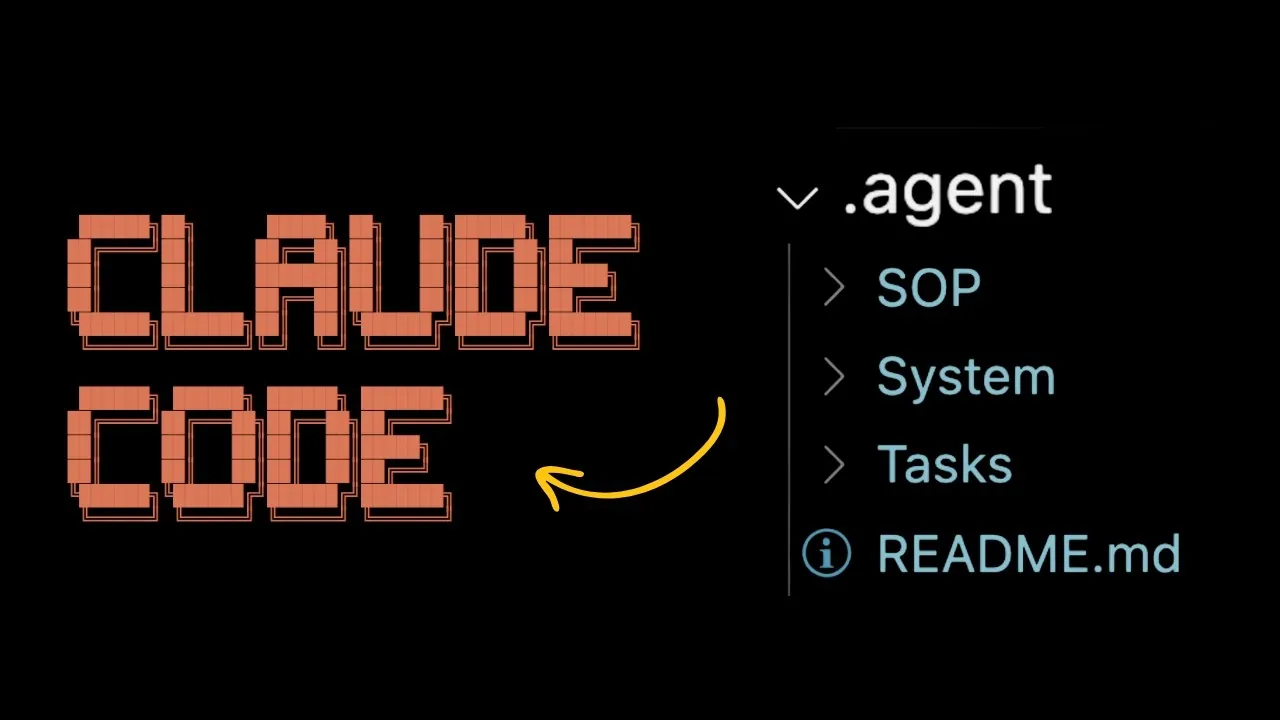
A well-structured documentation system is essential for managing large codebases effectively. Organizing your documentation in a dedicated `.agent` folder ensures that all critical resources are easily accessible and systematically maintained. This folder should include the following key components:
- Task Folder: Store implementation plans (PRDs) for future reference, allowing you to reuse and adapt plans for similar projects.
- System Folder: Maintain detailed records of project structures, database schemas, and API documentation for streamlined development.
- SOPs (Standard Operating Procedures): Log step-by-step processes and common mistakes to guide developers and reduce errors.
- Readme File: Serve as an index for all documentation files, allowing quick navigation to relevant resources.
To ensure your documentation remains accurate and up-to-date, use commands like `/update doc` for real-time adjustments. This approach allows your documentation to evolve alongside your codebase, maintaining its relevance and utility over time. A scalable documentation system not only simplifies project management but also enhances collaboration among team members.
Context Engineering for Developers Managing Big Projects

Below are more guides on context engineering from our extensive range of articles.
Sub-Agent Utilization: Delegating for Efficiency
Sub-agents play a crucial role in optimizing workflows by handling auxiliary tasks such as research and summarization. Delegating these responsibilities allows you to conserve token usage in the main conversation thread and focus on core development activities. This approach is particularly beneficial when working on resource-intensive projects.
- Research and summarize external models: Sub-agents can analyze libraries or tools and provide concise recommendations for integration.
- Streamline decision-making: By delegating exploratory tasks, you save time and ensure that your primary context remains focused and relevant.
The use of sub-agents not only conserves resources but also enhances the overall efficiency of your AI tools. By maintaining a well-organized and streamlined workflow, you can tackle complex projects with greater confidence and precision.
Implementation Workflow: Laying the Groundwork for Success
Before developing new features, it is essential to create detailed implementation plans. Using plan mode, you can generate comprehensive project roadmaps and save them in the task folder for future use. These plans act as blueprints, making sure consistency and reducing the likelihood of errors during development.
Additionally, generating SOPs for specific processes, such as integrating external models or updating APIs, can standardize workflows. This is particularly valuable for teams working on large, collaborative projects, as it ensures that all members follow the same procedures. Standardized workflows not only improve efficiency but also reduce the risk of miscommunication and errors.
Scalability and Maintenance: Preparing for Growth
As your codebase expands, it is critical to ensure that your documentation system and workflows can adapt to increasing complexity. Tailoring your documentation to meet the specific needs of your projects is a key step in achieving scalability. Regularly refining and updating your documentation ensures that it remains relevant and useful, even as your systems evolve.
Another important aspect of scalability is generating comprehensive system architecture documentation. This includes detailed records of your project’s structure, database schemas, and APIs. Such documentation simplifies onboarding for new team members and streamlines future development efforts, making it easier to manage growth without compromising efficiency.
Real-World Applications and Insights
AI tools like Claude offer a wide range of applications in coding and operational tasks, making them invaluable for modern development workflows. These tools can automate repetitive processes, optimize workflows, and provide structured solutions tailored to your project’s unique requirements. For example:
- Integrate external models seamlessly: AI-driven workflows can simplify the process of incorporating new models into existing systems, saving time and effort.
- Address common challenges effectively: By providing targeted solutions, AI tools can help resolve issues quickly and efficiently.
By studying industry examples and continuously refining your workflows, you can maximize the benefits of AI tools. This structured approach not only enhances productivity but also ensures greater accuracy and consistency in your projects.
Optimizing for Long-Term Success
Managing large codebases requires a strategic combination of context engineering, scalable documentation systems, and sub-agent utilization. These approaches enable you to optimize workflows, reduce errors, and maintain consistent performance across projects. Whether you are implementing new features or maintaining existing systems, these strategies provide a solid foundation for tackling even the most complex challenges. By fully harnessing the potential of AI-driven coding workflows, you can achieve enhanced productivity and long-term success in your development efforts.
Media Credit: AI Jason
Filed Under: AI, Guides
Latest Geeky Gadgets Deals
Disclosure: Some of our articles include affiliate links. If you buy something through one of these links, Geeky Gadgets may earn an affiliate commission. Learn about our Disclosure Policy.
Credit: Source link