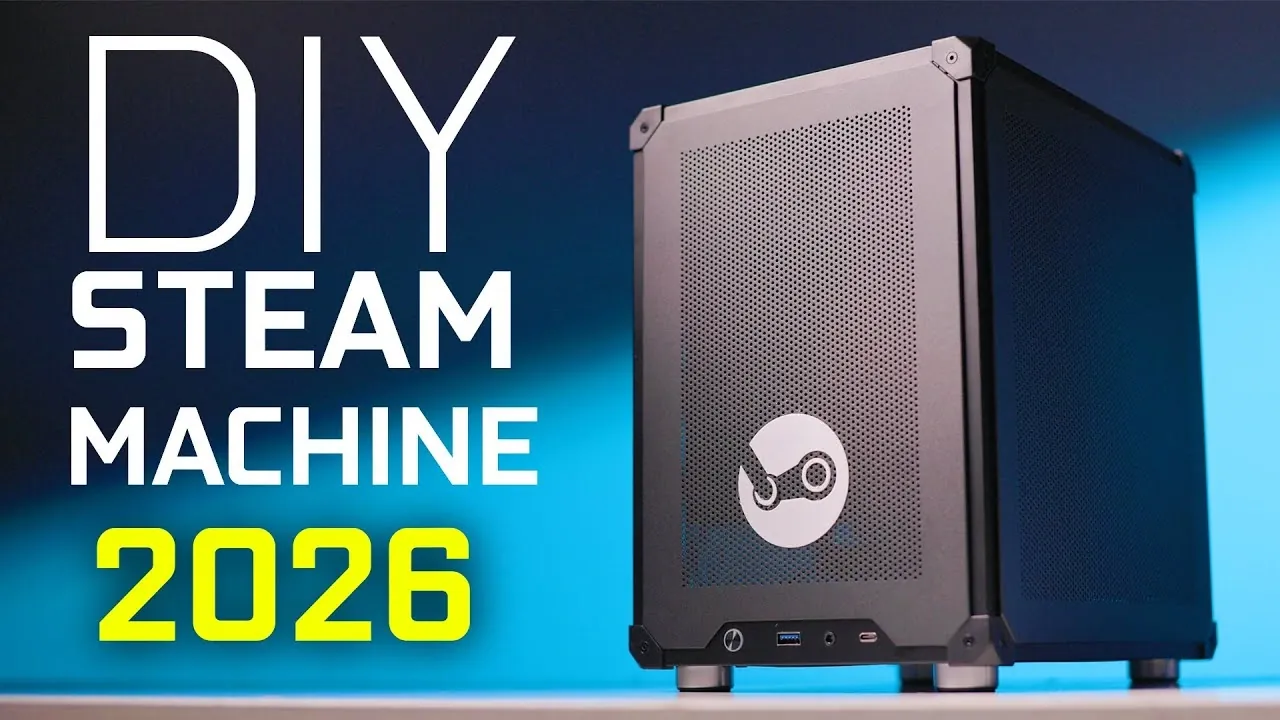
Is building a Steam Machine in 2026 a forward-thinking move for gamers or a nostalgic revival of a concept left behind? MW Technology explores how advancements in Linux gaming, paired with the latest hardware innovations, are breathing new life into the idea of these custom gaming systems. With Proton allowing smoother compatibility between Windows and Linux games and Valve’s Steam ecosystem growing stronger, the concept of crafting a dedicated Steam Machine feels more attainable than ever. However, rising hardware prices and the convenience of pre-built systems raise the question: is it truly worth the effort and expense?
This feature dives into the advantages and challenges of building a Steam Machine in today’s gaming landscape. From innovative components like DDR5 RAM and RDNA 3 GPUs to the seamless integration of Proton, there’s no shortage of reasons to consider a custom build. Yet, the potential costs and the appeal of Valve’s pre-configured options might sway even the most dedicated DIY enthusiasts. As gaming technology continues to evolve, the decision to build a Steam Machine isn’t just about performance, it’s about reimagining how you experience gaming in 2026.
Building a Steam Machine
TL;DR Key Takeaways :
- Linux gaming in 2026 has significantly advanced, with tools like Proton and Lutris allowing compatibility and performance for Windows games, making Linux a viable alternative for gamers.
- Hardware costs, including DDR5 RAM, AMD Zen 4 CPUs, RDNA 3 GPUs, and NVMe storage, remain high due to increased demand, impacting the affordability of custom Steam Machines.
- Valve’s pre-built Steam Machine offers a cost-effective, plug-and-play solution with innovative hardware and a pre-configured Linux environment, priced between $800 and $1,200.
- Custom-built Steam Machines provide greater flexibility and performance but come with higher costs, ranging from $1,400 to $1,700, depending on the configuration.
- Performance on Linux systems now often matches or surpasses Windows, with optimized drivers and gaming tools allowing smooth gameplay at 1440p resolution for most titles.
Hardware Challenges in 2026
The hardware landscape in 2026 presents unique challenges for gamers, particularly in terms of rising costs. Key components such as DRAM, CPUs, GPUs, and NVMe storage have become more expensive due to increased demand from industries like AI infrastructure and high-performance computing.
– Memory Costs: DDR5 RAM, while offering significant performance improvements over its predecessors, remains costly. Limited supply and high production costs have kept prices elevated, making it a substantial investment for gamers.
– Processors and Graphics Cards: AMD’s RDNA 3 GPUs and Zen 4 CPUs deliver exceptional performance, especially for gaming at 1440p or higher resolutions. However, these components come at a premium, which can strain budgets for those seeking innovative performance.
– Storage: NVMe drives have become the standard for gaming due to their unmatched speed and reliability. While they enhance load times and overall system responsiveness, their cost adds to the financial burden of building a custom Steam Machine.
For gamers on a budget, repurposing older hardware or opting for mid-range components can help reduce expenses. However, this approach may limit performance in demanding games and could compromise the system’s ability to remain future-proof.
The Evolution of Linux Gaming
Linux gaming has undergone a remarkable transformation, largely thanks to tools like Valve’s Proton and platforms such as the Steam Deck. These advancements have significantly improved the compatibility and performance of Windows-based games on Linux systems, making the platform a more attractive option for gamers.
– Proton: This compatibility layer allows a vast library of Windows games to run on Linux, often with performance levels comparable to native Windows systems. Its seamless integration with Steam has made it a cornerstone of Linux gaming.
– Lutris: A versatile game manager, Lutris simplifies the process of running older or non-Steam titles on Linux. It enhances compatibility and provides a unified interface for managing games across multiple platforms.
– Bazzite Linux: This gaming-optimized Linux distribution comes pre-configured with essential drivers and tools like Proton and Lutris. Its streamlined setup process makes it an excellent choice for gamers transitioning to Linux for the first time.
The compatibility of Linux with popular games has improved dramatically, dispelling the long-standing perception that Linux gaming is inherently inferior to Windows. For many titles, performance on Linux now matches or even exceeds that of Windows systems, making it a compelling alternative for gamers.
Is It Worth Building a Steam Machine in 2026?

Discover other guides from our vast content that could be of interest on Steam Machine.
Valve Steam Machine vs. Custom Builds
In 2026, gamers have the option to choose between Valve’s pre-built Steam Machine and custom-built systems. Each choice offers distinct advantages and trade-offs, depending on individual preferences and priorities.
– Valve Steam Machine:
Valve’s latest Steam Machine is expected to feature innovative hardware, including AMD’s Zen 4 CPU, RDNA 3 GPU, and DDR5 RAM. Priced between $800 and $1,200, it provides a cost-effective, plug-and-play solution for gamers. Its integration with the Steam ecosystem and pre-configured Linux environment ensures a hassle-free setup, making it an appealing option for those new to Linux gaming.
– Custom Builds:
Custom-built Steam Machines offer greater flexibility and the potential for superior performance. A typical configuration might include an AMD Ryzen 9600X CPU, an RDNA 3-based GPU like the 9600 XT, 32GB of DDR5 RAM, and a 1TB NVMe drive. While such a build could cost between $1,400 and $1,700, it allows gamers to tailor their system to specific needs. Compact cases like the Jonbo C6 MATX are ideal for creating powerful, space-efficient setups.
The choice between a pre-built Steam Machine and a custom build ultimately depends on your budget, technical expertise, and gaming requirements.
Performance and Cost Considerations
Custom-built Steam Machines have demonstrated impressive performance in 2026, particularly when running games at 1440p resolution. Testing with popular titles reveals high frame rates and smooth gameplay, even in graphically demanding scenarios. Thanks to optimized drivers and advancements in gaming tools, Linux gaming performance now often rivals or surpasses that of Windows systems.
Valve’s Steam Machine, while potentially less powerful than a high-end custom build, is expected to deliver solid performance for the majority of gamers. Its pre-configured Linux environment ensures a seamless experience, making it an attractive option for those who prioritize convenience over customization.
Cost remains a critical factor in the decision-making process. Custom builds, while offering superior performance and flexibility, require a higher upfront investment. Rising prices for DDR5 RAM and other components can make this option less accessible for budget-conscious gamers. In contrast, Valve’s Steam Machine provides a more affordable alternative without sacrificing too much in terms of performance, making it a practical choice for many.
Key Tips for Building a Steam Machine
If you decide to build your own Steam Machine, careful planning is essential to ensure optimal performance and compatibility. Consider the following tips:
- Choose AMD Components: AMD CPUs and GPUs are highly recommended for their excellent compatibility with Linux and strong gaming performance.
- Install a Gaming-Optimized Linux Distribution: Bazzite Linux simplifies the setup process and ensures optimal hardware support, making it an ideal choice for gamers.
- Invest in High-Speed Storage: NVMe drives and at least 16GB of DDR5 RAM are crucial for smooth gameplay and fast load times.
- Consider Compact Cases: Small form-factor cases like the Jonbo C6 MATX allow for powerful builds in a space-efficient design, perfect for those seeking a minimalist setup.
With the right components and careful planning, building a Steam Machine can be a rewarding experience that delivers a powerful, versatile gaming platform tailored to your needs.
Media Credit: MW Technology
Filed Under: Gaming News, Guides, Hardware
Latest Geeky Gadgets Deals
Disclosure: Some of our articles include affiliate links. If you buy something through one of these links, Geeky Gadgets may earn an affiliate commission. Learn about our Disclosure Policy.
Credit: Source link