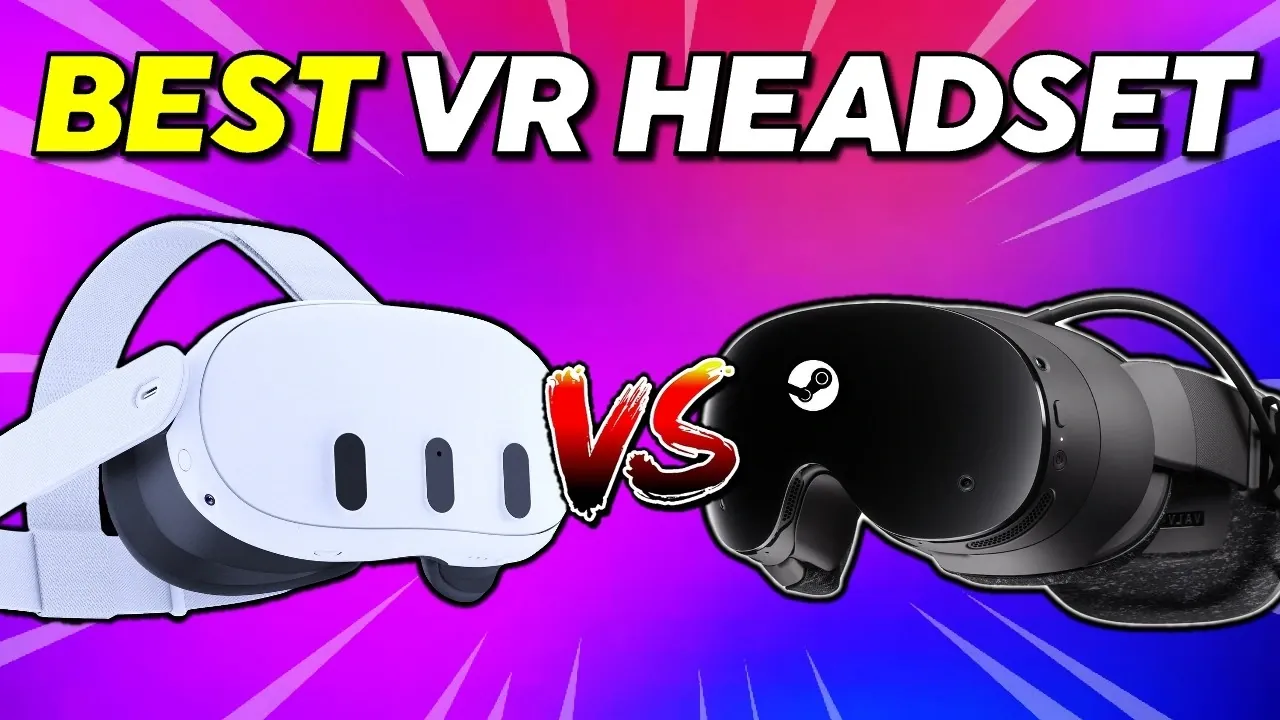
Imagine stepping into a world where the boundaries of reality blur, where vibrant landscapes and heart-pounding adventures unfold right before your eyes. Virtual reality has evolved from a niche curiosity to a mainstream phenomenon, and at the forefront of this revolution are two titans: the Meta Quest 3 and the Steam Frame. But here’s the catch, while both promise innovative experiences, they cater to vastly different audiences. Whether you’re a casual gamer seeking standalone simplicity or a PC VR enthusiast chasing uncompromising performance, the choice between these two headsets could redefine how you experience the virtual realm. So, which one truly deserves the crown as the best VR headset?
In this feature, VRelity peel back the layers of these two devices, comparing their design, performance, and gaming ecosystems to uncover what sets them apart. You’ll discover why the Meta Quest 3’s standalone versatility might be perfect for newcomers, while the Steam Frame’s advanced PC integration could win over seasoned gamers. From weight distribution to refresh rates, and from storage options to controller design, every detail matters when choosing a headset that aligns with your needs. By the end, you’ll not only have a clearer picture of each device’s strengths but also a deeper understanding of what matters most in your VR journey. After all, the right headset isn’t just about specs, it’s about how it transforms the way you play, explore, and connect.
Specs, Display & Performance Overview
TL;DR Key Takeaways :
- The Meta Quest 3 and Steam Frame are two advanced VR headsets catering to different user needs, with the Meta Quest 3 focusing on standalone gaming and affordability, while the Steam Frame targets PC VR enthusiasts with high-end performance and customization.
- The Steam Frame is lighter (435g vs. 515g) and features better weight distribution, making it more comfortable for extended PC VR gaming sessions, whereas the Meta Quest 3 offers vibrant mixed reality experiences with full-color passthrough cameras.
- In terms of visuals, both headsets deliver high-resolution displays, but the Steam Frame offers a higher experimental refresh rate of 144Hz compared to the Meta Quest 3’s 120Hz, appealing to users seeking ultra-smooth performance.
- The Meta Quest 3 excels in standalone applications with a Snapdragon XR2 Gen 2 chip and up to 512GB storage, while the Steam Frame, powered by a Series 8 Gen 3 processor, supports expandable storage up to 2TB and is optimized for PC VR gaming.
- The Meta Quest 3, released in 2023, is ideal for casual gamers and newcomers, while the Steam Frame, set for release in 2026, is designed for advanced users seeking superior hardware and native Steam VR support.
Design and Comfort
The design and comfort of a VR headset are crucial factors, especially for users planning extended sessions. Both the Meta Quest 3 and Steam Frame incorporate thoughtful design elements, but they differ in key areas.
- Weight: The Meta Quest 3 weighs 515 grams, while the Steam Frame is lighter at 435 grams. This weight difference makes the Steam Frame more comfortable for prolonged use, especially for PC VR enthusiasts.
- Camera Technology: The Meta Quest 3 features full-color passthrough cameras, allowing vibrant and engaging mixed reality experiences. On the other hand, the Steam Frame uses monochrome cameras, prioritizing precision for PC VR gaming rather than mixed reality.
- Weight Distribution: The Steam Frame integrates its battery into the strap, improving balance and reducing strain during extended sessions. This design choice gives it an ergonomic advantage for users focused on PC VR gaming.
Both headsets prioritize comfort, but the Steam Frame’s lighter build and balanced weight distribution may appeal more to users who prioritize long gaming sessions.
Controller Design
The controllers included with each headset are designed to enhance usability and cater to different gaming preferences. While both rely on AA batteries for power, their layouts and features vary.
- Meta Quest 3: The controllers feature a standard layout that is intuitive and familiar to most VR users, making it accessible for casual gamers and newcomers.
- Steam Frame: The addition of a D-pad on the Steam Frame controllers provides a more traditional gaming feel. This feature enhances versatility, especially for users accustomed to console-style controls.
The choice between these controllers depends on whether you prefer a straightforward design or additional functionality for a more traditional gaming experience.
Meta Quest 3 vs Valve Steam Frame

Advance your skills in VR headsets by reading more of our detailed content.
Display and Visuals
Visual quality is a defining aspect of any VR headset, and both the Meta Quest 3 and Steam Frame deliver impressive performance in this area. However, subtle differences in their display technologies may influence your decision.
- Resolution and Optics: Both headsets feature high-resolution LCD screens paired with pancake optics, making sure crisp visuals and an immersive experience.
- Refresh Rate: The Meta Quest 3 offers a 120Hz refresh rate, providing smooth gameplay for most users. The Steam Frame, however, pushes the boundaries with an experimental 144Hz refresh rate, catering to those seeking ultra-smooth performance.
- Field of View: Both devices boast a 110° field of view, offering a wide and immersive perspective for gaming and virtual environments.
While both headsets excel in visual performance, the Steam Frame’s higher refresh rate may appeal to users who prioritize fluid motion and responsiveness.
Performance and Processing Power
Performance is a critical consideration for VR users, and the Meta Quest 3 and Steam Frame take different approaches to deliver powerful experiences.
- Meta Quest 3: Equipped with the Snapdragon XR2 Gen 2 chip, the Meta Quest 3 provides robust standalone performance. This makes it ideal for users who want a self-contained VR experience without relying on external hardware.
- Steam Frame: Powered by the advanced Series 8 Gen 3 processor, the Steam Frame is optimized for PC VR gaming. It also includes inward-facing cameras for eye tracking and foveated rendering, which enhance performance by allocating resources to the areas you’re actively viewing.
The Meta Quest 3 excels in standalone applications, while the Steam Frame’s advanced processing capabilities make it a top choice for PC VR enthusiasts.
Gaming and Software Ecosystem
The gaming experience offered by each headset is shaped by its software ecosystem and compatibility with different platforms.
- Meta Quest 3: This headset shines in standalone gaming, offering a vast library of games and access to the Horizon Worlds social platform. It also supports PC VR gaming via a cable or wireless connection, providing flexibility for users who want to explore both standalone and PC-based experiences.
- Steam Frame: Designed for PC VR enthusiasts, the Steam Frame supports native Steam VR game downloads. Its Wi-Fi 6E dongle ensures ultra-low latency, and the Steam OS interface offers extensive customization options for advanced users.
Your choice will depend on whether you prefer the convenience of standalone gaming or the advanced features and customization of PC VR gaming.
Storage Options
Storage capacity is another important factor, particularly for users with extensive game libraries or those who frequently download large files.
- Meta Quest 3: Offers up to 512GB of internal storage, which is sufficient for most users and ensures a seamless experience without the need for external storage solutions.
- Steam Frame: Available in 256GB and 1TB models, the Steam Frame also supports expandable storage via microSD cards, accommodating up to 2TB. This flexibility makes it an excellent choice for users with larger storage needs.
The Steam Frame’s expandable storage options provide a significant advantage for users who require more space for games and applications.
Release Timeline and Target Audience
The release dates and intended audiences for these headsets highlight their distinct focus and appeal.
- Meta Quest 3: Released in 2023, the Meta Quest 3 emphasizes affordability and accessibility. It is an excellent choice for casual gamers and those new to VR.
- Steam Frame: Scheduled for release in 2026, the Steam Frame targets advanced users and PC VR enthusiasts. Its superior hardware and native Steam VR support make it a compelling option for experienced gamers.
The Meta Quest 3 is ideal for those seeking an affordable entry point into VR, while the Steam Frame caters to users looking for high-end performance and customization.
Making the Right Choice
Selecting the right VR headset ultimately depends on your priorities and how you plan to use the device.
- If you value standalone gaming, affordability, and mixed reality features, the Meta Quest 3 is a strong contender.
- If you’re a PC VR enthusiast seeking advanced performance, customizable features, and native Steam VR support, the Steam Frame is the better choice.
Both headsets offer unique strengths, making sure there is an option for every type of VR user. Carefully consider your preferences and requirements to find the headset that best suits your virtual reality journey.
Media Credit: VRelity
Filed Under: Gaming News, Guides
Latest Geeky Gadgets Deals
Disclosure: Some of our articles include affiliate links. If you buy something through one of these links, Geeky Gadgets may earn an affiliate commission. Learn about our Disclosure Policy.
Credit: Source link