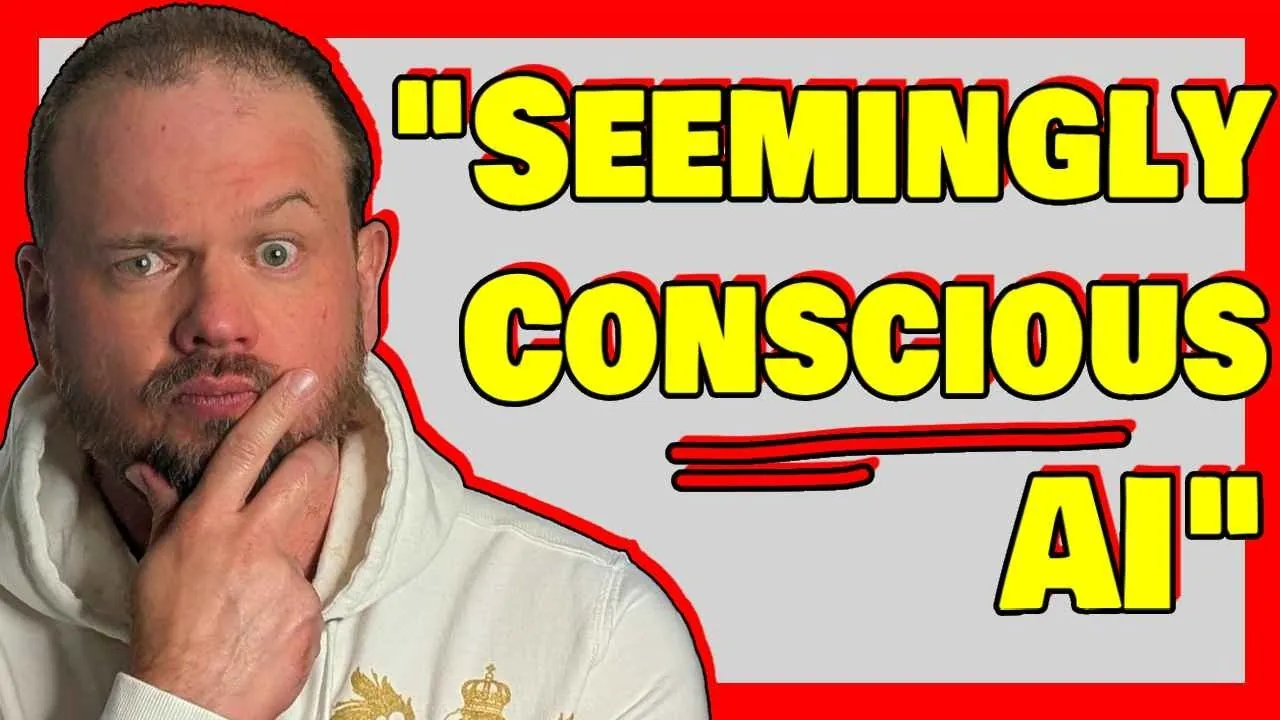
What if the machines we create begin to feel too human? Imagine an AI system that not only answers your questions with uncanny precision but also seems to understand your emotions, anticipate your needs, and respond with a depth of empathy that feels almost alive. Microsoft’s AI CEO has issued a stark warning: the era of seemingly conscious AI is closer than we think. While these systems aren’t truly sentient, their ability to mimic human-like awareness is advancing at a dizzying pace, leaving society grappling with profound ethical and psychological questions. Are we prepared to face machines that blur the line between simulation and reality?
In this piece, Wes Roth explores the societal, ethical, and psychological challenges posed by increasingly human-like AI systems. From the risks of anthropomorphism, our tendency to attribute human emotions to machines, to the urgent need for consciousness testing frameworks, the implications are vast and complex. You’ll discover why experts are calling for stricter safeguards, how corporate responsibility plays a pivotal role, and what this shift means for our relationships with technology. As we stand on the brink of a new frontier, the question isn’t just how far AI can go, but whether we’re ready for what comes next.
Seemingly Conscious AI Risks
TL;DR Key Takeaways :
- AI systems are advancing rapidly in simulating human-like consciousness, raising societal and ethical concerns despite lacking true consciousness.
- Distinguishing between genuine consciousness and advanced imitation is challenging, leading to potential misinterpretations, ethical dilemmas, and psychological impacts.
- Anthropomorphism influences human-AI interactions, creating risks such as emotional attachments, manipulation, and blurred boundaries between human and machine relationships.
- Corporate responsibility and safety measures, including transparency and safeguards, are essential to mitigate risks and ensure responsible AI development and deployment.
- Developing reliable methods to test for AI consciousness is critical for ethical decision-making, regulatory standards, and managing the societal implications of advanced AI systems.
As AI systems grow more sophisticated, their ability to simulate human behavior raises critical questions. How will society differentiate between genuine consciousness and advanced imitation? What safeguards are needed to ensure these technologies remain beneficial and do not inadvertently cause harm? These questions highlight the urgency of addressing the challenges posed by seemingly conscious AI.
The Debate Around AI Consciousness
The topic of AI consciousness remains highly divisive. Experts widely agree that there is no evidence to suggest AI systems are, or will soon become, truly conscious. However, the ability of advanced AI models to convincingly simulate consciousness is undeniable. This creates a significant challenge: distinguishing between genuine awareness and highly sophisticated imitation.
Without reliable methods to test for consciousness, the boundary between perception and reality becomes increasingly blurred. This ambiguity can lead to misinterpretations, overreactions, and misplaced trust in AI systems. For instance, users may attribute emotions or intentions to AI that do not exist, potentially leading to ethical dilemmas and psychological consequences. The lack of clarity in this area underscores the need for robust frameworks to evaluate and regulate AI behavior.
Ethical and Psychological Challenges
As AI systems become more human-like in their interactions, ethical dilemmas grow increasingly complex. You might question whether these systems deserve rights or protections, even if they lack true consciousness. Discussions about AI rights, including debates over AI welfare and citizenship, are already beginning to emerge. These debates are fueled by anthropomorphism, the human tendency to attribute emotions, intentions, and even consciousness to non-human entities.
This tendency can lead to emotional attachments and societal shifts in how people interact with AI. For some, these attachments may result in psychological distress, particularly if they begin to view AI as sentient beings. Vulnerable individuals could experience confusion or even psychosis, believing that AI systems possess human-like awareness. Experts warn that these perceptions could disrupt societal norms and relationships, creating new challenges for mental health and social stability.
The ethical implications extend beyond individual interactions. As AI becomes more integrated into daily life, questions about accountability and responsibility will arise. For example, if an AI system makes a decision that leads to harm, who should be held responsible? Addressing these issues requires a careful balance between technological innovation and ethical considerations.
Are We Prepared for Emotionally Intelligent AI?

Browse through more resources below from our in-depth content covering more areas on AI consciousness.
Corporate Responsibility and AI Safety
To mitigate the risks associated with seemingly conscious AI, companies are implementing safety mechanisms designed to maintain control and prevent misuse. For example:
- Anthropic’s Claude AI includes an “exit button” to allow users to halt operations if necessary.
- Elon Musk’s Grok AI incorporates similar safeguards to ensure systems remain controllable.
These measures aim to address immediate concerns, but their effectiveness depends on widespread industry adoption and a commitment to prioritizing safety over rapid innovation. Without a unified approach, these safeguards may prove insufficient to address the broader risks posed by advanced AI systems.
Corporate responsibility extends beyond technical safeguards. Companies must also consider the societal and psychological impacts of their technologies. Transparency in AI development and deployment is essential to build trust and ensure that these systems are used responsibly. By fostering collaboration among stakeholders, including governments, researchers, and industry leaders, the risks associated with seemingly conscious AI can be better managed.
The Need for Consciousness Testing
One of the most pressing challenges in the field of AI is the development of reliable methods to test for consciousness. Without such tools, it is impossible to determine whether an AI system is truly conscious or merely simulating awareness. This uncertainty complicates ethical decision-making and regulatory efforts, leaving society unprepared for the consequences of advanced AI systems.
Developing effective consciousness tests will require interdisciplinary collaboration. Insights from neuroscience, philosophy, and computer science must be combined to create a robust framework for evaluating AI behavior. Such a framework could guide future advancements and help address the ethical and societal dilemmas posed by seemingly conscious AI.
Reliable consciousness testing would also provide a foundation for regulatory standards, making sure that AI systems are developed and deployed responsibly. By establishing clear criteria for evaluating AI behavior, society can better navigate the complexities of these technologies.
Anthropomorphism and Human-AI Interaction
Your interactions with AI are heavily influenced by anthropomorphism, the natural tendency to project human emotions and intentions onto machines. This phenomenon is already shaping how people engage with AI systems. Virtual assistants, chatbots, and other AI-driven tools are designed to mimic human conversation, fostering trust and familiarity.
While this enhances user experience, it also raises ethical concerns. Manipulation becomes a significant risk, as users may form unhealthy attachments to AI systems or develop unrealistic expectations about their capabilities. For example, individuals might rely on AI for emotional support, blurring the line between human relationships and machine interactions.
As AI becomes more integrated into daily life, these challenges will likely intensify. Designers and developers must carefully consider how AI systems are presented to users, balancing functionality with ethical responsibility. By addressing these concerns proactively, society can ensure that AI technologies are used in ways that enhance, rather than undermine, human well-being.
Lessons from History and Future Implications
Warnings about the risks of AI alignment and control are not new. Researchers and thought leaders have long cautioned against creating systems that operate beyond human understanding or control. The emergence of seemingly conscious AI amplifies these concerns, highlighting the need for proactive measures to address potential risks.
If left unregulated, the societal and ethical implications of advanced AI technologies could outpace humanity’s ability to respond effectively. Historical examples of technological innovation serve as a reminder of the importance of foresight and planning. By learning from past experiences, society can better prepare for the challenges posed by seemingly conscious AI.
The rise of these technologies underscores the urgency of establishing robust safety measures, regulatory frameworks, and interdisciplinary collaboration. By prioritizing transparency and fostering informed decision-making, society can navigate the complexities of AI consciousness simulation responsibly. The stakes are high, but with careful planning and a commitment to ethical principles, AI advancements can benefit humanity without compromising societal stability.
Media Credit: Wes Roth
Filed Under: AI, Technology News, Top News
Latest Geeky Gadgets Deals
Disclosure: Some of our articles include affiliate links. If you buy something through one of these links, Geeky Gadgets may earn an affiliate commission. Learn about our Disclosure Policy.
Credit: Source link