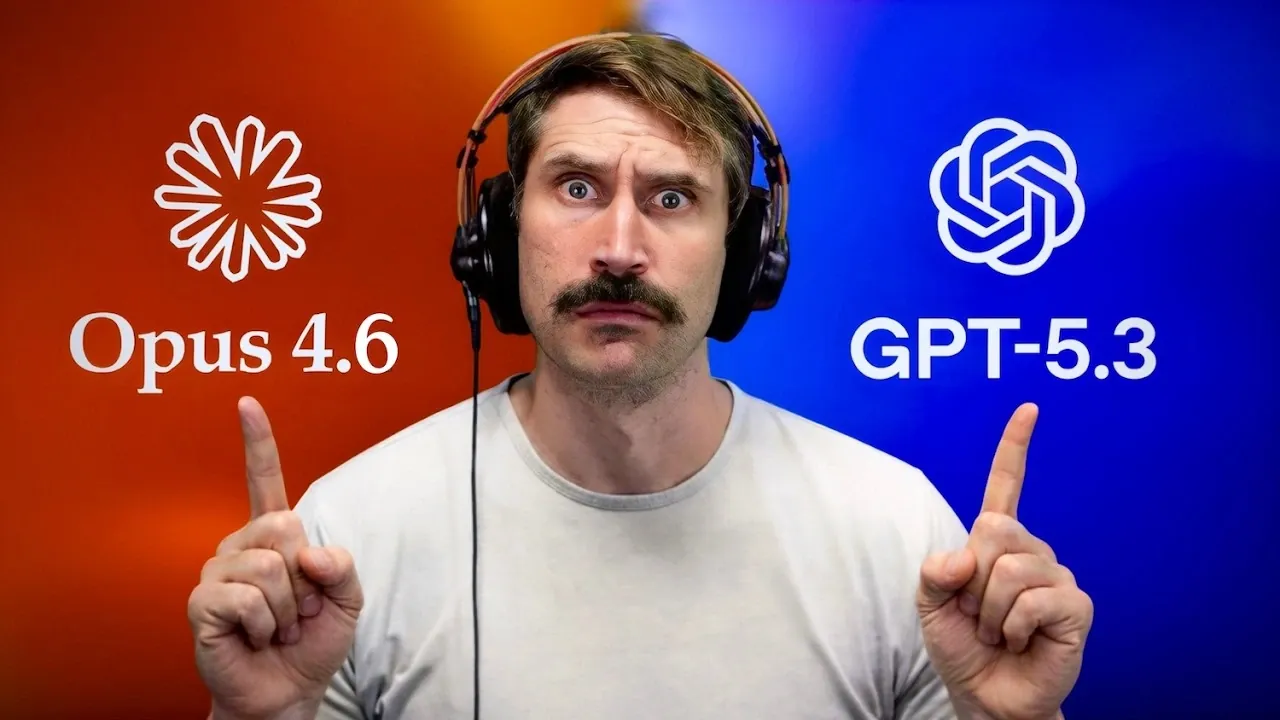
What if the future of programming wasn’t just about writing code but about collaborating with AI to create it? In this breakdown, The PrimeTime walks through how the newly launched Opus 4.6 and ChatGPT 5.3 are reshaping the way developers approach complex tasks. Released just minutes apart on February 6, 2026, these two AI models bring distinct strengths to the table, offering developers a choice between streamlined code generation and dynamic modularity. Whether you’re building a JSX transformer or tackling a more intricate project, the differences between these models could redefine how you think about productivity and problem-solving in software development. With one excelling in clarity and precision and the other in adaptability, the announcement raises a compelling question: which approach aligns better with the future of programming?
This guide dives into the unique capabilities of Opus 4.6 and ChatGPT 5.3, unpacking their performance in a real-world coding challenge. From generating elegant, concise code to implementing advanced features like hot module reloading, each model demonstrates its strengths and trade-offs in surprising ways. If you’ve ever wondered how AI could transform your workflow, or where its limitations might frustrate you, this announcement offers a nuanced look at both the possibilities and the challenges. By the end, you’ll not only understand what sets these models apart but also gain insights into how to harness their potential to elevate your own development process.
Opus 4.6 vs ChatGPT 5.3
TL;DR Key Takeaways :
- Opus 4.6 and ChatGPT 5.3 were launched on February 6, 2026, offering advanced AI tools designed to enhance software development workflows by simplifying complex programming tasks.
- ChatGPT 5.3 excelled in generating clean, concise, and maintainable code, successfully compiling JSX into JavaScript but lacked the ability to implement hot module reloading.
- Opus 4.6 prioritized modularity and dynamic functionality, successfully implementing hot module reloading but failing to fully compile JSX into JavaScript, producing less polished code.
- The performance comparison highlights trade-offs: ChatGPT 5.3 is ideal for code clarity and efficiency, while Opus 4.6 is better suited for modularity and dynamic features.
- Advanced AI models like Opus 4.6 and ChatGPT 5.3 are reshaping programming by saving time, automating debugging, and improving code quality, but their effectiveness depends on the developer’s expertise and strategic application.
Launch Overview
On February 6, 2026, Opus 4.6 was officially launched at 10:45 a.m., followed shortly by the release of ChatGPT 5.3 at 11:12 a.m. Both models represent innovative advancements in AI technology, with the shared goal of simplifying complex programming tasks and enhancing developer productivity. Despite their common purpose, each model offers distinct features that cater to different aspects of software development, making them valuable tools for a variety of use cases.
Testing the Models: Building a JSX Transformer
To evaluate the capabilities of Opus 4.6 and ChatGPT 5.3, both models were tasked with creating a JSX transformer application. The project requirements included:
- Compiling JSX into JavaScript
- Implementing hot module reloading
- Rendering output using Bun
The testing environment was built on a Rust-based development framework, making sure a consistent and unbiased comparison. Identical prompts were provided to both models, allowing for a direct assessment of their abilities in code generation, execution, and optimization. This rigorous testing process revealed key differences in their approaches and outcomes, shedding light on their respective strengths and areas for improvement.
Opus 4.6 & ChatGPT 5.3 AI Models Officially Launched

Here are more guides from our previous articles and guides related to ChatGPT that you may find helpful.
Performance Analysis
The results of the testing process highlighted distinct differences in how each model approached the task of building the JSX transformer application. These differences provide valuable insights into their functionality and potential applications.
ChatGPT 5.3 demonstrated a strong ability to generate clean and concise code.
- Successfully compiled JSX into JavaScript using only 520 lines of Rust code, showcasing its efficiency in code generation.
- Excelled in live JSX compilation but was unable to implement hot module reloading, indicating a limitation in handling dynamic updates.
- Produced code that was well-organized and stylistically preferred, making it easier to read and maintain.
Opus 4.6, on the other hand, prioritized modularity and functionality.
- Successfully implemented hot module reloading but failed to fully compile JSX into JavaScript, reflecting a trade-off in its capabilities.
- Generated 1,300 lines of Rust code, relying heavily on modular functions rather than producing a fully compiled output.
- Produced functional but less polished code, emphasizing modularity over stylistic elegance.
These findings highlight the trade-offs between the two models, with ChatGPT 5.3 excelling in code clarity and efficiency, while Opus 4.6 focuses on modularity and dynamic functionality.
Key Takeaways for Developers
The performance of Opus 4.6 and ChatGPT 5.3 underscores the importance of understanding the strengths and limitations of AI tools in programming. Both models demonstrated the ability to produce functional code, but their effectiveness depends heavily on the user’s expertise and approach.
As a developer, your ability to craft precise prompts and interpret AI-generated output plays a critical role in determining the quality of the results. These AI tools act as amplifiers of your skills, streamlining repetitive tasks such as debugging and testing while also magnifying inefficiencies in your workflow.
When choosing between these models, consider your specific needs:
- If you prioritize clean, concise, and maintainable code, ChatGPT 5.3 may be the better fit for your projects.
- If modularity and dynamic features like hot module reloading are more critical, Opus 4.6 might be the preferred choice.
Ultimately, the value of these tools lies in how effectively you can use their capabilities to enhance your programming workflow.
AI’s Broader Impact on Programming
The introduction of advanced AI models like Opus 4.6 and ChatGPT 5.3 is reshaping the programming landscape, offering developers new opportunities to improve efficiency and code quality. These tools provide several key benefits:
- Time savings on repetitive and time-consuming coding tasks
- Enhanced debugging and testing automation, reducing error rates and improving reliability
- Improved code quality when used effectively by skilled developers
However, the effectiveness of these tools is directly tied to the user’s ability to apply them strategically. While competition among AI providers continues to drive innovation, the true impact of these technologies lies in their practical application. Developers who invest time in understanding the capabilities and limitations of these models will be better positioned to unlock their full potential and achieve meaningful results in their projects.
By integrating tools like Opus 4.6 and ChatGPT 5.3 into your workflow, you can not only enhance your productivity but also gain a competitive edge in an increasingly AI-driven programming environment.
Media Credit: The PrimeTime
Filed Under: AI, Technology News, Top News
Latest Geeky Gadgets Deals
Disclosure: Some of our articles include affiliate links. If you buy something through one of these links, Geeky Gadgets may earn an affiliate commission. Learn about our Disclosure Policy.
Credit: Source link