
What if the next breakthrough in space exploration wasn’t powered by billion-dollar budgets or sprawling research facilities, but by a credit card-sized computer you could hold in your hand? Enter the Raspberry Pi, a tiny yet mighty device that’s transforming how we reach for the stars. From managing satellite systems to conducting experiments in orbit, these affordable mini PCs are proving that innovation doesn’t have to come with an astronomical price tag. In fact, they’re at the heart of CubeSats—small, modular satellites that are providing widespread access to access to space. By combining open source technology with hands-on learning, Raspberry Pi-powered CubeSats are empowering students, researchers, and hobbyists to play an active role in space exploration, breaking down barriers that once made the cosmos feel out of reach.
In this exploration, Jeff Geerling explains how Raspberry Pi devices are reshaping satellite technology and making space more accessible than ever before. You’ll discover how these compact computers tackle the unique challenges of operating in orbit, from managing extreme temperatures to making sure reliable communication with Earth. We’ll also delve into the educational revolution sparked by CubeSats, where students and enthusiasts are not just learning about space but actively building and launching their own satellites. Whether you’re curious about the affordability of CubeSats or inspired by their potential to transform STEM education, this journey into the world of Raspberry Pi in space promises to be as enlightening as it is exciting. After all, when the tools of exploration are this accessible, who’s to say where the next big idea might come from?
CubeSats and Raspberry Pi
TL;DR Key Takeaways :
- CubeSats, modular satellites powered by microcontrollers and Raspberry Pi, are transforming space exploration by making satellite technology affordable and accessible to students, researchers, and hobbyists.
- These small satellites are cost-effective, with development and launch costs significantly reduced through ride-share programs and educational grants, providing widespread access to access to space technology.
- CubeSats face unique technical challenges, such as power constraints, thermal management, and cybersecurity, which are addressed through efficient design and versatile hardware like Raspberry Pi.
- As educational tools, CubeSats provide hands-on STEM learning opportunities, allowing students to design, build, and launch satellites, preparing them for careers in engineering and technology.
- Collaboration and open source platforms are key to CubeSat success, fostering a global community that shares knowledge and resources to advance satellite innovation and exploration.
What Are CubeSats?
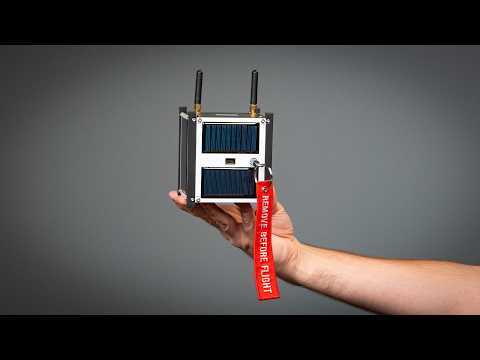
CubeSats are standardized, modular satellites constructed in units such as 1U, 2U, or 12U, where “U” represents a 10x10x10 cm cube. This modular design simplifies construction and integration, making CubeSats adaptable for a wide range of missions. At their core, they rely on microcontrollers and compact computers like Raspberry Pi to manage onboard systems and experiments. These devices handle essential tasks such as data collection, telemetry, and communication.
CubeSats are equipped with deployment mechanisms, including burn resistors and flexible antennas, to ensure smooth launches and reliable operation in space. Their scalable design allows them to support diverse missions, ranging from Earth observation and scientific research to interplanetary exploration. This versatility has made CubeSats a cornerstone of modern satellite technology.
Why CubeSats Are Affordable and Accessible
One of the most significant advantages of CubeSats is their cost-effectiveness. Traditional satellites often require millions of dollars for development and launch, but CubeSats reduce these costs dramatically, sometimes to just a few thousand dollars. This affordability is further enhanced by ride-share launch programs, where multiple CubeSats share a single rocket, significantly lowering the financial barrier to entry.
Educational grants and initiatives, such as NASA’s CubeSat Launch Initiative, provide additional support for schools, universities, and independent teams. These programs provide widespread access to access to satellite technology, allowing a broader audience to engage in space exploration. By lowering costs and offering institutional support, CubeSats are empowering a new generation of innovators to explore the possibilities of space.
Raspberry Pi Mini PCs in Space
Stay informed about the latest in Raspberry Pi 5 by exploring our other resources and articles.
Overcoming Technical Challenges
Operating in space presents unique technical challenges that CubeSats must overcome to ensure mission success. These challenges include:
- Power Constraints: CubeSats typically operate on just 1-2 watts of power, necessitating highly efficient power management systems to sustain operations.
- Thermal Management: The extreme temperatures of space can damage sensitive components, requiring robust thermal control measures to maintain functionality.
- Reliability: Redundancy systems are often implemented to ensure continued operation, even in the event of subsystem failures.
- Remote Operation: CubeSats must be controlled from Earth, which demands reliable communication and control systems to execute commands and transmit data.
- Cybersecurity: Protecting CubeSats from unauthorized access and cyber threats is critical to maintaining mission integrity.
Raspberry Pi devices, adapted for low-power and space-specific tasks, play a pivotal role in addressing these challenges. Their versatility and computational capabilities make them ideal for managing CubeSat operations, from data processing to system monitoring.
CubeSats as Educational Tools
CubeSats are not just tools for research; they are also powerful educational platforms. Programs like NASA’s CubeSat Launch Initiative inspire students to design, build, and launch their own satellites, offering a unique opportunity to apply STEM concepts in a real-world context. Educational kits, such as MYAT and RAS Cube, provide hands-on learning experiences, teaching students about engineering, programming, and problem-solving.
Open source projects, such as “Build a CubeSat,” further enhance accessibility by sharing detailed resources and documentation. These initiatives encourage collaboration and community engagement, making satellite development an inclusive and participatory endeavor. By working on CubeSat projects, students gain practical experience that prepares them for careers in engineering, science, and technology.
Security and Communication in CubeSats
Security is a growing concern in satellite technology, and CubeSats are no exception. Vulnerabilities in their systems can jeopardize entire missions, making robust cybersecurity measures essential. Encryption protocols, secure communication channels, and regular system updates are critical to safeguarding CubeSats from potential threats.
Communication is another vital aspect of CubeSat operations. Many CubeSats use amateur radio frequencies for telemetry and data transmission between the satellite and ground stations. Tools like software-defined radios (SDRs) and satellite tracking software, such as Gpredict and Stellarium, simplify communication and monitoring. These tools ensure reliable operation throughout the mission lifecycle, allowing teams to maintain control and gather valuable data.
Real-World Examples of CubeSat Projects
Several CubeSat projects illustrate the potential and versatility of these miniature satellites:
- SilverSat: A student-led initiative supported by NASA that integrates social media with satellite technology by tweeting images from space.
- Tempest CubeSat: A project designed to teach cybersecurity concepts, providing a practical framework for understanding and addressing satellite vulnerabilities.
- “Build a CubeSat”: A community-driven project that documents the process of launching weather balloons, offering insights into the challenges and rewards of satellite development.
These examples highlight how CubeSats are inspiring innovation and exploration, demonstrating their value as both research tools and educational platforms.
The Role of Community and Collaboration
The success of CubeSats is deeply rooted in collaboration among educators, students, researchers, and amateur radio enthusiasts. Open source platforms and social media channels play a crucial role in sharing knowledge and resources, fostering a global community dedicated to advancing satellite technology. By working together, these groups are pushing the boundaries of what is possible with small satellites, creating opportunities for innovation and discovery.
Looking Ahead: The Future of CubeSats
The future of CubeSats is bright, with expanding opportunities for students, researchers, and hobbyists to engage in satellite development. As technology continues to evolve, CubeSats are expected to play an increasingly important role in educational outreach, providing hands-on engineering experience and inspiring the next generation of scientists and engineers.
By using the affordability and accessibility of these miniature satellites, you can contribute to the growing field of space exploration. Whether you are a student, educator, or enthusiast, CubeSats offer a unique opportunity to participate in the exploration of the final frontier.
Media Credit: Jeff Geerling
Filed Under: DIY Projects, Hardware, Technology News
Latest Geeky Gadgets Deals
Disclosure: Some of our articles include affiliate links. If you buy something through one of these links, Geeky Gadgets may earn an affiliate commission. Learn about our Disclosure Policy.
Credit: Source link