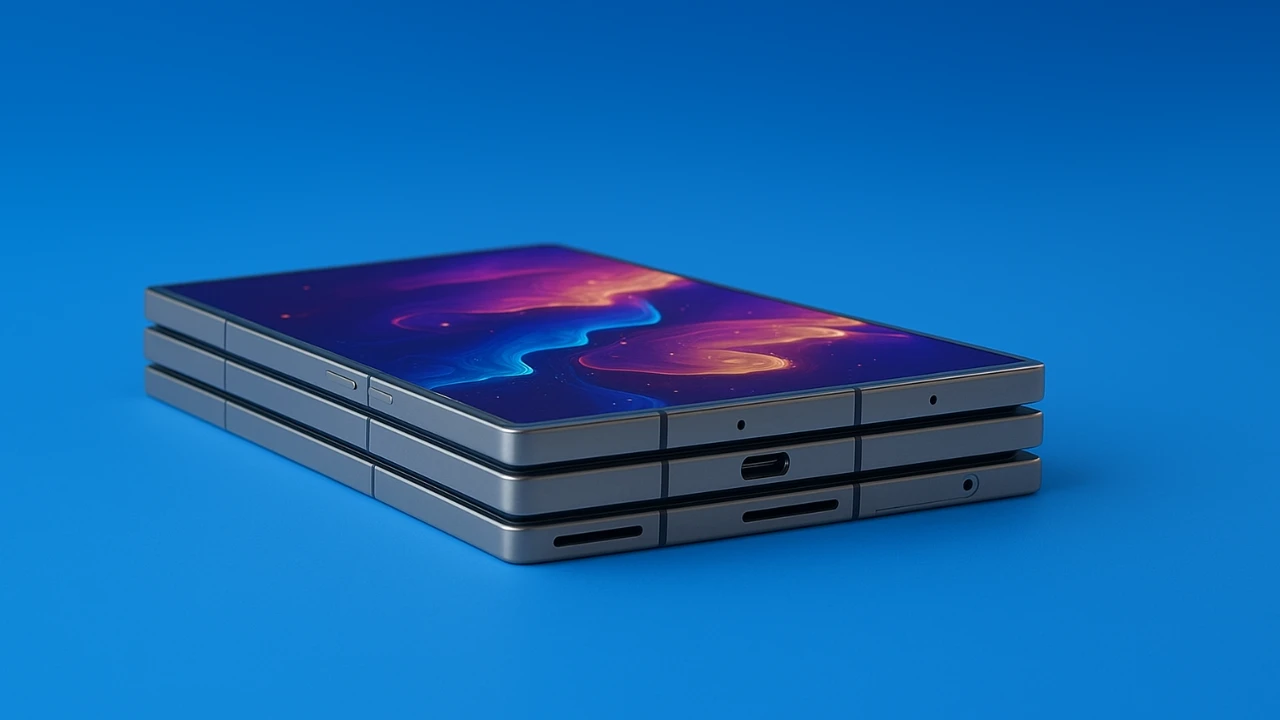
Last week, we broke down the incredible engineering leaks behind Samsung’s upcoming Galaxy Z Tri-Fold, detailing the razor-thin 4.2mm profile and the ambition to put a 200MP camera into a folding chassis. The “what” is now well established.
But as we barrel toward the confirmed December 5 launch date, the conversation has shifted to the “how” and the “why.”
New supply chain reports indicate that while the device is ready for the spotlight, Samsung is treating this release less like a Galaxy S25 blockbuster and more like a “public beta.” With availability strictly limited to South Korea and select Chinese retailers, Western enthusiasts are effectively being told to wait. Here is a deep dive into Samsung’s strategy, the “Dual-Inward” hinge decision, and the reality of importing one of these beasts.
The “Inward” Gamble: Durability Over Flash
While the specs remain consistent with our previous reporting, we now have a clearer understanding of the physicality of the device compared to its main rival, the Huawei Mate XT.
Huawei grabbed headlines earlier this year with a “Z-Fold” design—one hinge folds in, the other folds out. This allows for a thinner device because it requires one less screen (the folded-out part acts as the cover screen). However, it leaves a third of the soft plastic screen permanently exposed to the elements.
Samsung has chosen the harder path.
Confirmed schematics show a “Dual Inward” (G-Shape) fold. Both side wings fold in to protect the main 10-inch panel. This necessitates a separate, fourth glass display on the front cover.
The Strategy: This adds thickness (pushing the device to ~14mm folded), but it solves the number one consumer fear: Scratching the soft screen. By ensuring the expensive flexible panel is always armored behind the metal chassis when closed, Samsung is betting that users will accept a thicker phone in exchange for peace of mind. It is a conservative, practical engineering choice that contrasts sharply with the flashy but fragile designs from Chinese competitors.
The “Public Beta” Launch Strategy
Why can’t you buy this at Best Buy on December 6th?
Sources point to a production run of just 50,000 to 100,000 units for this initial window. For context, Samsung typically produces millions of Galaxy S units for launch day. This scarcity is intentional.
1. The Yield Rate Reality
Manufacturing a display that can survive folding in two different places simultaneously is exponentially harder than a standard foldable. Yield rates (the percentage of screens that come off the line without defects) are reportedly low. By keeping the launch small, Samsung can manage its limited inventory without frustrating global carriers who demand millions of units.
2. Field Testing the Hinge
No amount of robot testing can simulate the chaos of the real world. By limiting the device to South Korea (and likely China), Samsung keeps the “test group” close to home. If a hinge defect is discovered after two months of real-world use, recalling 50,000 units in Seoul is a logistical annoyance. Recalling 2 million units across the US and Europe is a brand-destroying catastrophe (see: Galaxy Note 7).
Effectively, the early adopters in Korea are paying a premium (~$3,000) to be beta testers for the rest of us. The data gathered from this December launch will directly influence the “Galaxy Z Tri-Fold 2” (or the global version of this device) expected in late 2026.
The Import Market: A Warning for US Buyers
We know our audience. Many of you are already browsing eBay and specialized export sites like Clove or Expansys, preparing to pay a premium to import the Tri-Fold.
If you are considering this, there are three critical factors to confirm before you drop $3,500+ (including import markup):
- 5G Band Support: The Korean SKU (likely model number SM-F966N) is optimized for Asian 5G bands. While it will likely support basic US LTE bands, it may lack the specific mmWave bands used by Verizon or AT&T for high-speed 5G. You might be buying a $3,000 phone that is stuck on 4G speeds.
- Samsung Pay & Software: Imported Samsung devices often have region-locked features. Samsung Pay / Wallet may refuse to work with US credit cards, and specific AI features in “Galaxy AI” might be geofenced to Korean servers initially.
- The Repair Nightmare: This is the big one. If you crack the screen of a Z Tri-Fold in New York, Samsung US will not have the parts to fix it. You would likely have to ship the device back to Korea for service, a process that can take months and cost hundreds of dollars in insured shipping.
Final Spec Confirmation
While we covered the leaked specs extensively here, the final configuration for the December 5 event has settled on the following:
- SoC: Snapdragon 8 Elite Gen 5 (Global logic, surprisingly, rather than Exynos).
- RAM: 16GB is the only option. No 12GB models.
- Cameras: The 200MP Main sensor is locked in. However, the telephoto lens is now confirmed to be a conservative 10MP 3x Optical unit, rather than the 5x periscope found on the Ultra series. This was likely a space-saving measure to keep the device under 15mm thick.
- Battery: 5,600 mAh split-cell.
The Verdict
The December 5 launch of the Galaxy Z Tri-Fold is a watershed moment for mobile technology, but it is not a commercial product launch in the traditional sense. It is a statement of intent.
Samsung is planting a flag in the ground to say, “We can do this too, and we can do it with a durable, inward-folding design.” For the vast majority of our readers, this is a spectator sport. The smart money is on waiting for the refined, globally supported version that will inevitably follow once the “beta testers” in Seoul have put the hinge through its paces.
Enhance your knowledge on the Samsung Galaxy Z Trifold by exploring a selection of articles and guides on the subject.
Filed Under: Android News, Mobile Phone News, Top News
Latest Geeky Gadgets Deals
Disclosure: Some of our articles include affiliate links. If you buy something through one of these links, Geeky Gadgets may earn an affiliate commission. Learn about our Disclosure Policy.
Credit: Source link