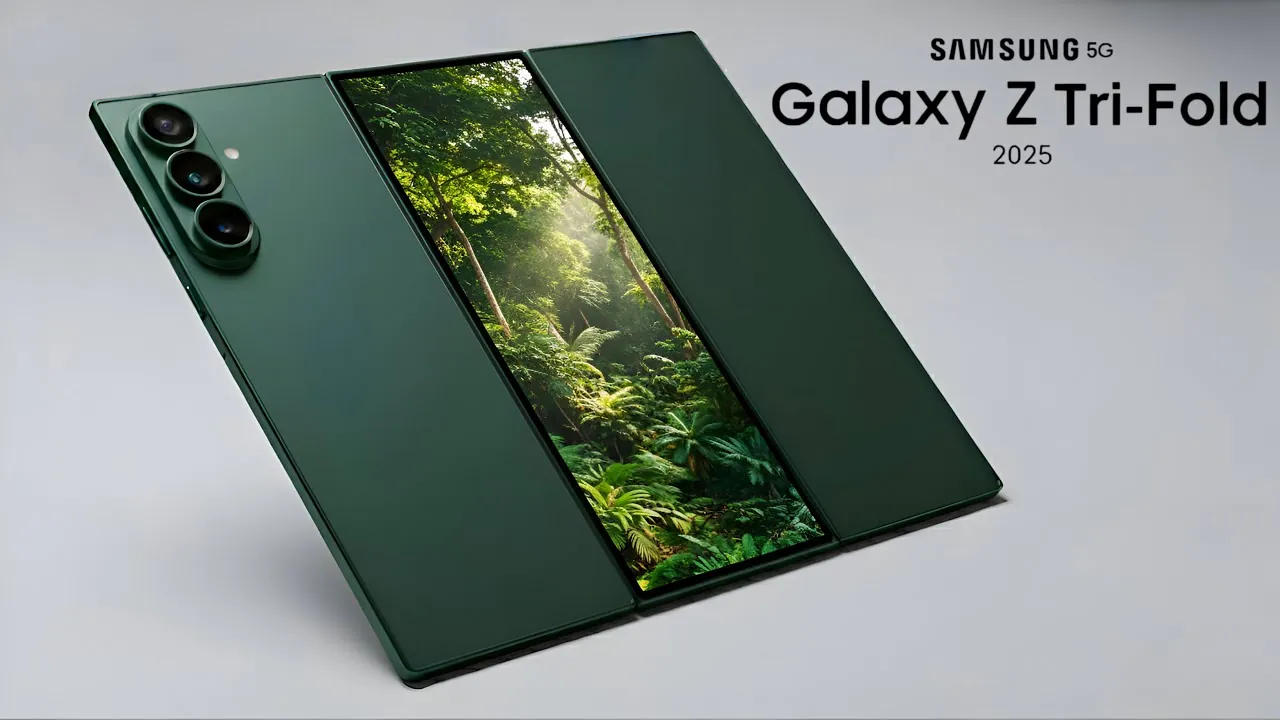
Samsung’s Galaxy Z Trifold is poised to make a significant impact in the foldable smartphone market with its debut price of $2,499—substantially lower than the anticipated $3,000. This pricing positions the device as a formidable competitor in the premium foldable segment, directly challenging rivals such as Huawei’s Mate X series and Apple’s rumored foldable device. With its innovative dual-hinge design and expansive 10-inch display, the Galaxy Z Trifold aims to elevate user expectations, merging innovative technology with a pricing strategy that broadens its appeal.

Innovative Dual-Hinge Design and Enhanced Functionality
The Galaxy Z Trifold introduces a dual-hinge mechanism that sets it apart from traditional foldable smartphones. This design enables multiple folding configurations, allowing users to adapt the device to various needs. When fully unfolded, the phone transforms into a 10-inch display, offering a tablet-like experience ideal for multitasking, entertainment, and productivity.
This expansive screen supports advanced features such as split-screen layouts, allowing users to run multiple apps simultaneously. Whether you’re editing documents, attending virtual meetings, or streaming content, the Trifold’s design enhances versatility. By combining premium aesthetics with practical functionality, Samsung delivers a device that caters to professionals, tech enthusiasts, and everyday users seeking innovation and adaptability.
Strategic Pricing: Making Foldable Technology More Accessible
Samsung’s decision to price the Galaxy Z Trifold at $2,499 reflects a deliberate effort to make foldable technology more accessible. This pricing undercuts initial estimates and positions the device as a more affordable option compared to competitors. For instance:
- Huawei’s Mate X series often commands a higher price, appealing to a niche audience.
- Apple’s rumored foldable device is expected to target the ultra-premium segment, likely exceeding the Trifold’s price point.
By offering a high-quality foldable device at a relatively lower price, Samsung not only strengthens its leadership in the foldable market but also broadens its customer base. This strategy underscores the company’s commitment to balancing innovation with affordability, making sure that innovative technology reaches a wider audience.
Rising Component Costs and Their Impact
While the Galaxy Z Trifold’s pricing is competitive, the broader smartphone industry faces challenges due to rising component costs, particularly for RAM. The growing demand for DDR5 RAM, driven by advancements in AI servers and high-performance computing, has led to a significant increase in prices. Samsung’s 16 GB DDR5 RAM modules, a critical component in premium smartphones, have become more expensive, adding pressure to production costs.
This trend is expected to persist, influencing the pricing of future devices across the industry. As manufacturers grapple with these challenges, consumers may see higher price tags on flagship models in the coming years. For Samsung, managing these costs while maintaining competitive pricing will be a key focus.
Samsung’s Competitive Edge in Memory Production
One of Samsung’s distinct advantages lies in its in-house memory production capabilities. Unlike many competitors, Samsung manufactures its own RAM and storage components, granting it greater control over supply chains and pricing. This vertical integration allows the company to navigate rising component costs more effectively, though it does not entirely shield it from market pressures.
Samsung’s ability to produce memory in-house provides a strategic edge, allowing it to maintain competitive pricing for devices like the Galaxy Z Trifold. This capability also positions Samsung to better adapt to industry challenges, making sure that it remains a leader in the premium smartphone market.
Future Flagships and Industry Implications
The rising cost of RAM and other components is likely to influence the pricing of Samsung’s upcoming flagship devices, including the Galaxy S26 and S27. To mitigate these costs, Samsung may continue its dual-processor strategy, using both Exynos and Snapdragon chips regionally to optimize production efficiency. While this approach offers some relief, consumers should anticipate higher prices for future flagship models.
The challenges posed by escalating component costs are not unique to Samsung. Smartphone manufacturers across the industry are facing similar pressures, which could lead to widespread price increases for premium devices. However, Samsung’s in-house memory production provides a slight advantage, allowing it to manage costs more effectively than some competitors. This advantage may help Samsung maintain its market position as the industry adapts to these financial pressures.
Shaping the Future of Foldable Technology
The Samsung Galaxy Z Trifold represents a bold step forward in the evolution of foldable smartphones. Its dual-hinge design, expansive display, and competitive pricing redefine what consumers can expect from premium foldable devices. However, the broader industry faces significant challenges due to rising component costs, particularly for RAM. While Samsung’s vertical integration offers some relief, the impact of these costs is likely to be felt in future flagship models.
As the smartphone market continues to evolve, consumers can expect a dynamic mix of technological innovation and shifting price points. The Galaxy Z Trifold exemplifies Samsung’s ability to balance these factors, delivering a device that pushes the boundaries of design and functionality while remaining accessible to a wider audience.
Gain further expertise in the Samsung Galaxy Z Trifold by checking out these recommendations.
Source & Image Credit: Demon’s Tech
Filed Under: Android News, Mobile Phone News, Top News
Latest Geeky Gadgets Deals
Disclosure: Some of our articles include affiliate links. If you buy something through one of these links, Geeky Gadgets may earn an affiliate commission. Learn about our Disclosure Policy.
Credit: Source link