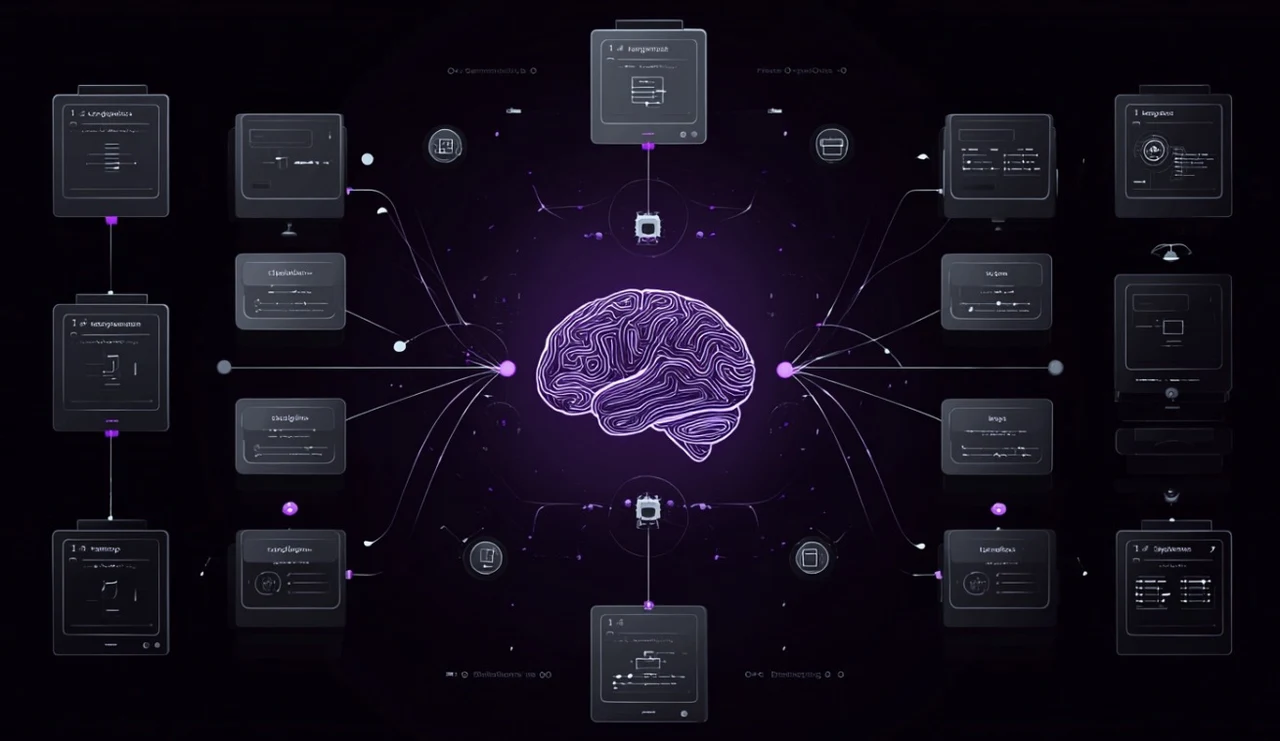
What if artificial intelligence could not only complete tasks but also manage them over weeks, months, or even years with near-perfect precision? Enter Deep Agents, a new evolution in AI designed to handle the kind of intricate, long-term challenges that leave traditional systems struggling. Imagine a research assistant that doesn’t just gather data but critiques its own findings, or a project manager that adapts to shifting priorities without missing a beat. Built on a robust architecture and powered by tools like modular sub-agents and contextual file systems, these agents are redefining what’s possible in task management. But how do they work, and what makes them so effective?
This feature provide more insights into the inner workings of Deep Agents JS, a JavaScript-based framework that brings these advanced AI systems to life. You’ll discover the key components that make these agents tick, from structured system prompts that ensure clarity to web search APIs that enable real-time data gathering. Whether you’re a developer eager to build your own deep agent or simply curious about their fantastic potential, this guide will illuminate the possibilities. By the end, you might find yourself rethinking how AI can shape the future of research, data analysis, and beyond.
Key Features of Deep Agents
TL;DR Key Takeaways :
- Deep agents are advanced AI systems designed for managing complex, long-term tasks with precision, using structured architecture for planning, context management, and task execution.
- Key features include advanced planning tools, contextual file system access, modular sub-agents for specialized tasks, and structured system prompts for clarity and consistency.
- Core components of a deep agent system include a Web Search API, Language Model API, Langraph Server, and a user-friendly UI for seamless operation and task management.
- Deploying a deep agent involves steps like cloning repositories, configuring environment variables, setting up the Langraph server and UI, and testing before deployment.
- Deep agents have practical applications in academic research, data analysis, and project management, offering enhanced productivity, accuracy, and efficiency in handling intricate workflows.
Deep agents stand out due to their sophisticated architecture, tailored for handling long-term and complex tasks. Unlike conventional AI systems, these agents are built on a React-based framework and incorporate advanced components to enhance their functionality. Here are the core features that make them unique:
- Advanced Planning Tools: These tools guide the agent’s actions, making sure tasks are executed logically and efficiently, minimizing errors and redundancies.
- Contextual File System Access: By organizing and managing context effectively, this feature prevents information overload and ensures quick and accurate data retrieval.
- Modular Sub-Agents: Specialized sub-agents focus on specific tasks, such as conducting research or critiquing outputs, fostering a collaborative and efficient approach to problem-solving.
- Structured System Prompts: Clear and detailed instructions align the primary agent and its sub-agents with task objectives, making sure consistency and clarity in execution.
These features collectively enable deep agents to handle tasks that require sustained focus and adaptability, making them invaluable for research, data analysis, and project management.
Core Components of a Deep Agent System
Building and deploying a deep agent requires the integration of several critical components. Each plays a vital role in making sure the system operates smoothly and effectively:
- Web Search API: This component expands the agent’s research capabilities by allowing real-time information gathering from the internet, making sure access to the latest data.
- Language Model API: This powers the agent’s natural language processing capabilities, allowing it to generate, analyze, and synthesize text-based information with high accuracy.
- Langraph Server: Acting as the operational backbone, this server manages workflows and coordinates interactions between the system’s various components.
- UI Integration: A user-friendly interface provides an accessible platform for monitoring and managing the agent’s tasks and outputs, enhancing usability.
These components work together to create a cohesive system capable of handling complex workflows with precision and adaptability.
Deep Agents JS : The JavaScript Framework Transforming AI Systems
Here are more detailed guides and articles that you may find helpful on Deep Agents.
Steps to Implement a Deep Agent
Deploying a deep agent involves a series of carefully planned steps. Each step requires precise configuration to ensure the system functions as intended. Below is a step-by-step guide to setting up a deep agent:
- Clone the Repository: Start by cloning the Deep Agents JS repository to access the core files and dependencies required for the system.
- Configure Environment Variables: Set up API keys for web search and language model providers to enable secure and efficient integration of these services.
- Build the Langraph Server: Install the necessary dependencies and run the server to manage the agent’s operations and workflows.
- Set Up the UI: Clone and configure the Deep Agents UI repository, linking it to the server using environment variables for seamless interaction.
- Test and Deploy: Conduct test tasks to verify the system’s functionality, then deploy the agent for real-world applications such as research or data analysis.
By following these steps, you can ensure a smooth setup process and optimize the agent’s performance for your specific needs.
How a Research Agent Operates
A research agent exemplifies the capabilities of deep agents, using specialized tools and sub-agents to perform tasks such as web searches, information synthesis, and report generation. Below is an overview of its workflow:
- Task Execution: The agent initiates tasks based on detailed system prompts, making sure clarity and focus throughout the process.
- Sub-Agent Collaboration: Sub-agents handle specific roles, such as analyzing data or critiquing findings, to enhance the quality and accuracy of the final output.
- File System Management: Tasks and context are organized within a file system, allowing efficient data handling and retrieval for future use.
For instance, a research agent tasked with comparing two cities, such as New York City and San Francisco, would gather data through web searches, synthesize the information, and generate a comprehensive report. Sub-agents would critique and refine the output, making sure the final product is both accurate and relevant.
Practical Applications and Benefits
Deep agents offer a wide range of applications, making them a versatile tool for various industries and use cases. Their ability to handle complex, long-term tasks with precision and efficiency makes them particularly valuable in the following areas:
- Academic Research: Deep agents can streamline the process of gathering, analyzing, and synthesizing information, saving researchers significant time and effort.
- Data Analysis: By organizing and managing large datasets, these agents enable businesses to make data-driven decisions with greater confidence.
- Project Management: Their advanced planning tools and modular sub-agent architecture make them ideal for managing large-scale projects with multiple moving parts.
By integrating deep agents into your workflow, you can enhance productivity, improve accuracy, and achieve your objectives more efficiently.
Media Credit: LangChain
Filed Under: AI, Guides
Latest Geeky Gadgets Deals
Disclosure: Some of our articles include affiliate links. If you buy something through one of these links, Geeky Gadgets may earn an affiliate commission. Learn about our Disclosure Policy.
Credit: Source link