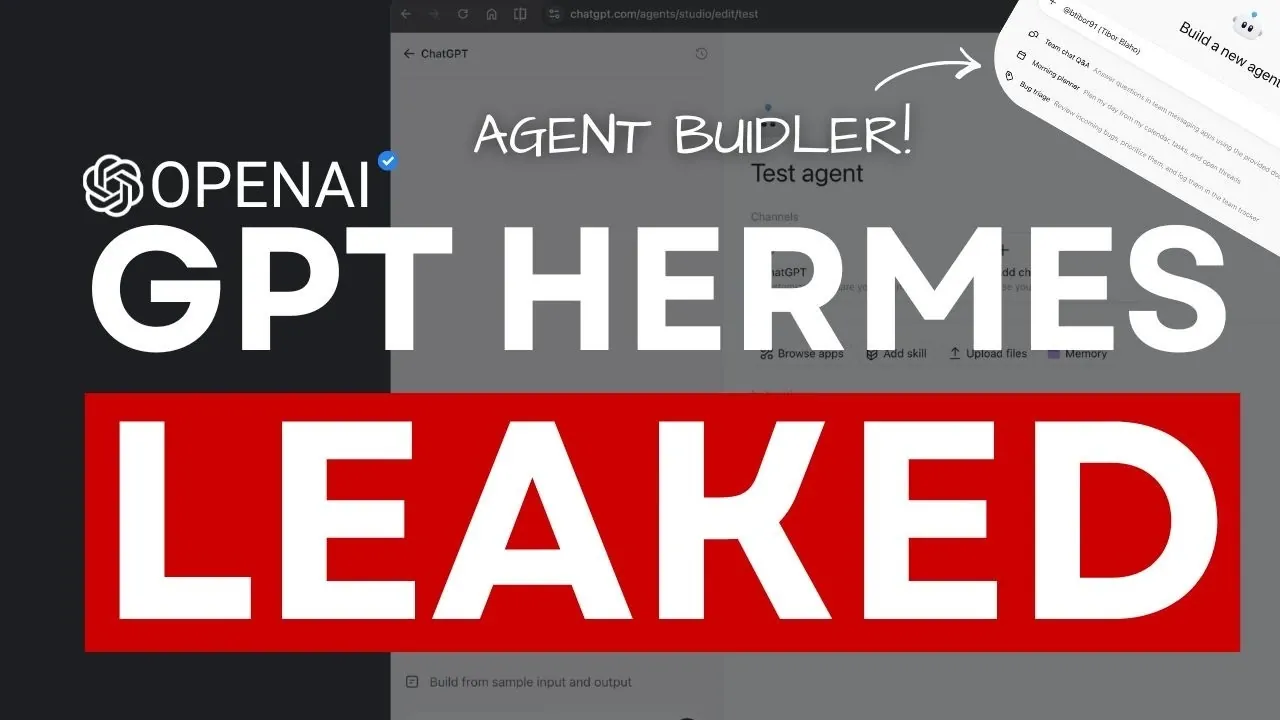
OpenAI and Google have unveiled a series of advancements that push the boundaries of what AI can achieve in both creative and analytical domains. Universe of AI highlights OpenAI’s leaked Hermes Agent Studio, a framework for building custom AI agents tailored to specific workflows and ChatGPT Images 2.0, which introduces features like multilingual text generation within visuals and support for diverse artistic styles. Meanwhile, Google’s Deep Research and Deep Research Max agents, powered by Gemini 3.1 Pro, focus on automating research tasks, offering capabilities such as real-time reasoning transparency and multimodal input support for complex data analysis.
Explore how these technologies can enhance productivity and creativity, from automating repetitive tasks with Hermes to generating precise, multilingual visuals with ChatGPT Images 2.0. Gain insight into Google’s research agents, which streamline everything from quick problem-solving to in-depth data exploration. This revelation provides a detailed look at the practical applications and potential impact of these AI systems across industries.
OpenAI’s Latest Innovations
TL;DR Key Takeaways :
- OpenAI’s Hermes Agent Studio allows users to create customizable AI agents for specific workflows, featuring automated task management, Slack integration and support for specialized operations.
- ChatGPT Images 2.0 enhances visual creativity with multilingual text generation, diverse artistic styles, flexible aspect ratios and real-time web search integration for functional visuals.
- Google’s Deep Research focuses on real-time, efficient problem-solving, while Deep Research Max excels at in-depth analysis and detailed overview generation for complex projects.
- Both Google research agents support multimodal inputs, infographic generation, real-time reasoning transparency and compatibility with custom data sources for tailored workflows.
- These AI advancements aim to streamline operations, boost creativity and enhance research capabilities, while raising important ethical and societal considerations like job displacement and equitable access.
Hermes Agent Studio: A Customizable AI Assistant
OpenAI’s Hermes Agent Studio, though not officially released, is rumored to be a new addition to the ChatGPT ecosystem. This tool is designed to allow users to create custom AI agents tailored to specific workflows, offering unparalleled flexibility and efficiency for both personal and professional applications.
Key features of Hermes Agent Studio include:
- Automated task management that operates 24/7, reducing the need for manual intervention.
- Seamless integration with Slack for communication and task handling within team environments.
- Support for specialized workflows, such as scheduling, data entry, or niche operational tasks.
Hermes is built to adapt to your unique needs, whether you’re managing a team, automating repetitive processes, or optimizing your daily productivity. By using this tool, users can focus on higher-value tasks while delegating routine operations to the AI.
ChatGPT Images 2.0: Enhanced Visual Creativity
OpenAI has also introduced ChatGPT Images 2.0, a significant upgrade to its image generation capabilities. This tool offers precision and versatility, allowing users to create detailed visuals for a wide range of applications, from marketing materials to artistic projects.
Notable improvements in ChatGPT Images 2.0 include:
- Multilingual text generation and translation embedded within images, expanding its global usability.
- Support for diverse artistic styles, such as photo-realistic imagery, manga and pixel art.
- Flexible aspect ratios to accommodate various creative and professional needs.
- Real-time web search integration for generating functional visuals, such as QR codes or infographics.
Available to all users, with advanced features accessible to Plus, Pro and Business subscribers, ChatGPT Images 2.0 is a valuable resource for creative professionals, marketers and businesses aiming to elevate their visual content. Its ability to combine creativity with functionality makes it a versatile tool for modern content creation.
Google’s Autonomous Research Agents
Deep Research and Deep Research Max
Google has unveiled two autonomous research agents, Deep Research and Deep Research Max, powered by the advanced Gemini 3.1 Pro model. These tools are designed to handle a wide array of research tasks, ranging from quick queries to comprehensive, data-driven analysis.
Deep Research
Deep Research is optimized for speed and efficiency, delivering high-quality answers in real time. It is particularly well-suited for dynamic problem-solving, live interactions and scenarios where quick decision-making is essential.
Deep Research Max
Deep Research Max focuses on in-depth analysis, excelling at generating detailed reports and visualizations over extended periods. It is ideal for complex, data-intensive projects that require thorough exploration and interpretation.
Both agents share several advanced features:
- Multimodal input support, including PDFs, images, audio files and CSV data, allowing diverse research capabilities.
- Integrated infographic and chart generation for clear and effective data visualization.
- Real-time streaming of reasoning steps and outputs, providing transparency and insight into the AI’s decision-making process.
- Compatibility with MCP servers and custom data sources, allowing users to tailor workflows to their specific needs.
These tools are particularly valuable for professionals in fields such as equity analysis, scientific research and other data-driven industries. By automating complex research tasks, they enable users to focus on strategic decision-making and innovation.

Implications of These Advancements
The introduction of these innovative AI tools marks a pivotal moment in the evolution of automation, creativity and research. For businesses, these technologies offer opportunities to streamline operations, enhance productivity and explore new creative avenues. For individuals, they simplify complex tasks, foster innovation and provide tools to achieve more with less effort.
However, these advancements also raise critical questions about their broader societal impact. As AI takes on roles traditionally performed by humans, concerns about job displacement and ethical considerations become increasingly relevant. Addressing these challenges will require a balanced approach that maximizes the benefits of AI while mitigating its potential downsides. This includes fostering transparency, making sure equitable access and developing strategies to support workers in adapting to an AI-driven economy.
Staying Ahead in the AI Era
OpenAI’s Hermes Agent Studio and ChatGPT Images 2.0, along with Google’s Deep Research agents, represent the forefront of AI innovation. These tools empower users to unlock new levels of efficiency, creativity and insight in their work. As AI continues to evolve, staying informed and adaptable will be essential for using these technologies effectively. By embracing these advancements, you can position yourself to thrive in an increasingly AI-driven world.
Media Credit: Universe of AI
Filed Under: AI, Top News
Disclosure: Some of our articles include affiliate links. If you buy something through one of these links, Geeky Gadgets may earn an affiliate commission. Learn about our Disclosure Policy.
Credit: Source link