Many traders had written off XTZ as a “ghost chain,” but Tezos surprised them with a genuine technical upgrade rather than a recycled roadmap. The launch of the Tezos X Previewnet on May 5 is suddenly putting the spotlight back on XTZ, especially as the token sits deep inside a historical demand zone around $0.35-$0.50.
And yeah, after a brutal decline since 2021, that’s either the perfect accumulation range or the world’s longest crypto coma.
Tezos X Removes Bridges From Equation
Here’s the interesting part. Tezos X isn’t another fragmented Layer 2 experiment. The Previewnet introduces a unified execution layer where EVM and Michelson contracts operate on the same ledger. In plain English: no bridges, no wrapped assets, and fewer moving parts waiting to implode during peak volatility.
The system allows atomic transactions across Solidity and Michelson contracts in one block. If one side fails, the entire transaction rolls back. That’s the kind of infrastructure pitch developers actually care about.
Meanwhile, Tezos is evolving Etherlink into the broader Tezos X architecture, letting Solidity developers use familiar tools like Hardhat, Foundry, and MetaMask while tapping into Tezos-native functionality.
XTZ Price Sits At Historic Demand Zone
But let’s be real, technology alone rarely saves a token overnight. XTZ is still down massively from its highs, and even this weekly move barely registers on the larger chart structure.
Still, the technical setup is getting attention. XTZ price is revisiting a 2019 demand area that previously triggered a strong recovery rally. Historically, these zones tend to matter.
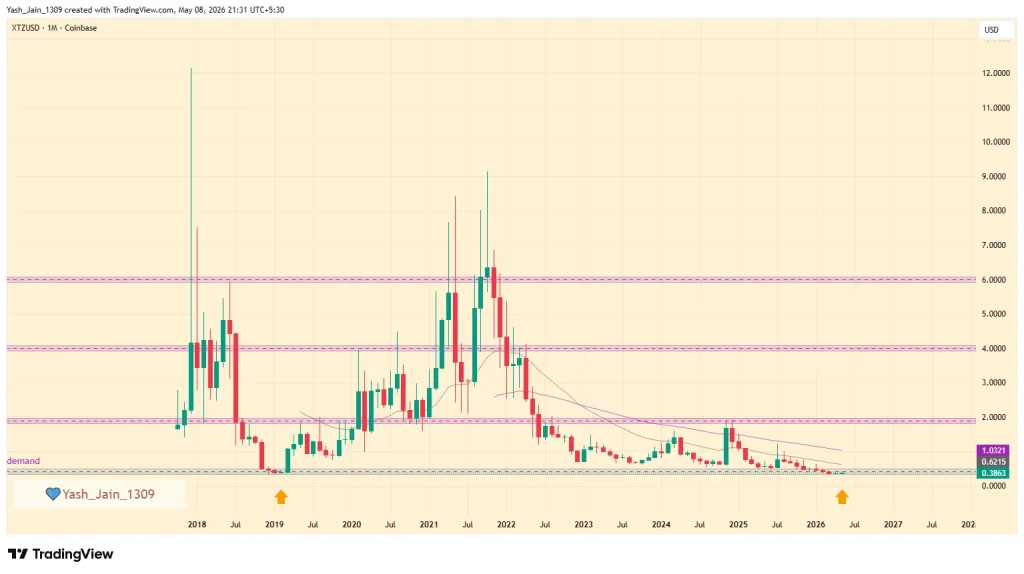
If demand returns alongside the Tezos X rollout, a move toward the safer-side $2 target doesn’t look impossible. Ambitious? Sure. Impossible? Not yet.
Mainnet Vote Could Decide XTZ Direction
So, what’s next? June 2026 is the real checkpoint. Governance proposals are expected to move Tezos X from Previewnet toward Mainnet deployment if validators approve it.
Then comes the H2 2026 migration toward RISC-V architecture, opening the door for smart contract development in languages like Rust, C++, and potentially Python or JavaScript with improved gas efficiency.
For now though, XTZ still needs one thing crypto narratives can’t fake forever: sustained demand. Without that, the token may simply continue grinding sideways at this demand area while traders keep waiting for the “real” recovery rally.
Was this writing helpful?
Story Ends Here
Trust with CoinPedia:
CoinPedia has been delivering accurate and timely cryptocurrency and blockchain updates since 2017. All content is created by our expert panel of analysts and journalists, following strict Editorial Guidelines based on E-E-A-T (Experience, Expertise, Authoritativeness, Trustworthiness). Every article is fact-checked against reputable sources to ensure accuracy, transparency, and reliability. Our review policy guarantees unbiased evaluations when recommending exchanges, platforms, or tools. We strive to provide timely updates about everything crypto & blockchain, right from startups to industry majors.
Investment Disclaimer:
All opinions and insights shared represent the author’s own views on current market conditions. Please do your own research before making investment decisions. Neither the writer nor the publication assumes responsibility for your financial choices.
Sponsored and Advertisements:
Sponsored content and affiliate links may appear on our site. Advertisements are marked clearly, and our editorial content remains entirely independent from our ad partners.
Read the Next News
Credit: Source link