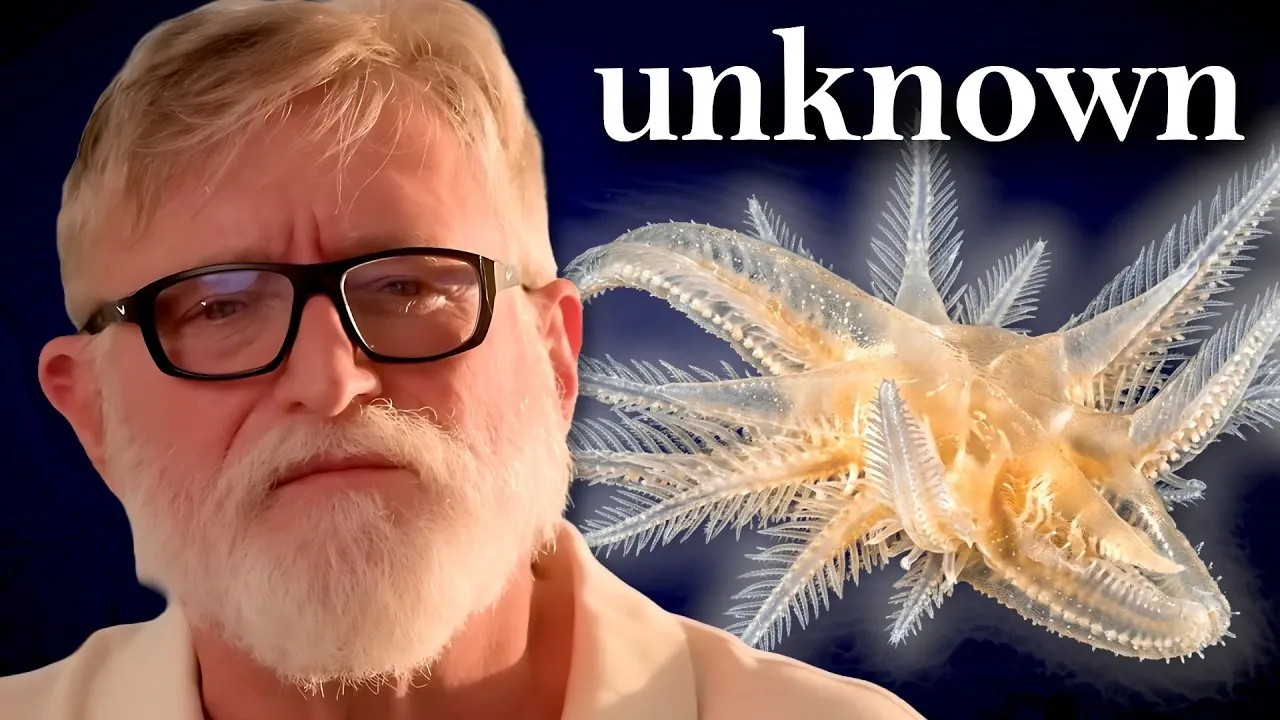
Gabe Newell, co-founder of Valve and creator of the gaming platform Steam, has expanded his interests into deep-sea exploration through his marine research organization, Inkfish. His team, equipped with the DSSV Pressure Drop and the submersible Bakunawa, has explored the hadal zone, where pressures exceed 1,000 times those at sea level. Among their discoveries are translucent snailfish, carnivorous sponges and other organisms that defy existing scientific classification, challenging current frameworks for understanding marine biodiversity.
Discover the unique adaptations that enable life to thrive under extreme pressure and darkness and learn how seismic activity shapes the ecosystems of the deep ocean. Gain insight into the impact of human pollution on remote marine environments and what these findings reveal about the interconnectedness of global ecosystems.
Exploring the Hadal Zone: Earth’s Deepest Frontier
TL;DR Key Takeaways :
- Gabe Newell, co-founder of Valve, leads deep-sea exploration through his marine research organization, Inkfish, uncovering new species and the impact of human activity on remote ecosystems.
- Research focuses on the hadal zone, the ocean’s deepest region, using advanced vessels like the DSSV Pressure Drop and submersible Bakunawa to explore extreme environments and unique ecosystems.
- Expeditions have documented 108 organism groups, including unclassified species and the deepest-living fish ever recorded, expanding knowledge of marine biodiversity and life’s resilience in extreme conditions.
- Studies reveal human pollution, such as debris at 7,500 meters depth, highlighting the pervasive impact of human activity even in the ocean’s most remote areas.
- Technological innovations in exploration vessels and submersibles are driving advancements in deep-sea research, offering insights into Earth’s biodiversity, geological processes and conservation needs.
Newell’s research focuses on the hadal zone, the deepest part of the ocean, located more than 10 kilometers below the surface. This region endures pressures over 1,000 times greater than at sea level, creating conditions that are inhospitable to most life forms. Despite these challenges, the hadal zone harbors unique ecosystems that remain largely unexplored. To access these depths, Newell’s team deployed advanced vessels like the DSSV Pressure Drop and the submersible Bakunawa. These state-of-the-art technologies allowed scientists to safely navigate trench systems previously beyond human reach, uncovering hidden ecosystems and expanding our understanding of the deep ocean.
The hadal zone is not just a scientific curiosity but a critical frontier for understanding life’s resilience. By studying organisms that thrive under immense pressure and near-freezing temperatures, researchers gain insights into biological adaptations that could have applications in medicine, biotechnology and other fields. The exploration of this extreme environment also sheds light on the geological processes shaping the planet’s crust, offering a deeper understanding of Earth’s dynamic systems.
Breakthrough Discoveries in the Deep
The expeditions led by Newell and his team have yielded a wealth of scientific discoveries, documenting 108 distinct organism groups. Among these are fascinating species such as carnivorous sponges, translucent snailfish and ancient crinoid meadows. One of the most remarkable findings was the discovery of the deepest-living fish ever recorded, a species thriving under immense pressure and near-freezing temperatures. These discoveries not only expand our understanding of marine biodiversity but also challenge existing theories about the limits of life on Earth.
Even more intriguing were the unclassified organisms encountered during these missions, creatures so unique that they defy current scientific classification. These findings underscore the vast unknowns still lurking in the ocean’s depths and highlight the importance of continued exploration. Each new discovery adds a piece to the puzzle of Earth’s biodiversity, offering clues about the evolution of life in extreme environments.
Find more information on Valve by browsing our extensive range of articles, guides and tutorials.
Natural Disasters and Their Underwater Impact
The deep-sea environment is profoundly shaped by natural disasters, which can create both destruction and opportunity for marine ecosystems. Newell’s team studied ecosystems affected by the 2011 Tohoku earthquake, uncovering dense populations of spoon worms inhabiting fault fissures. These organisms have adapted to thrive in the unstable conditions created by seismic activity, demonstrating the resilience of life in the face of geological upheaval.
At the Boso Triple Junction, a volatile area where tectonic plates converge, researchers discovered a crinoid meadow teeming with over 1,500 sea lilies. This vibrant ecosystem provides critical insights into how geological events influence marine biodiversity and the long-term evolution of deep-sea habitats. By studying these dynamic environments, scientists can better understand the interplay between geological processes and biological systems, offering a more comprehensive view of Earth’s natural history.
Pollution Reaches the Ocean’s Abyss
Even in the planet’s most remote depths, human activity leaves its mark. During their expeditions, Newell’s team found debris such as metal and wood at depths of 7,500 meters, colonized by microorganisms. This stark evidence of pollution in the deep ocean underscores the far-reaching consequences of human behavior. The presence of man-made materials in such isolated environments highlights the interconnectedness of Earth’s ecosystems and the urgent need for environmental stewardship.
These findings serve as a sobering reminder that no part of the planet is immune to human impact. The deep ocean, once thought to be untouched by human activity, is now a repository for waste and pollutants. Addressing this issue requires global cooperation and innovative solutions to reduce pollution and protect the planet’s most vulnerable ecosystems.
Technological Innovations Driving Exploration
Newell’s fleet of research vessels represents the forefront of marine exploration technology. The Leviathan, a state-of-the-art research vessel and the Dra, a converted superyacht equipped for deep-sea missions, showcase advancements in pressure-resistant engineering and underwater navigation. Paired with innovative submersibles, these tools have enabled scientists to safely study the deep ocean’s ecosystems in unprecedented detail.
The technological breakthroughs achieved during these missions are paving the way for future exploration of Earth’s final frontier. Innovations in submersible design, data collection and remote sensing are not only enhancing our ability to study the deep ocean but also inspiring new approaches to exploration in other extreme environments, such as outer space. These advancements demonstrate the potential of technology to expand the boundaries of human knowledge and address some of the most pressing challenges facing the planet.
Why Deep-Sea Research Matters
The work led by Newell and his team has established a critical baseline for understanding deep-ocean biodiversity. This data is essential for protecting fragile ecosystems increasingly threatened by human activity and climate change. By uncovering the complexity and vulnerability of these environments, these expeditions emphasize the importance of preserving Earth’s least-explored regions.
Deep-sea research is not just about discovery; it is about responsibility. The insights gained from these missions have far-reaching implications for conservation, resource management and our understanding of the planet’s interconnected systems. Gabe Newell’s passion for deep-sea exploration has not only advanced scientific knowledge but also highlighted the fragility of the planet’s most mysterious ecosystems. His efforts remind you that the deep ocean, while remote and inhospitable, is a vital part of Earth’s natural heritage, one that demands both curiosity and care.
Media Credit: Water CS2
Filed Under: Technology News, Top News
Disclosure: Some of our articles include affiliate links. If you buy something through one of these links, Geeky Gadgets may earn an affiliate commission. Learn about our Disclosure Policy.
Credit: Source link