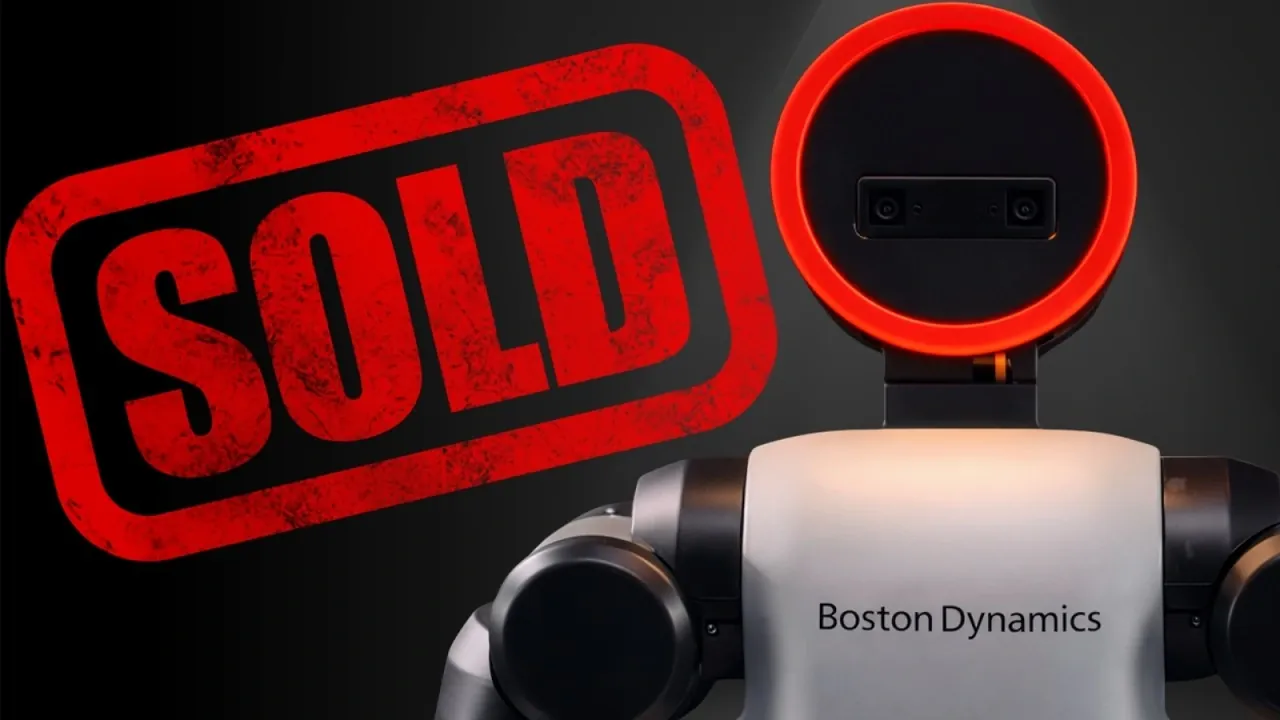
Google’s decision to sell Boston Dynamics in 2017 underscored the tension between research-driven robotics and the demands of commercial viability. As Chromeborne explains, the sale stemmed from a mismatch between Boston Dynamics’ emphasis on experimental advancements, such as the humanoid robot Atlas and Google’s focus on creating products with clear and immediate market applications. This case illustrates the broader challenge of balancing long-term technological exploration with the pressures of short-term business goals.
Explore how Boston Dynamics shifted its priorities under new ownership, including its move toward warehouse automation and logistics. Gain insight into the roles played by SoftBank and Hyundai in shaping the company’s trajectory. Understand the broader implications of integrating advanced robotics into industries that demand both innovation and profitability.
The Visionary Foundations of Boston Dynamics
TL;DR Key Takeaways :
- Google sold Boston Dynamics in 2017 due to a conflict between Boston Dynamics’ research-driven approach and Google’s focus on commercial viability, marking a pivotal shift in the company’s trajectory.
- Boston Dynamics, founded in 1992 by Marc Raibert, initially focused on new robotic locomotion research, achieving milestones like Big Dog, Petman and Atlas, though these lacked immediate commercial applications.
- Under SoftBank’s ownership (2017), Boston Dynamics shifted toward practical applications, developing robots like Spot for industrial inspections, security and data collection, aligning innovation with market demands.
- Hyundai’s acquisition in 2021 further emphasized commercial success, focusing on factory and warehouse automation, scaling production and refining technologies for broader adoption.
- Boston Dynamics successfully transitioned from a research-focused organization to a commercially viable enterprise, balancing innovation with practicality and solidifying its leadership in the robotics industry.
Boston Dynamics was established in 1992 by Marc Raibert, a visionary in the field of robotics. His ambition was to create machines capable of mimicking the agility, balance and movement of animals. From its inception, the company concentrated on dynamic locomotion, pushing the boundaries of what robots could achieve. Early projects were heavily research-driven, often funded by organizations like the Defense Advanced Research Projects Agency (DARPA). These initiatives prioritized technological breakthroughs over immediate commercial applications, solidifying Boston Dynamics’ reputation as a leader in innovation.
The company’s early work laid the groundwork for its future success. By focusing on solving complex problems in robotic movement, Boston Dynamics developed technologies that would later influence the broader robotics industry. However, this emphasis on research over practicality also posed challenges, particularly when it came to finding real-world applications for their innovations.
Technological Milestones That Redefined Robotics
Boston Dynamics achieved several key breakthroughs that demonstrated the potential of advanced robotics. These milestones not only showcased the company’s technical expertise but also highlighted the challenges of translating innovation into practical use:
- Big Dog (2003): A quadruped robot developed for DARPA, designed to traverse rough terrain using advanced robotic legs. Despite its impressive capabilities, the robot’s loud, gas-powered engine limited its usability in real-world scenarios.
- Petman: A humanoid robot created to test protective gear, capable of human-like movement and balance. This project demonstrated the potential for robots to perform tasks requiring precision and adaptability.
- Atlas: A bipedal robot that pushed the boundaries of humanoid robotics, showcasing remarkable agility and adaptability in navigating complex environments.
While these innovations were new, their lack of immediate, practical applications hindered their commercial potential. This gap between technological achievement and market readiness became a recurring challenge for Boston Dynamics.
Expand your understanding of Boston Dynamics with additional resources from our extensive library of articles.
Google’s Acquisition and the Clash of Objectives
In 2013, Google acquired Boston Dynamics as part of its broader exploration into robotics and automation. At the time, Google was investing heavily in emerging technologies, aiming to position itself as a leader in the field. However, the partnership quickly revealed a fundamental misalignment of priorities. Google sought to develop robots that could address immediate industrial needs, focusing on market-ready solutions. In contrast, Boston Dynamics remained committed to long-term innovation and experimental prototypes.
This divergence in goals created tension between the two companies. Boston Dynamics’ research-driven approach did not align with Google’s commercial ambitions, leading to friction and ultimately the decision to sell the company in 2017. The sale highlighted the challenges of integrating a research-focused organization into a commercially driven enterprise.
SoftBank’s Influence: A Shift Toward Practical Applications
When SoftBank acquired Boston Dynamics in 2017, the company began to pivot toward practical, real-world applications. This shift was evident in the development of quieter, electric-powered robots like Spot, which was designed to perform tasks in various industries. Spot’s capabilities included:
- Industrial inspections: Navigating hazardous environments to collect data and monitor equipment.
- Security and surveillance: Providing autonomous monitoring solutions for large facilities.
- Data collection: Operating in challenging conditions where human presence might be unsafe.
Spot’s versatility and ability to navigate complex environments made it a valuable tool for industries such as construction, energy and manufacturing. Additionally, Boston Dynamics’ acquisition of Kinema Systems, a company specializing in robotic vision, enhanced its robots’ autonomy and adaptability, further aligning the company with market demands.
Hyundai’s Role in Driving Commercial Success
In 2021, Hyundai acquired Boston Dynamics, marking another significant turning point in the company’s evolution. With Hyundai’s backing, Boston Dynamics intensified its focus on aligning its innovations with industrial needs. This partnership emphasized the development of robots for factory and warehouse automation, areas where robotics could deliver immediate value.
Under Hyundai’s ownership, Boston Dynamics expanded the applications of its robots. Spot became a reliable tool for inspection tasks, while Atlas demonstrated potential for performing repetitive labor in controlled environments. This shift toward practical, real-world uses allowed Boston Dynamics to transition from a research-focused organization to a commercially viable enterprise. Hyundai’s support also provided the resources needed to scale production and refine the company’s technologies for broader adoption.
Addressing Challenges Through Adaptation and Innovation
Boston Dynamics faced numerous challenges throughout its journey, including:
- Identifying practical applications: Finding real-world uses for its advanced robotics technologies.
- Integrating artificial intelligence (AI): Enhancing the functionality and autonomy of its robots.
- Balancing innovation with market demands: Maintaining a commitment to new research while addressing commercial needs.
The company addressed these challenges by focusing on autonomy, environmental awareness and electric-powered designs. By adapting its technologies to meet market demands, Boston Dynamics successfully bridged the gap between innovation and practicality. This approach not only ensured the company’s survival but also solidified its position as a leader in the robotics industry.
The Present and Future of Boston Dynamics
Today, Boston Dynamics is recognized as a pioneer in robotics, producing machines with clear, defined purposes. Spot has become a staple in industrial inspections, while Atlas continues to evolve as a platform for repetitive tasks in controlled environments. The company’s transformation from a research-driven organization to a commercially focused business underscores its ability to adapt and thrive in a competitive and rapidly evolving industry.
As robotics technology continues to advance, Boston Dynamics remains at the forefront, shaping the future of automation and dynamic locomotion. Its journey serves as a powerful example of how innovation, when balanced with practicality, can drive progress and redefine what is possible in the field of robotics.
Media Credit: Chromeborne
Filed Under: Technology News, Top News
Disclosure: Some of our articles include affiliate links. If you buy something through one of these links, Geeky Gadgets may earn an affiliate commission. Learn about our Disclosure Policy.
Credit: Source link