
Presence detection has moved beyond basic motion sensors, offering more precise ways to track occupancy. TechteamGB examines this evolution with Tommy Sense, a system that uses ESP32 boards to create affordable presence sensors by analyzing disruptions in Wi-Fi signals. Unlike traditional PIR sensors that depend on detecting heat or motion, Tommy Sense can identify subtle activities like breathing by monitoring changes in the 2.4 GHz and 5 GHz Wi-Fi bands. This method removes the need for direct line of sight, making it a practical option for environments such as shared offices or multi-room homes.
Explore how to set up and customize Tommy Sense to suit different spaces. Learn about the hardware requirements, including the benefits of using multiple ESP32 boards for better coverage and discover how to adjust detection zones and sensitivity settings. Additionally, gain insight into its integration with Home Assistant, allowing centralized management and monitoring for smart home systems.
How Tommy Sense Stands Out
TL;DR Key Takeaways :
- Tommy Sense transforms ESP32 boards into advanced presence sensors by analyzing Wi-Fi signal fluctuations, offering a cost-effective alternative to traditional motion sensors.
- It detects subtle movements like breathing without requiring a direct line of sight, making it ideal for precise occupancy detection in various environments.
- The system integrates seamlessly with Home Assistant and ESPHome, allowing for easy customization, sensitivity adjustments and defined detection zones.
- While highly sensitive and affordable, the setup requires multiple ESP32 boards per zone, wall power and some technical expertise, with a paid licensing model starting at €9.
- Compared to Zigbee and 60 GHz sensors, Tommy Sense stands out for its affordability and ability to repurpose existing hardware, making it a practical choice for DIY smart home enthusiasts.
Understanding Presence Detection
Presence detection focuses on identifying occupancy rather than just movement, offering a more nuanced approach compared to traditional motion detection. While motion sensors like PIR (Passive Infrared) devices detect heat or motion changes, presence sensors monitor subtle disruptions in radio waves. Tommy Sense capitalizes on this principle by analyzing fluctuations in Wi-Fi signals to detect even the smallest movements, such as breathing, within a defined area.
This technology does not require a direct line of sight, making it highly versatile for complex environments. By using ESP32 boards, Tommy Sense scans for variations in Wi-Fi signals, allowing real-time detection of people or objects in a room. This precision is particularly valuable in spaces where accurate occupancy detection is essential, such as bedrooms, home offices, or even shared workspaces. Its ability to detect subtle movements ensures a higher level of sensitivity compared to traditional motion sensors.

What You Need to Get Started
To set up Tommy Sense, you’ll need specific hardware and tools to ensure optimal performance:
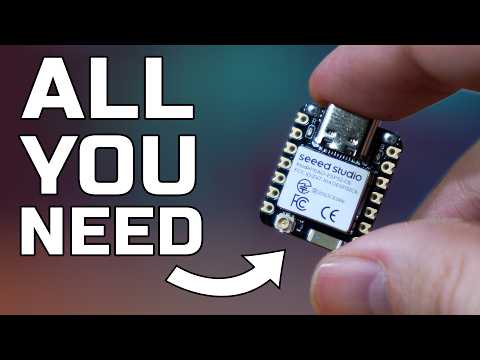
- ESP32 boards, preferably ESP32-C5 or C6 models, for their advanced Wi-Fi capabilities.
- A stable USB power source for each board, as continuous Wi-Fi scanning requires consistent power.
- At least two ESP32 boards per detection zone, though using four boards is recommended for enhanced accuracy and broader coverage.
Once the hardware is ready, Tommy Sense can be installed using ESPHome YAML files or its dedicated installer. The setup process is straightforward yet customizable, allowing you to adjust sensitivity levels, define detection boundaries and set activation thresholds. While the system relies on wall power and is not portable, this ensures uninterrupted operation and consistent performance. For users with technical expertise, the customization options provide a tailored solution for specific needs.
Here are additional guides from our expansive article library that you may find useful on ESP32.
Seamless Integration with Smart Home Systems
Tommy Sense integrates seamlessly with Home Assistant, a popular platform for smart home automation. This integration simplifies updates, management and monitoring, allowing you to control your presence sensors directly from the Home Assistant dashboard.
Its compatibility with ESPHome further enhances its adaptability, allowing you to fine-tune the system to suit your specific requirements. Key customization options include:
- Adjusting sensitivity to filter out minor movements and focus on significant occupancy changes.
- Defining boundaries to create precise detection zones within a room or area.
Whether you’re automating a compact apartment or a larger home, Tommy Sense’s flexibility makes it a valuable addition to any smart home ecosystem. Its ability to integrate with existing systems ensures that users can expand their automation capabilities without overhauling their current setup.
Performance: Strengths and Limitations
Tommy Sense excels in sensitivity, capable of detecting subtle movements such as breathing or slight shifts in posture. This level of precision makes it ideal for scenarios requiring detailed occupancy detection, such as monitoring sleeping individuals or optimizing energy usage in smart homes. However, there are some limitations to consider:
- Each detection zone requires multiple ESP32 boards, which can make the setup process more complex and time-intensive.
- The system relies on wall power, limiting its portability and flexibility for temporary installations.
- Tommy Sense operates on a closed-source model with a paid licensing structure. Pricing starts at €9 for one detection zone or €29 for unlimited zones, which may deter users who prefer open source solutions.
Despite these trade-offs, Tommy Sense’s affordability and functionality make it a compelling option for users seeking advanced presence detection without the high costs associated with proprietary systems.
How Does Tommy Sense Compare to Other Technologies?
Tommy Sense offers a unique balance of cost-effectiveness and functionality, making it a standout option in the presence detection market. Here’s how it compares to other technologies:
- Zigbee-based presence sensors: While these sensors also operate on the 2.4 GHz band, they often require additional hardware, such as a Zigbee hub, which increases the overall cost and complexity of the system.
- 60 GHz motion sensors: These sensors provide unparalleled accuracy and are capable of detecting even the smallest movements. However, their high price point and limited accessibility make them less appealing for DIY enthusiasts or budget-conscious users.
Tommy Sense’s ability to repurpose existing ESP32 boards gives it a significant advantage. By using hardware that many users may already own, it minimizes additional investment, making it an attractive option for those looking to enhance their smart home systems without overspending.
Is Tommy Sense Right for You?
Tommy Sense is an excellent choice for DIY smart home enthusiasts and individuals with surplus ESP32 boards. Its affordability, high sensitivity and customization options make it a practical solution for those who enjoy tailoring their home automation systems to their specific needs. However, it may not be the best fit for users seeking a plug-and-play solution, as the setup process requires some technical knowledge and effort.
For users willing to invest time in configuring the system, Tommy Sense offers a highly sensitive and cost-effective presence detection solution that rivals more expensive alternatives. Its seamless integration with Home Assistant and adaptability to various environments further enhance its appeal, making it a versatile tool for modern smart homes.
Media Credit: TechteamGB
Filed Under: DIY Projects, Guides
Disclosure: Some of our articles include affiliate links. If you buy something through one of these links, Geeky Gadgets may earn an affiliate commission. Learn about our Disclosure Policy.
Credit: Source link