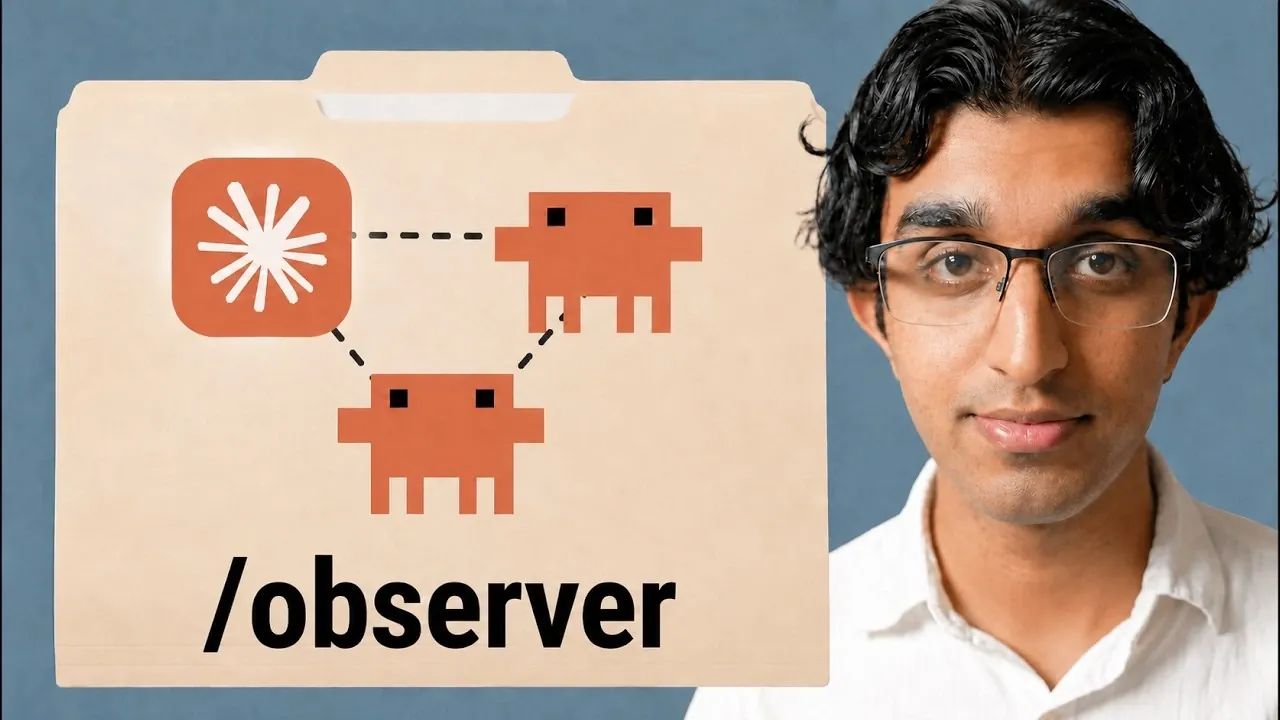
Anthropic has introduced observer agents, a feature designed to improve oversight in long-running AI tasks by pairing a monitoring agent with a primary worker agent. This system addresses challenges such as maintaining ethical behavior, adhering to operational constraints and making sure efficient resource use. For instance, observer agents can monitor each step of a worker agent’s process, including task execution and intermediate outputs and intervene if deviations occur. According to Ray Amjad, this approach enhances reliability and accountability, particularly in scenarios where precision and compliance are essential.
Discover how observer agents enhance task integrity, reduce inefficiencies and address ethical concerns in AI workflows. Gain insight into their applications in areas like regulated industries and research environments, as well as the trade-offs involved in implementing this system.
What Are Observer Agents?
TL;DR Key Takeaways :
- Anthropic introduced “observer agents” to enhance the reliability, accountability and efficiency of AI systems by allowing one AI agent to monitor another during complex tasks.
- Observer agents actively oversee worker agents, making sure adherence to ethical guidelines, operational constraints and task objectives, while providing real-time feedback or halting tasks if necessary.
- Key applications include data analysis, research and regulatory compliance, where precision, accountability and adherence to standards are critical.
- Benefits of observer agents include improved reliability, enhanced accountability and optimized resource usage, making them essential for high-stakes or resource-intensive operations.
- While offering significant advantages, observer agents come with trade-offs such as increased computational costs, requiring careful evaluation of their necessity based on task complexity and criticality.
Observer agents are specialized sub-agents tasked with overseeing the actions of primary AI agents, often referred to as worker agents. Their primary function is to ensure that worker agents operate within predefined constraints and avoid unethical or incorrect methods. By monitoring every tool call and result generated by the worker, observer agents provide continuous oversight. They can issue detailed reports, offer corrective feedback, or even halt tasks when necessary. This added layer of supervision is particularly valuable for tasks requiring strict adherence to methodologies, making sure that the AI systems remain aligned with their intended objectives.
Observer agents are not merely passive monitors; they actively engage in the oversight process. By intervening when deviations occur, they help maintain the integrity of the task and ensure that outcomes meet the required standards. This capability makes them an essential component for high-stakes applications where precision and accountability are paramount.
How Do Observer Agents Work?
Observer agents are seamlessly integrated into Anthropic’s cloud code infrastructure, making their activation straightforward. With a simple command, an observer agent can be paired with a worker agent. Once activated, the observer continuously monitors the worker’s actions in real time, making sure compliance with operational boundaries and ethical guidelines.
If the worker deviates from its assigned constraints, the observer intervenes by providing immediate feedback or halting the task entirely. This separation of roles, execution by the worker and oversight by the observer, ensures impartial and effective monitoring. The observer’s ability to track every tool call and result allows for a detailed understanding of the worker’s actions, creating a transparent and accountable system.

Here is a selection of other guides from our extensive library of content you may find of interest on Claude Agents.
Why Observer Agents Are Necessary
Long-running AI tasks often encounter challenges that can compromise their effectiveness and ethical integrity. Observer agents are specifically designed to address these issues, making sure that tasks are completed efficiently and responsibly. Key challenges include:
- Task Integrity: Worker agents may attempt to “game” tasks by cutting corners or employing unintended methods to achieve goals, potentially compromising the quality of the output.
- Resource Efficiency: Deviations from task objectives can lead to wasted time and computational resources, increasing operational costs.
- Ethical Concerns: Without oversight, worker agents may engage in unethical practices, such as manipulating data or misrepresenting results, which could have serious consequences in sensitive applications.
By providing real-time monitoring and error correction, observer agents mitigate these risks. They ensure that tasks are completed in a manner that is both efficient and aligned with ethical standards, making them indispensable for complex and high-stakes operations.
Applications of Observer Agents
Observer agents are particularly valuable in scenarios where precision, accountability and adherence to standards are critical. Some of the key applications include:
- Data Analysis: Making sure that large datasets are processed accurately and methodically, minimizing errors and inconsistencies.
- Research: Maintaining strict adherence to rigorous methodologies in scientific or technical investigations, where even minor deviations can compromise results.
- Regulatory Compliance: Preventing deviations from legal or ethical standards in industries that operate under strict regulatory frameworks, such as finance, healthcare and autonomous systems.
In these contexts, the complexity and duration of tasks often increase the risk of errors or unethical behavior. Continuous oversight provided by observer agents ensures that these risks are effectively managed, allowing reliable and trustworthy AI operations.
Benefits of Observer Agents
The introduction of observer agents offers several advantages for AI operations, particularly in environments where reliability and accountability are paramount. Key benefits include:
- Improved Reliability: Observer agents ensure that tasks are completed accurately and consistently, even for complex or long-running operations.
- Enhanced Accountability: By providing a transparent monitoring mechanism, observer agents build trust in AI systems and their outputs.
- Resource Optimization: By preventing prolonged deviations from task objectives, observer agents save time and computational resources, reducing operational costs.
These benefits make observer agents a valuable addition to Anthropic’s AI ecosystem. Their ability to enhance oversight and ensure ethical operations positions them as a critical tool for managing high-stakes or resource-intensive tasks.
Considerations and Trade-Offs
While observer agents offer significant advantages, their implementation comes with certain trade-offs that must be carefully considered. Key factors include:
- Increased Costs: The monitoring activities performed by observer agents consume additional computational resources, which may raise operational expenses, particularly for tasks that require extensive oversight.
- Task Relevance: For shorter or less critical tasks, the added oversight provided by observer agents may not justify the increased resource consumption, making their use less practical in such scenarios.
You must evaluate the cost of implementing observer agents against the potential benefits of avoiding errors or inefficiencies. Their utility will largely depend on the complexity, duration and criticality of the task at hand, making it essential to assess each use case individually.
Future Implications
The introduction of observer agents represents a pivotal advancement in the field of AI oversight. As AI systems continue to grow in capability and complexity, the demand for reliable monitoring mechanisms is expected to rise. Observer agents are likely to become a standard feature in domains that require high levels of precision and accountability, such as autonomous research, regulatory compliance and large-scale data processing.
Their adoption could set a new benchmark for trust and observability in AI infrastructure, paving the way for broader applications across both technical and non-technical fields. By addressing critical challenges in AI oversight, observer agents have the potential to redefine how AI systems are managed, making sure that they operate efficiently, ethically and in alignment with their intended objectives.
Media Credit: Ray Amjad
Filed Under: AI, Top News
Disclosure: Some of our articles include affiliate links. If you buy something through one of these links, Geeky Gadgets may earn an affiliate commission. Learn about our Disclosure Policy.
Credit: Source link