
What if the future of video creation wasn’t just about cameras, scripts, or editing software, but about harnessing the power of artificial intelligence to bring your imagination to life? Enter the showdown between Google Veo 3.1 and OpenAI Sora 2 Pro, two innovative platforms redefining how we think about storytelling and visual content. While both promise to transform creative workflows, their approaches couldn’t be more different. Veo 3.1 dazzles with its cinematic visuals and technical precision, while Sora 2 Pro captivates with its lifelike motion and emotionally rich narratives. But which one truly delivers on its promises, and which might leave you frustrated? This report dives into the heart of their strengths and weaknesses, offering a no-nonsense look at what these platforms bring to the table.
Below CyberJungle demonstrates how these AI titans stack up in key areas like realism, motion coherence, and usability. From Veo 3.1’s innovative scene-building tools to Sora 2 Pro’s dynamic storytelling capabilities, we’ll explore the features that set them apart, and the quirks that might make or break your project. Whether you’re a filmmaker seeking cinematic quality or a creator chasing seamless narratives, this comparison will help you decide which platform aligns with your vision. So, as the lines between human creativity and AI innovation blur, one question remains: which of these tools will shape the stories of tomorrow?
Google Veo 3.1 vs Sora 2
TL;DR Key Takeaways :
- OpenAI Sora 2 Pro excels in realism, dynamic storytelling, and narrative coherence, making it ideal for users prioritizing lifelike movements and engaging narratives.
- Google Veo 3.1 stands out for its cinematic visuals, precise prompt execution, and advanced features like timestamp-based scene creation and video element editing.
- Sora 2 Pro offers superior motion coherence and dynamic action sequences, while Veo 3.1 struggles with motion artifacts but delivers high-quality textures and lighting effects.
- Both platforms provide innovative tools like doodling for frame editing and scene-building features, but their execution and usability vary, with Sora 2 Pro offering better multi-scene control.
- Future updates include OpenAI Sora 2 Pro introducing “cameos” for pets and non-human characters, while Google Veo 3.1 focuses on refining motion coherence and prompt execution for improved performance.
Performance: Realism, Motion, and Execution
The performance of an AI video platform is defined by its ability to deliver realistic visuals, maintain smooth motion, and execute prompts with precision. Google Veo 3.1 and OpenAI Sora 2 Pro each excel in different aspects of these criteria.
- Realism and Motion Coherence: OpenAI Sora 2 Pro leads in creating lifelike movements and dynamic action sequences, offering a level of realism that immerses viewers. By comparison, Google Veo 3.1 occasionally struggles with motion artifacts, which can disrupt the fluidity of its videos.
- Prompt Execution: Google Veo 3.1 demonstrates remarkable accuracy in adhering to user prompts, making sure that the generated content aligns closely with the original vision. However, it sometimes encounters issues with chaotic sequencing and visual inconsistencies, which can detract from the overall experience.
- Cinematic Quality: Veo 3.1 excels in delivering high-quality textures, lighting effects, and cinematic visuals, making it a strong choice for users prioritizing aesthetics. Meanwhile, Sora 2 Pro focuses on dynamic storytelling, crafting emotionally engaging narratives that resonate with audiences.
Feature Comparison: Innovation and Usability
Both platforms offer innovative tools designed to enhance the video creation process, but their implementation and ease of use vary. Here’s a closer look at their standout features:
- Character Consistency: Google Veo 3.1 uses an “ingredients” feature to maintain character consistency throughout videos. While effective, it occasionally lacks precision. OpenAI Sora 2 Pro employs “cameos” for ultra-realistic face consistency, though it limits customization by restricting the ability to upload custom images.
- Scene Building: Veo 3.1 provides timestamp-based scene creation, allowing users to define specific moments within a video. However, it struggles with handling complex multi-scene prompts. Sora 2 Pro’s storyboard feature offers greater control, allowing users to craft detailed multi-scene videos up to 25 seconds long with ease.
- First and Last Frame Control: Veo 3.1 includes a feature that allows users to set the tone and conclusion of their videos. While promising, its precision is inconsistent, occasionally resulting in abrupt transitions.
- Video Extension: Veo 3.1 supports scene extensions with varying emotional tones, making it ideal for dialogue-driven storytelling. However, this feature requires further refinement to ensure smoother transitions between scenes.
- Add/Remove Elements: Veo 3.1 allows users to add or remove elements within a video, a feature still in development but with significant potential. Sora 2 Pro does not currently offer this capability.
- Doodling for Prompting: Both platforms allow users to edit frames using doodles, unlocking creative possibilities. However, the execution of this feature remains inconsistent, limiting its reliability for professional use.
Google Veo 3.1 vs OpenAI Sora 2 Pro
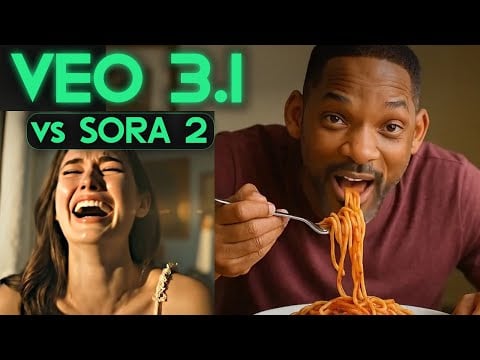
Check out more relevant guides from our extensive collection on AI video generation that you might find useful.
Strengths and Weaknesses
Each platform has distinct advantages and limitations, catering to different creative priorities and workflows.
- OpenAI Sora 2 Pro: Renowned for its realism, dynamic camera work, and narrative coherence, Sora 2 Pro is ideal for users who prioritize storytelling. However, it occasionally introduces unprompted elements, such as unexpected music or language changes, which can disrupt the intended vision.
- Google Veo 3.1: With its cinematic visuals, precise prompt execution, and audio clarity, Veo 3.1 is well-suited for users focused on aesthetics and technical accuracy. However, it struggles with motion artifacts, sequencing issues, and achieving the same level of realism as Sora 2 Pro.
Future Developments
Both platforms are actively working to address user feedback and expand their capabilities, making sure they remain competitive in the fast-paced world of AI video generation.
- OpenAI Sora 2 Pro: Planned updates include the introduction of “cameos” for pets and non-human characters, allowing users to incorporate animals or fantastical beings into their videos. This feature is expected to broaden the platform’s appeal to a wider range of creators.
- Google Veo 3.1: The platform is focusing on refining its existing features, particularly in motion coherence and prompt execution, to enhance overall performance and deliver more polished results.
Choosing the Right Platform
Selecting between Google Veo 3.1 and OpenAI Sora 2 Pro ultimately depends on your creative priorities and project requirements. If you value realism, dynamic storytelling, and narrative coherence, OpenAI Sora 2 Pro is the stronger choice. On the other hand, if cinematic quality, precise prompt execution, and visual aesthetics are more important, Google Veo 3.1 is better suited to your needs. Both platforms represent significant advancements in AI video generation, offering unique strengths that can elevate your creative projects to new heights.
Media Credit: CyberJungle
Filed Under: AI, Technology News, Top News
Latest Geeky Gadgets Deals
Disclosure: Some of our articles include affiliate links. If you buy something through one of these links, Geeky Gadgets may earn an affiliate commission. Learn about our Disclosure Policy.
Credit: Source link