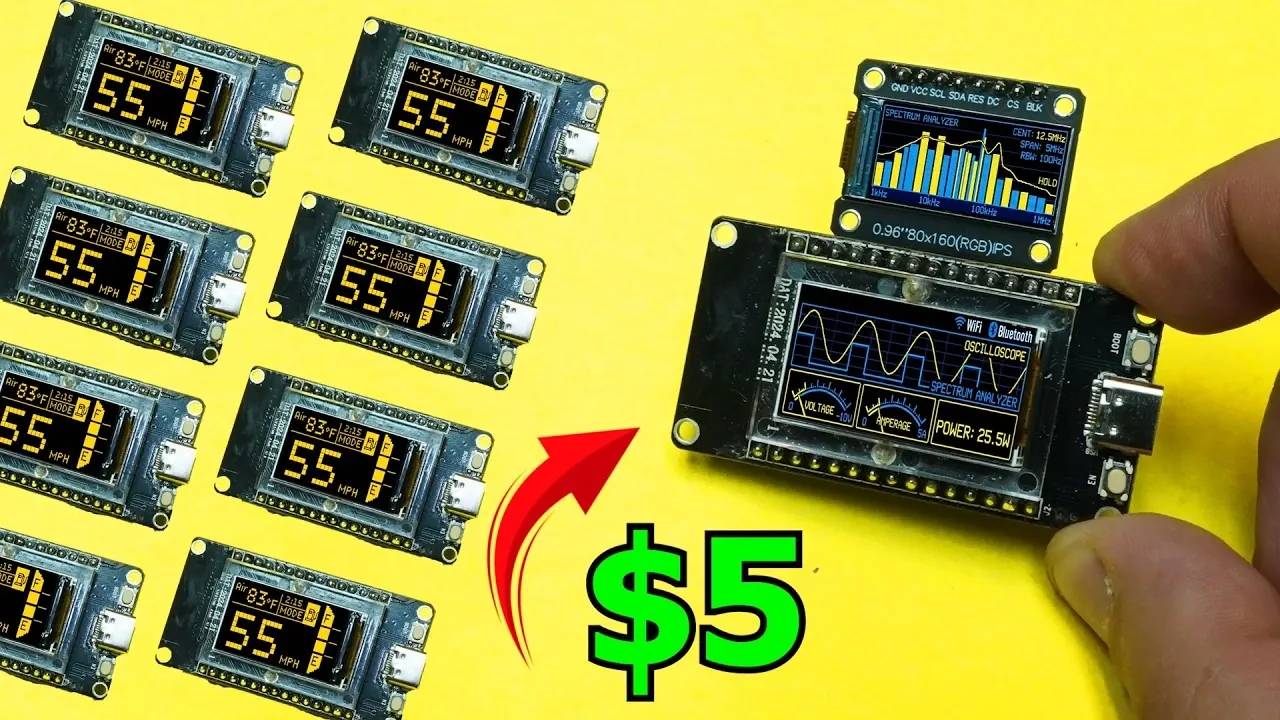
The $5 ESP32 S3 module is a compact and affordable development board designed for a wide range of IoT and AI applications. With its Dual-core Xtensa LX7 microcontroller running at up to 240 MHz, integrated Wi-Fi and Bluetooth 5 connectivity and support for flexible memory configurations, this module is well-suited for both simple and demanding projects. Hacktuber highlights its versatility through examples like creating interactive displays, building weather stations and even designing cryptocurrency terminals. The inclusion of features such as 45 GPIO pins, a programmable RGB LED and a built-in lithium battery charging circuit further enhances its appeal for developers and hobbyists alike.
Explore how this module can elevate your projects by learning about its support for TFT and e-paper displays, customizable pin mapping and resolutions optimized for clear visuals. Gain insight into practical applications like touch-sensitive interfaces, graphical effects and real-time data monitoring. Whether you’re a beginner experimenting with DIY electronics or an experienced developer tackling complex IoT solutions, this overview will provide actionable ideas to help you make the most of the ESP32 S3’s capabilities.
Performance and Connectivity
TL;DR Key Takeaways :
- The ESP32 S3 is a $5 development board designed for IoT and AI applications, featuring a dual-core Xtensa LX7 microcontroller with speeds up to 240 MHz, 2.4 GHz Wi-Fi and Bluetooth 5 for seamless connectivity.
- It offers flexible memory configurations, including up to 16 MB flash memory and 8 MB PSRAM, along with 45 GPIO pins, 14 touch-sensitive inputs, a built-in lithium battery charging circuit and a programmable RGB LED.
- The module supports various display types, including TFT and e-paper screens, with resolutions up to 135×240 pixels, making it ideal for projects requiring visual output like weather updates or digital clocks.
- Applications range from IoT devices and cryptocurrency terminals to interactive displays and educational tools, making it suitable for both beginners and experienced developers.
- Compared to the ESP32 C3, the ESP32 S3 offers more GPIO pins, additional features like a temperature sensor and enhanced processing power, all while maintaining an affordable price point.
At the heart of the ESP32 S3 lies a Dual-core Xtensa LX7 microcontroller, capable of operating at speeds of up to 240 MHz. This ensures smooth handling of computationally demanding tasks, making it suitable for a wide range of applications. The module also supports 2.4 GHz Wi-Fi and Bluetooth 5, allowing seamless wireless communication for IoT devices.
The ESP32 S3 offers flexible memory configurations, including 512 KB of internal SRAM, flash memory options ranging from 4 MB to 16 MB, and PSRAM options from 2 MB to 8 MB. This adaptability allows you to customize the module to meet the specific requirements of your project, whether it involves data-heavy processing or lightweight tasks. Additional hardware features include:
- 45 GPIO pins, with 14 touch-sensitive inputs for connecting sensors, actuators and other peripherals.
- A built-in lithium battery charging circuit with a Type-C USB connector for efficient power management.
- A programmable RGB LED and a core temperature sensor, enhancing its utility for both creative and practical applications.
These features make the ESP32 S3 a reliable and versatile platform for developers seeking to create innovative solutions.
Display Support and Customization
One of the standout features of the ESP32 S3 is its compatibility with a variety of display types, making it ideal for projects that require visual output. The module supports:
- TFT screens, such as 0.96-inch and 1.14-inch displays, for vibrant and dynamic visuals.
- E-paper displays, which offer low-power, high-contrast visuals suitable for applications like e-readers or status monitors.
Supported resolutions include 80×160 and 135×240 pixels, making sure clear and crisp visuals for tasks like displaying weather updates, creating digital clocks, or even running simple graphical interfaces. The module also features customizable pin mapping, simplifying the integration of displays and allowing you to adapt the setup to your specific project needs.
Check out more relevant guides from our extensive collection on ESP32 that you might find useful.
Applications: From IoT to DIY Gadgets
The ESP32 S3 is designed to excel across a broad spectrum of applications, particularly in IoT and AI-driven projects. Its affordability and ease of use make it an excellent choice for both beginners and experienced developers. Here are some practical applications you can explore:
- Building a weather station to monitor temperature, humidity and air quality in real time.
- Creating a cryptocurrency terminal that displays live price updates.
- Developing interactive touch-sensitive displays for DIY gadgets or educational tools.
- Designing graphical effects, clocks, or weather updates for creative projects.
The module’s versatility also makes it a valuable tool for educators, offering students hands-on experience in programming, electronics and IoT development. Its ability to handle both simple and complex tasks ensures that it remains relevant across a wide range of learning and development scenarios.
How Does It Compare to the ESP32 C3?
When compared to its predecessor, the ESP32 C3, the ESP32 S3 introduces several significant enhancements that make it a more capable and versatile option:
- It offers more GPIO pins and additional touch-sensitive inputs, providing greater connectivity options for peripherals.
- Features like a built-in temperature sensor and a programmable RGB LED add functionality for both practical and creative applications.
- Its increased processing power and memory configurations make it better suited for handling complex projects.
Despite these improvements, the ESP32 S3 maintains a highly competitive price point, making sure that it remains accessible to a wide audience. For developers seeking a balance between performance and affordability, the ESP32 S3 is a compelling choice.
Affordability Meets Accessibility
One of the most attractive aspects of the ESP32 S3 is its cost-effectiveness. Starting at just $5, it delivers high performance at a fraction of the cost of comparable development boards. This affordability ensures that the module is accessible to a diverse audience, including professional developers, hobbyists and students.
With multiple configurations and sizes available, you can select the version that best aligns with your project’s needs. Whether you’re working on a small-scale DIY project or a more complex IoT solution, the ESP32 S3 offers the flexibility and performance required to bring your vision to life.
A Versatile Tool for Innovation
The ESP32 S3 module is a powerful, versatile and budget-friendly development board that enables developers to explore a wide range of IoT and AI applications. Its dual-core processor, extensive connectivity options and support for various display types make it an invaluable tool for innovation. Whether you’re a beginner experimenting with electronics or an experienced developer refining advanced projects, the ESP32 S3 provides the performance and adaptability needed to turn your ideas into reality. At just $5, it represents an exceptional value, offering the tools and features to unlock limitless possibilities.
Media Credit: Hacktuber
Filed Under: DIY Projects, Guides
Disclosure: Some of our articles include affiliate links. If you buy something through one of these links, Geeky Gadgets may earn an affiliate commission. Learn about our Disclosure Policy.
Credit: Source link