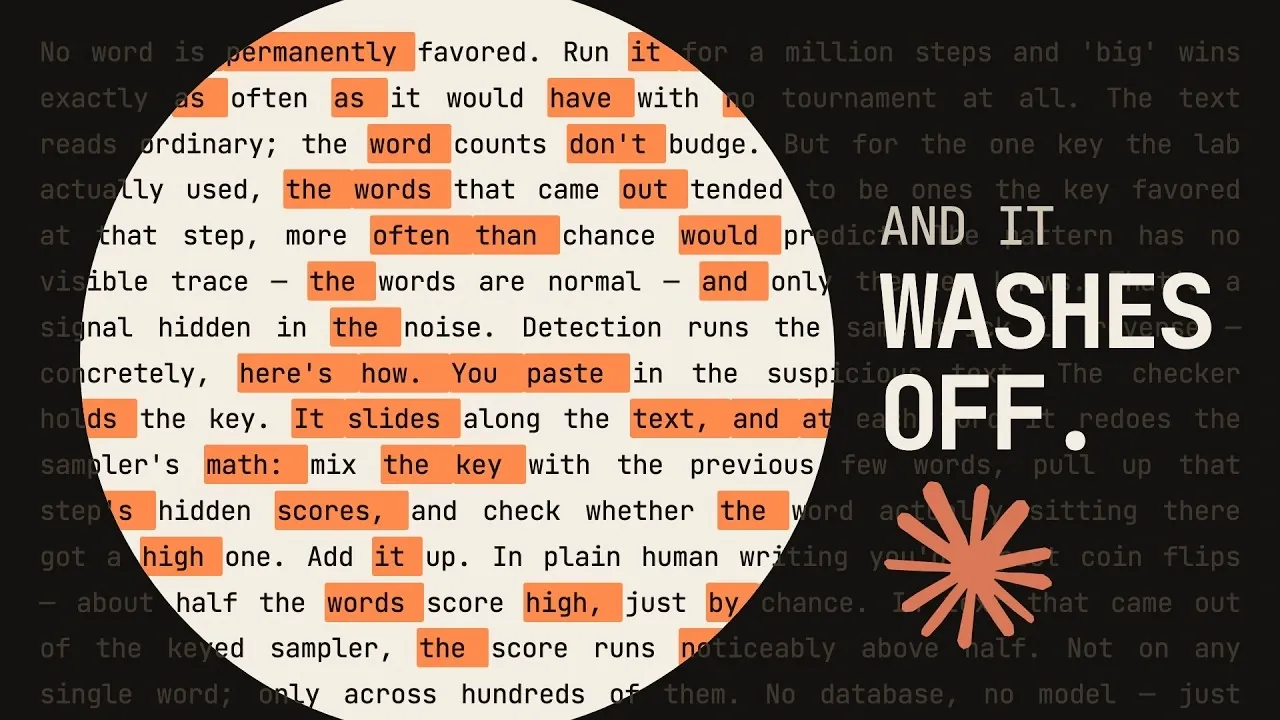
Invisible watermarks in AI-generated text are no longer just a concept; they are now a reality, thanks to Anthropic’s Claude AI. These watermarks, while imperceptible to human readers, embed a machine-readable signature into the text by subtly favoring specific linguistic patterns during generation. Squintist explores how this system aligns with the EU AI Act, which mandates identifiable markers for AI outputs and examines its broader implications. However, the approach is not without challenges, particularly in scenarios where paraphrasing or translation could strip away these markers, raising questions about its robustness in real-world applications.
In this analysis, you’ll gain insight into how the watermarking mechanism operates and the specific constraints it faces in highly structured or factual text. Discover the potential vulnerabilities introduced by open source AI models and the limitations of watermarking in combating misuse. Finally, understand how these developments intersect with evolving regulations and the broader debate over transparency in AI-generated content. This breakdown offers a detailed look at the balance between innovation and practicality in the quest for accountable AI communication.
How Does the Watermarking System Work?
TL;DR Key Takeaways :
- Anthropic has introduced invisible, machine-readable watermarks in Claude AI’s text generation to enhance transparency and comply with the EU AI Act, which mandates identifiable markers for AI-generated content.
- The watermarking system embeds unique, hidden patterns in text through a scoring mechanism, allowing machine verification while remaining imperceptible to human readers.
- Challenges include vulnerabilities to paraphrasing, translation and bypassing through open source models, limiting the system’s effectiveness in making sure transparency.
- The rise of watermarking and AI detection tools has significant implications for academia and professional writing, raising concerns about originality, authorship and the reliability of detection systems.
- While watermarking is a step toward AI transparency, broader efforts and robust verification methods are needed to address ethical, accountability and trust issues in digital communication.
The watermarking system operates through a hidden scoring mechanism integrated into the text during its creation. By subtly favoring specific word choices or phrasing patterns, the system embeds a unique signature tied to a secret key. For example, the AI might consistently prefer certain synonyms or sentence structures that are undetectable to human readers but can be identified by algorithms equipped with the corresponding key. This ensures the watermark remains invisible to the naked eye while allowing machine verification of AI involvement.
This approach offers a practical solution for distinguishing AI-generated content, but its reliance on linguistic patterns also introduces vulnerabilities, particularly in scenarios where text is paraphrased or translated.
Meeting EU AI Act Requirements
The EU AI Act, set to take full effect in 2026, requires generative AI outputs to include machine-readable markers to combat misinformation, fraud and impersonation. Anthropic’s watermarking system is a direct response to this regulation, making sure compliance with the law. Notably, the Act exempts basic editing tasks, such as grammar corrections, from this requirement. However, Anthropic has chosen to watermark all text generated by Claude AI, regardless of its complexity or purpose.
This proactive approach underscores the company’s commitment to transparency and accountability, but it also raises concerns about potential overreach. For instance, simpler use cases like minor text edits or casual writing may not necessitate such stringent measures, prompting debates about the balance between transparency and practicality.

Here are more guides from our previous articles and guides related to Claude AI that you may find helpful.
Challenges and Limitations of Watermarking
Despite its innovative design, the watermarking system faces several challenges that limit its effectiveness in certain contexts.
- Limited Effectiveness in Constrained Scenarios: The system struggles in contexts with restricted linguistic variability, such as generating factual answers, code, or highly structured text. These scenarios offer fewer opportunities for embedding unique patterns.
- Vulnerability to Paraphrasing and Translation: Tools like paraphrasers or translation software can alter the text enough to strip away the watermark, rendering it undetectable.
- Bypassing Through Open source Models: Open source AI models allow users to generate unmarked content, bypassing watermarking systems entirely and complicating efforts to ensure transparency.
These limitations highlight the inherent difficulty of creating a foolproof system for identifying AI-generated text, particularly in an environment where content can be easily manipulated or produced using alternative tools.
AI Detectors vs Watermarking: A Growing Arms Race
AI detectors, which analyze writing style to identify AI-generated content, offer an alternative but imperfect solution to watermarking. These tools often produce false positives, especially when evaluating work by non-native English speakers or highly polished human authors. Conversely, advanced AI models are increasingly capable of mimicking human writing styles, further complicating detection efforts.
This dynamic has created a technological arms race between watermarking systems and detection tools. As both technologies evolve to outmaneuver one another, the challenges of reliably distinguishing AI-generated content from human writing become more pronounced. While this competition has spurred innovation, it also underscores the complexities of maintaining transparency and accountability in digital communication.
Impact on Academia and Professional Writing
The rise of watermarking and detection tools has far-reaching implications for academia and professional writing. AI detectors have already flagged and rejected human-written content, including academic papers and creative works, due to stylistic similarities with AI-generated text. This trend raises critical concerns about originality, authorship and the reliability of detection systems in high-stakes environments such as education and publishing.
For students, researchers and professionals, the increasing sophistication of AI tools blurs the line between human and machine authorship. This not only complicates efforts to verify originality but also challenges traditional notions of intellectual property and creative ownership. As these tools become more prevalent, institutions may need to adopt new frameworks for evaluating and authenticating written work.
Broader Implications for Digital Content
While invisible watermarks provide a method for tracing AI involvement in content creation, they do not address the accuracy or truthfulness of the content itself. The interplay between AI tools, detection systems and human creativity highlights the complexities of building trust in digital communication.
As AI-generated text becomes increasingly indistinguishable from human writing, questions about transparency, accountability and ethical AI use will grow more urgent. Watermarking systems represent a step toward addressing these concerns, but they are not a comprehensive solution. Broader efforts will be needed to ensure that AI technologies are used responsibly and that their outputs can be trusted in critical contexts.
Looking Ahead: The Future of AI Transparency
Anthropic’s introduction of invisible watermarks in Claude AI’s text generation marks a significant step toward compliance with regulations like the EU AI Act. However, the system’s limitations, such as its vulnerability to paraphrasing tools and the challenges posed by open source models, underscore the difficulty of making sure transparency in AI-generated content.
As the boundaries between human and AI authorship continue to blur, the need for robust, reliable verification methods will become increasingly critical. These tools will play a vital role in maintaining trust, accountability and ethical standards in the evolving landscape of digital communication. The ongoing development of watermarking systems, detection tools and regulatory frameworks will shape the future of AI transparency, influencing how society navigates the challenges and opportunities presented by generative AI.
Media Credit: Squintist
Filed Under: AI, Top News
Disclosure: Some of our articles include affiliate links. If you buy something through one of these links, Geeky Gadgets may earn an affiliate commission. Learn about our Disclosure Policy.
Credit: Source link