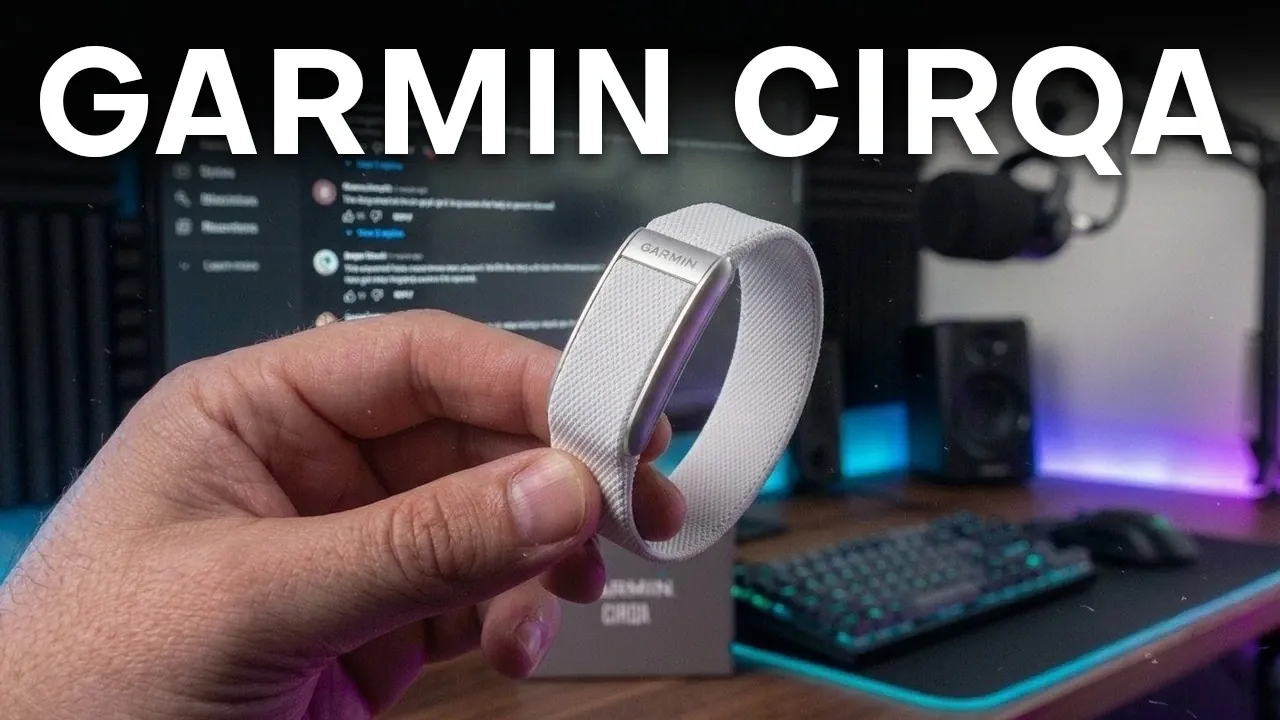
Garmin’s rumored CIRQA health band marks a bold shift in the company’s approach to wearable technology. Unlike Garmin’s feature-rich smartwatches, CIRQA adopts a screenless, minimalist design that prioritizes comfort and continuous health monitoring over advanced on-device functionality. Regulatory filings suggest the device is nearing release and its reliance on Bluetooth connectivity to a smartphone, rather than standalone features like GPS or Wi-Fi, signals Garmin’s intent to target a niche audience. TechAvid explores how this calculated gamble could reshape Garmin’s position in the fitness technology market, particularly for users who value simplicity and lightweight wearability.
Decode what sets CIRQA apart as you explore its focus on 24/7 health tracking, including metrics like heart rate variability and recovery times. Gain insight into how CIRQA integrates with Garmin’s smartwatch ecosystem to enhance fitness data without duplicating features. Finally, understand the potential challenges posed by its subscription-based pricing model and smartphone dependency and how these factors might influence its appeal to different user groups. This Q&A provides a detailed look at Garmin’s strategy and the implications of CIRQA’s unique design choices.
Defining CIRQA’s Unique Approach
TL;DR Key Takeaways :
- Garmin’s CIRQA is a screenless, minimalist health band designed for lightweight comfort and continuous health monitoring, marking a departure from its traditional feature-rich smartwatches.
- CIRQA lacks GPS, Wi-Fi and cellular connectivity, relying on Bluetooth to connect with smartphones for advanced features, positioning it as an accessory rather than a standalone device.
- The device integrates seamlessly with Garmin’s smartwatch ecosystem, focusing on recovery metrics to complement workout performance tracking from other Garmin devices.
- Targeted at fitness enthusiasts who value simplicity and comfort, CIRQA adopts a subscription-based pricing model, which could be a barrier for price-sensitive users.
- Garmin faces challenges with CIRQA’s reliance on smartphone connectivity and subscription fees but aims to carve out a niche by emphasizing comfort, simplicity and ecosystem integration.
CIRQA’s standout feature is its screenless design, which prioritizes comfort and simplicity over the advanced on-device functionalities Garmin is typically known for. Unlike Garmin’s flagship smartwatches, CIRQA lacks GPS, ANT+, Wi-Fi and cellular connectivity. Instead, it connects to your smartphone via Bluetooth, relying on the phone to provide location-based features and other advanced capabilities.
This streamlined design positions CIRQA as a 24/7 health-focused wearable, targeting users who value lightweight comfort and continuous monitoring of key health metrics. The device tracks essential data such as heart rate variability, sleep stages and recovery times, offering actionable insights to optimize training and recovery cycles. For those who prioritize health monitoring without the bulk or complexity of a traditional smartwatch, CIRQA could be an attractive alternative.
Enhancing the Garmin Ecosystem
One of CIRQA’s most compelling features is its ability to integrate seamlessly with Garmin’s existing smartwatch lineup. By combining motion and health data from both devices, CIRQA has the potential to enhance activity tracking and provide more precise fitness metrics. For instance, while a Garmin smartwatch focuses on monitoring workout performance, CIRQA could specialize in recovery metrics, creating a more holistic view of your fitness journey.
This complementary approach suggests that Garmin envisions CIRQA as an accessory rather than a standalone device, designed to work in tandem with its flagship watches. However, CIRQA’s reliance on smartphone connectivity for GPS and other advanced features may limit its appeal to users who prefer fully independent devices. This design choice underscores Garmin’s strategy to target a specific segment of fitness enthusiasts rather than compete directly with standalone wearables.

Gain further expertise in fitness trackers by checking out these recommendations.
Target Audience and Market Positioning
CIRQA is tailored for athletes and fitness enthusiasts who prioritize comfort, simplicity and continuous health monitoring. Its lightweight, screenless design makes it ideal for all-day wear, appealing to users who want to track their health metrics without the distractions of a traditional smartwatch interface.
However, the lack of standalone GPS and other connectivity options may deter users seeking a more independent device. In a market crowded with competitors like Fitbit and WHOOP, CIRQA’s success will depend on how effectively Garmin differentiates it from similar products. The device’s ability to complement Garmin’s existing ecosystem could be a key selling point, but its pricing and feature set will need to resonate with its target audience to gain traction.
The Subscription Model: A Potential Hurdle
CIRQA is expected to adopt a subscription-based pricing model, potentially offering discounts to Garmin Connect Plus subscribers. While this approach could strengthen loyalty among existing Garmin users, it also introduces a potential barrier to entry for new customers. Competing products, such as Fitbit Air, may offer similar features without the added cost of a subscription, making affordability a critical factor in CIRQA’s market performance.
If the subscription fees are perceived as excessive, CIRQA could face challenges in attracting price-sensitive consumers. Garmin will need to clearly communicate the value of its subscription model, emphasizing the unique benefits and insights CIRQA provides compared to its competitors.
Balancing Challenges with Opportunities
Garmin’s decision to focus on lightweight, continuous health monitoring with CIRQA represents a bold shift in its product strategy. This move could help the company carve out a niche in the fitness wearable market, particularly among users who value comfort, simplicity and seamless integration with existing devices.
However, CIRQA’s reliance on smartphone connectivity and its subscription-based pricing model present potential challenges. Users who prefer standalone devices or are hesitant about ongoing costs may be reluctant to adopt the new wearable. Additionally, Garmin will need to clearly articulate how CIRQA stands out from competitors to justify its value proposition.
Despite these challenges, CIRQA’s innovative approach to health tracking and its integration with Garmin’s smartwatch ecosystem offer significant opportunities. If Garmin can effectively balance affordability, functionality and differentiation, CIRQA could redefine how athletes and fitness enthusiasts approach health monitoring in their daily lives.
Media Credit: TechAvid
Filed Under: Gadgets News, Top News
Disclosure: Some of our articles include affiliate links. If you buy something through one of these links, Geeky Gadgets may earn an affiliate commission. Learn about our Disclosure Policy.
Credit: Source link