NASA’s Perseverance rover took its sixth ever selfie from the red planet during a recent excursion west of Mars’ Jezero Crater. And, researchers studying the pollution from satellite megaconstellations found the soot from these launches may have some concerning climate effects. Read on for more on those stories, and other science news we found interesting this week.
Perseverance explores Mars’ ‘Wild West’
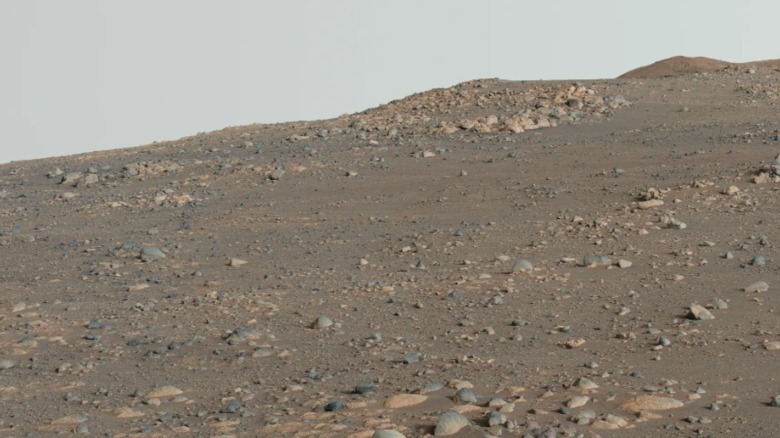
For the past five years, NASA’s Perseverance rover has been studying a location on Mars called the Jezero Crater, which is thought to be a promising site for finding signs of ancient microbial life. It recently ventured beyond the crater’s rim to what the team says is the farthest west it’s explored yet, and it snapped a selfie to capture the moment (along with a good look at the terrain around it). The selfie shared this week by NASA shows Perseverance in a rocky outcrop dubbed “Arathusa” within the “Lac de Charmes” region. This, NASA wrote in a blog post, “represents some of the most scientifically compelling terrain the rover has visited.”
An animated version of the selfie, composed of 61 images taken by a camera on the rover’s robotic arm on March 11, even allows us to see Perseverance swiveling its camera head to take a look around. Perseverance has since moved on to a different area in the region, “Arbot.” NASA shared a panorama of that spot captured on April 5 by the rover’s Mastcam-Z, stitching together 46 images to create a wide view of the rocky expanse. It might not look like much to the untrained eye, but NASA says there are plenty of features of note here. Some of the rocks are as large as skyscrapers, and likely landed there after a meteorite impact nearly 3.9 billion years ago.
The image shows “likely the oldest rocks we are going to investigate during this mission,” Ken Farley, Perseverance’s deputy project scientist at Caltech, said. There’s also what “may be a volcanic dike, a vertical intrusion of magma that hardened in place and was left standing as the softer surrounding material eroded away over billions of years.” In addition to taking pictures of its surroundings, Perseverance collects rock core samples and can grind down the surface of rocks so the team at home can analyze their composition. It’s still studying rocky outcrops in the Arbot area for the time being, before it moves on to a site called “Gardevarri,” which lies to the south.
Pollution from ‘megaconstellation’ launches
The number of annual satellite launches has risen exponentially over the past decade, driven by the commercial activities of companies like SpaceX. Since 2019, SpaceX has launched nearly 12,000 satellites to build out its Starlink megaconstellation, and over 10,300 are currently operational in orbit, according to astronomer Jonathan McDowell. And other companies including Amazon have ramped up their own efforts to create satellite fleets that can compete. Unsurprisingly, researchers say this increase in satellite launches is creating more pollution in Earth’s atmosphere. A study published this week in the journal Earth’s Future found that pollution from these megaconstellation launches will leave roughly 870 metric tons of soot in the atmosphere annually by 2029.
The authors note that pollution can remain in the upper atmosphere for years, which can cause vastly greater impacts on the climate than pollution at the lower layers. That amount of soot could reduce sunlight enough to have mild cooling effects on Earth’s climate. “The cooling effect from the reduction in sunlight that we calculate with our models may sound like a welcome change against the backdrop of global warming, but we need to be extremely cautious,” project lead, Eloise Marais from University College London (UCL Geography) said in a statement.
“The space industry pollution is like a small-scale, unregulated geoengineering experiment that could have many unintended and serious environmental consequences,” Marais said. “Currently the impact on the atmosphere is small, so we still have the chance to act early before it becomes a more serious issue that is harder to reverse or repair.” Megaconstellation launches accounted for about 35 percent of the space sector’s climate impact in 2020, the researchers found, and by 2029 that number could rise to 42 percent.
Before you go, be sure to check out these stories too:
Credit: Source link