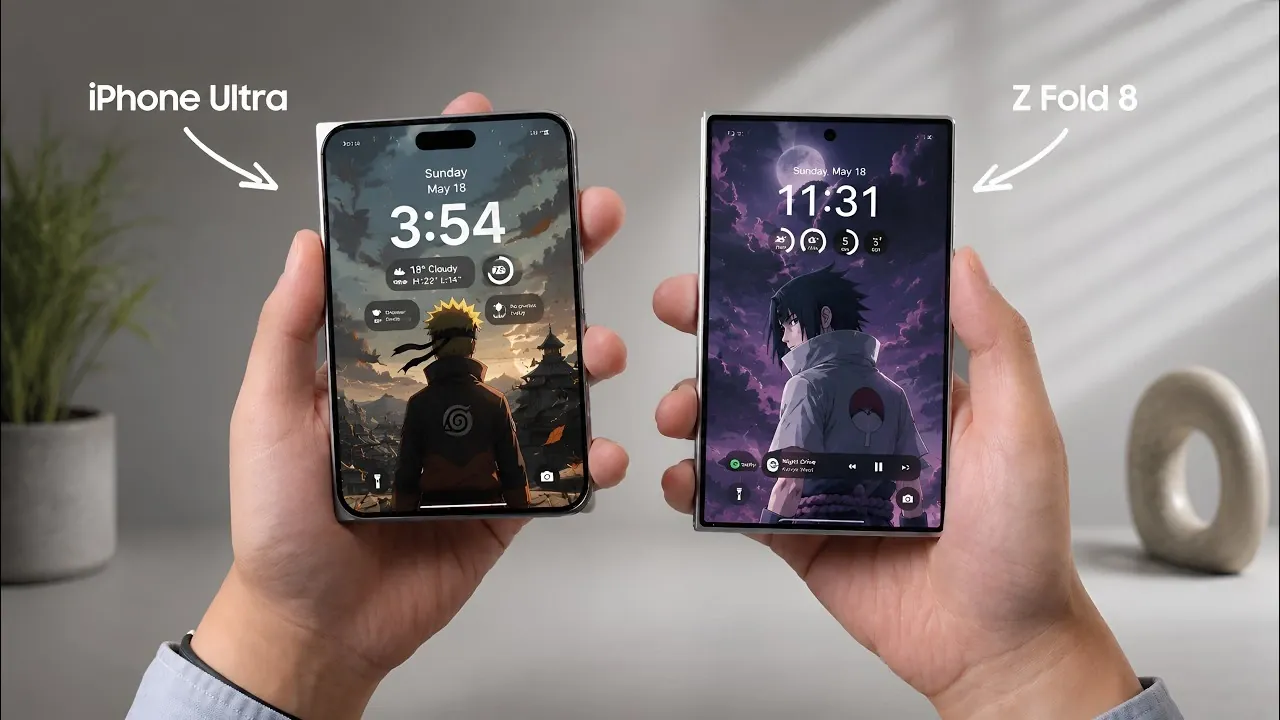
Apple is reportedly preparing to make its debut in the foldable phone market with a device rumored to be called the iPhone Ultra. Early leaks suggest this innovative device could feature a dual-cell battery with a combined rated capacity of 4,883 mAh. If accurate, this would position the iPhone Ultra as a direct competitor to Samsung’s Galaxy Z Fold 8 and Galaxy Z Fold 8 Ultra, which are expected to feature typical battery capacities of 4,800 mAh and approximately 5,000 mAh, respectively. However, battery capacity alone does not paint the full picture. The real competition lies in how effectively each company integrates hardware and software to optimize battery performance, a factor that could significantly influence user experience.
iPhone Ultra – Bigger Battery Than Galaxy Z Fold 8?

How Battery Capacities Compare
Understanding battery capacities requires a closer look at how manufacturers overview these figures. Apple typically uses rated capacity, while Samsung relies on typical capacity. For example, the iPhone Ultra’s 4,883 mAh rated capacity might appear slightly larger than the Galaxy Z Fold 8’s 4,800 mAh typical capacity. However, these figures are not directly comparable due to differences in measurement standards. Meanwhile, the Galaxy Z Fold 8 Ultra, with its estimated 5,000 mAh typical capacity, could hold a slight advantage in raw battery size.
Despite these differences, battery life is not determined by capacity alone. Apple’s history of hardware-software integration often allows its devices to outperform competitors with larger batteries. This means the iPhone Ultra could potentially deliver longer usage times, even if its battery capacity is marginally smaller than Samsung’s foldable devices. The efficiency of energy consumption, driven by software optimization, will likely play a pivotal role in determining which device offers superior battery performance.
Apple’s Optimization Advantage
Apple’s competitive edge lies in its ability to optimize every aspect of its devices, from hardware to software. The iPhone Ultra is expected to use custom chip technology, likely from Apple’s A-series or M-series processors, which are renowned for their energy efficiency. These processors, combined with the seamless integration of iOS, could result in significant improvements in battery life.
For instance, features such as adaptive power management and task prioritization could help reduce energy consumption during demanding activities like multitasking on a foldable display. In contrast, Samsung’s Galaxy Z Fold 8 and Z Fold 8 Ultra rely on Android, which must support a wide range of hardware configurations. Although Samsung has made considerable strides in optimizing its One UI software for foldable devices, it may still face challenges in matching the efficiency of Apple’s vertically integrated ecosystem.
Display and Design: Power Consumption Challenges
Foldable phones inherently face higher power demands due to their larger, more complex displays. Both the iPhone Ultra and Galaxy Z Fold 8 are expected to feature advanced OLED or AMOLED panels with high refresh rates, which can significantly impact battery life. Apple’s expertise in display technology, including adaptive refresh rates and power-efficient backlighting, could help mitigate these challenges. Samsung, as a leader in display manufacturing, is also likely to incorporate similar advancements in its foldable lineup.
Design choices will further influence battery performance. A thinner, lighter foldable phone might require compromises in battery size, while a thicker design could accommodate a larger battery. Striking the right balance between form and function will be critical for both Apple and Samsung as they compete in this space. Apple’s focus on user-centric design may give it an edge in creating a device that balances aesthetics with performance, while Samsung’s experience in foldable technology could enable it to refine its designs for maximum efficiency.
Camera Technology and Software Efficiency
The camera systems in foldable phones are another factor that significantly impacts battery life. These devices often include multiple camera modules, which require substantial power for image processing and storage. The iPhone Ultra is expected to feature Apple’s advanced computational photography capabilities, optimized to minimize energy use without compromising image quality. Similarly, Samsung’s Galaxy Z Fold 8 and Z Fold 8 Ultra are likely to include high-resolution cameras with AI-driven enhancements, which may demand more power.
Software optimization will be crucial in managing these power-intensive features. Apple’s iOS is known for its efficient resource allocation, which could give the iPhone Ultra a distinct advantage in battery performance. Samsung, on the other hand, may need to further refine its software to close the gap, particularly in areas such as background task management and app optimization. Both companies will need to ensure that their devices can handle the power demands of advanced camera systems without compromising overall battery life.
The Competitive Landscape
As foldable phones continue to evolve, battery performance is emerging as a critical factor in their success. While advancements in display technology, camera systems and design remain important, the ability to deliver all-day battery life will likely determine which brands dominate the market. Apple’s entry into the foldable phone category with the iPhone Ultra signals its intent to challenge Samsung’s leadership in this space. By focusing on hardware-software integration and energy efficiency, Apple could set a new standard for battery performance in foldable devices.
Samsung, however, is not standing still. The Galaxy Z Fold 8 and Z Fold 8 Ultra are expected to feature incremental improvements in battery capacity and software optimization. By addressing these areas, Samsung could maintain its competitive edge and continue to appeal to users who prioritize multitasking and productivity. The competition between Apple and Samsung in the foldable phone market is poised to drive innovation, ultimately benefiting consumers with devices that offer improved performance and functionality.
Check out more relevant guides from our extensive collection on Foldable phones that you might find useful.
Source & Image Credit: Demon’s Tech
Filed Under: Android News, Apple iPhone, Mobile Phone News, Top News
Disclosure: Some of our articles include affiliate links. If you buy something through one of these links, Geeky Gadgets may earn an affiliate commission. Learn about our Disclosure Policy.
Credit: Source link