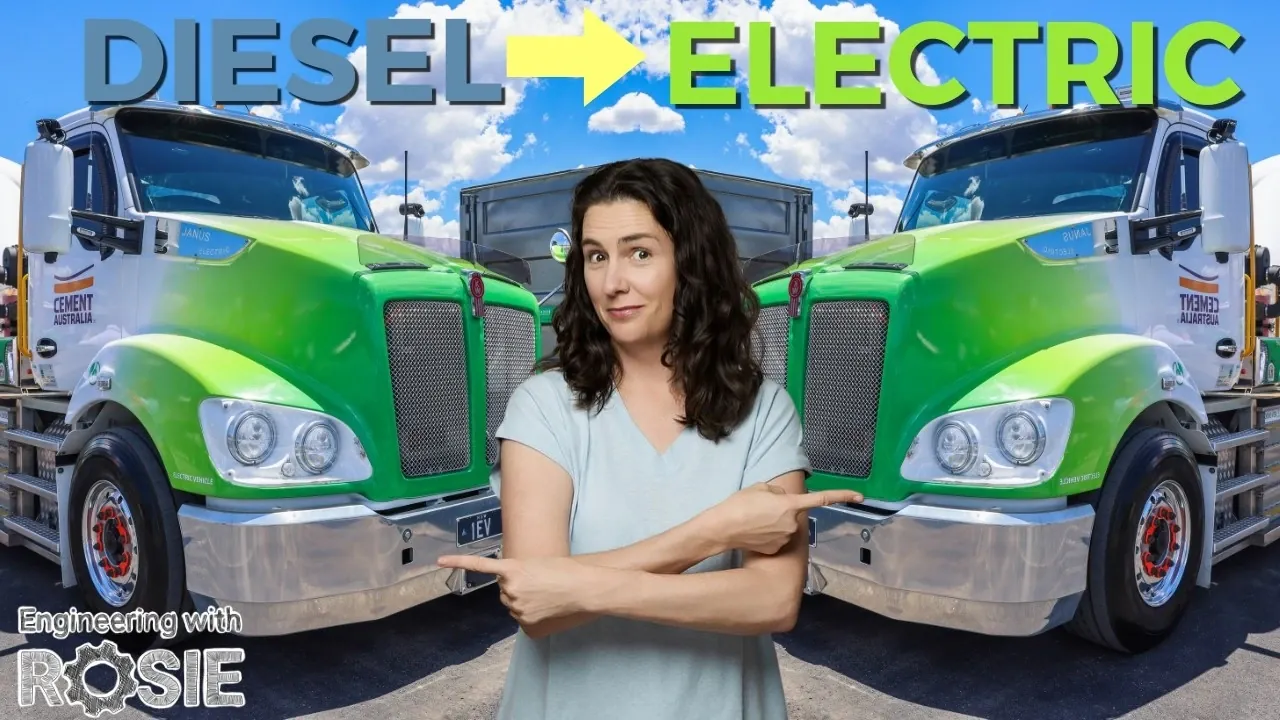
Diesel trucks are being repurposed through Janus Electric’s retrofitting process, which replaces internal combustion engines with electric drivetrains and modular batteries. This six-day conversion retains the original chassis, reducing material waste while offering a practical way to electrify existing fleets. According to Engineering with Rosie, this method provides a cost-efficient solution for fleet operators aiming to lower emissions without investing in entirely new vehicles.
Discover how this retrofitting process integrates battery-swapping systems to reduce vehicle downtime, the steps taken to ensure compliance with weight and safety standards and the infrastructure required to support long-haul electric trucking. This guide outlines the practical considerations and technical advancements shaping the future of sustainable freight transport.
How Diesel-to-Electric Retrofitting Works
TL;DR Key Takeaways :
- Janus Electric retrofits diesel trucks into electric vehicles by replacing traditional components with electric drivetrains and modular battery systems, offering a cost-effective and sustainable alternative to new electric trucks.
- The company’s battery-swapping technology allows depleted batteries to be replaced in under four minutes, minimizing downtime and addressing charging time challenges in the trucking industry.
- Retrofitting costs approximately one-quarter of the price of a new electric truck, with flexible battery and infrastructure-as-a-service models making the technology accessible to businesses of all sizes.
- Retrofitted trucks meet national weight regulations and offer ranges of up to 450 kilometers for single trailers, making sure compatibility with existing logistics networks and industry standards.
- Janus Electric is scaling up production to 50 conversion kits per month and developing a network of battery-swapping stations, supporting the widespread adoption of sustainable electric trucking solutions.
At the core of Janus Electric’s solution is its efficient and practical retrofit process. Diesel trucks are stripped of traditional components such as engines, gearboxes and fuel systems. These are replaced with electric drivetrains and modular battery systems, transforming the vehicle into a fully electric truck. The entire conversion process takes approximately six days, making it a time-efficient option for fleet operators.
By reusing existing truck chassis, this method significantly reduces waste and eliminates the need for manufacturing entirely new vehicles. This approach not only minimizes environmental impact but also provides a cost-effective alternative to replacing diesel trucks with brand-new electric models. The retrofitting process is designed to integrate seamlessly into existing fleet operations, making sure minimal disruption while maximizing sustainability.
Battery-Swapping: A Revolution in Efficiency
A standout feature of Janus Electric’s model is its battery-swapping technology, which addresses one of the most significant barriers to electric vehicle adoption: charging time. Instead of waiting hours to recharge, drivers can replace depleted batteries in under four minutes at designated swapping stations. These stations recharge batteries at a slower, controlled pace, which reduces wear and tear while easing the strain on the electrical grid.
The batteries are air-cooled, making sure consistent performance and durability even under demanding conditions. This system minimizes downtime for operators, allowing trucks to stay on the road longer and maintain productivity. By eliminating the operational delays typically associated with electric vehicle charging, Janus Electric’s battery-swapping technology offers a practical solution for the trucking industry’s unique needs.

Deep dive into the latest in energy by exploring our other resources and articles.
Affordable Solutions for Fleet Operators
Cost considerations are a major factor for fleet operators exploring new technologies. Retrofitting a diesel truck with Janus Electric’s system costs approximately one-quarter of the price of purchasing a new electric truck. This affordability makes the technology accessible to a broader range of businesses, including smaller operators who may lack the capital for significant upfront investments.
To further reduce financial barriers, Janus Electric offers a flexible model where batteries and charging infrastructure are provided as a service. This approach allows operators to adopt the technology without the burden of owning and maintaining expensive infrastructure. By making electric trucking more accessible, Janus Electric is empowering businesses of all sizes to transition toward sustainable operations.
Performance and Range: Meeting Industry Standards
Retrofitted trucks maintain a weight comparable to their diesel counterparts, making sure compliance with national truck weight regulations. This is a critical consideration for operators navigating strict guidelines in the transport industry.
In terms of range, Janus Electric’s batteries currently support approximately 450 kilometers for single trailers carrying up to 70 tonnes. For road trains hauling 220 tonnes, the range is around 170 kilometers. These capabilities align with the needs of many regional and long-haul routes in Australia, demonstrating the practicality of the technology for real-world applications. By meeting industry standards for performance and range, Janus Electric ensures its retrofitted trucks can seamlessly integrate into existing logistics networks.
Scaling Up: Infrastructure and Production
To meet the growing demand for its solutions, Janus Electric is scaling up its operations. By the end of the year, the company aims to produce 50 conversion kits per month, allowing more fleet operators to adopt its retrofitting technology.
In parallel, Janus is developing a network of battery-swapping and charging stations strategically located near major town centers and along key freight routes. This distributed infrastructure ensures that retrofitted trucks can operate efficiently over long distances, further accelerating the adoption of electric trucking. The company’s focus on infrastructure development highlights its commitment to creating a seamless and reliable ecosystem for electric heavy transport.
Environmental and Operational Benefits
Janus Electric’s approach delivers significant benefits for both the environment and fleet operations. Retrofitted trucks produce zero tailpipe emissions, contributing to improved air quality and reduced greenhouse gas emissions. This aligns with global efforts to combat climate change and transition to cleaner energy sources.
Drivers also benefit from the quieter and smoother operation of electric trucks, enhancing their overall experience on the road. Additionally, the batteries used in these trucks have second-life applications, such as stationary energy storage, which maximizes their value and minimizes waste. By addressing both environmental and operational concerns, Janus Electric’s solutions offer a comprehensive pathway to sustainable trucking.
Overcoming Challenges in Electric Trucking
While the transition to electric trucking presents numerous opportunities, it is not without challenges. Local council regulations on truck weight can pose hurdles, but Janus Electric’s retrofitting process ensures compliance with national standards, mitigating this issue.
Another challenge is the need for interoperability between battery systems and charging infrastructure as the industry evolves. Janus Electric is actively working to address these concerns, making sure its solutions remain adaptable and practical for a wide range of operators. By proactively tackling these challenges, the company is paving the way for a smoother transition to electric trucking.
Driving the Future of Sustainable Trucking
Janus Electric’s innovative approach represents a practical and scalable solution for electrifying heavy transport. By retrofitting existing diesel trucks, using battery-swapping technology, and addressing economic and logistical challenges, the company is setting a new benchmark for sustainable trucking.
With plans to expand its operations and infrastructure, Janus Electric is well-positioned to lead the transformation of the trucking industry. Its commitment to sustainability, efficiency and accessibility ensures that it will play a pivotal role in shaping a cleaner, more efficient future for heavy transport.
Media Credit: Engineering with Rosie
Filed Under: Auto News, Top News
Disclosure: Some of our articles include affiliate links. If you buy something through one of these links, Geeky Gadgets may earn an affiliate commission. Learn about our Disclosure Policy.
Credit: Source link