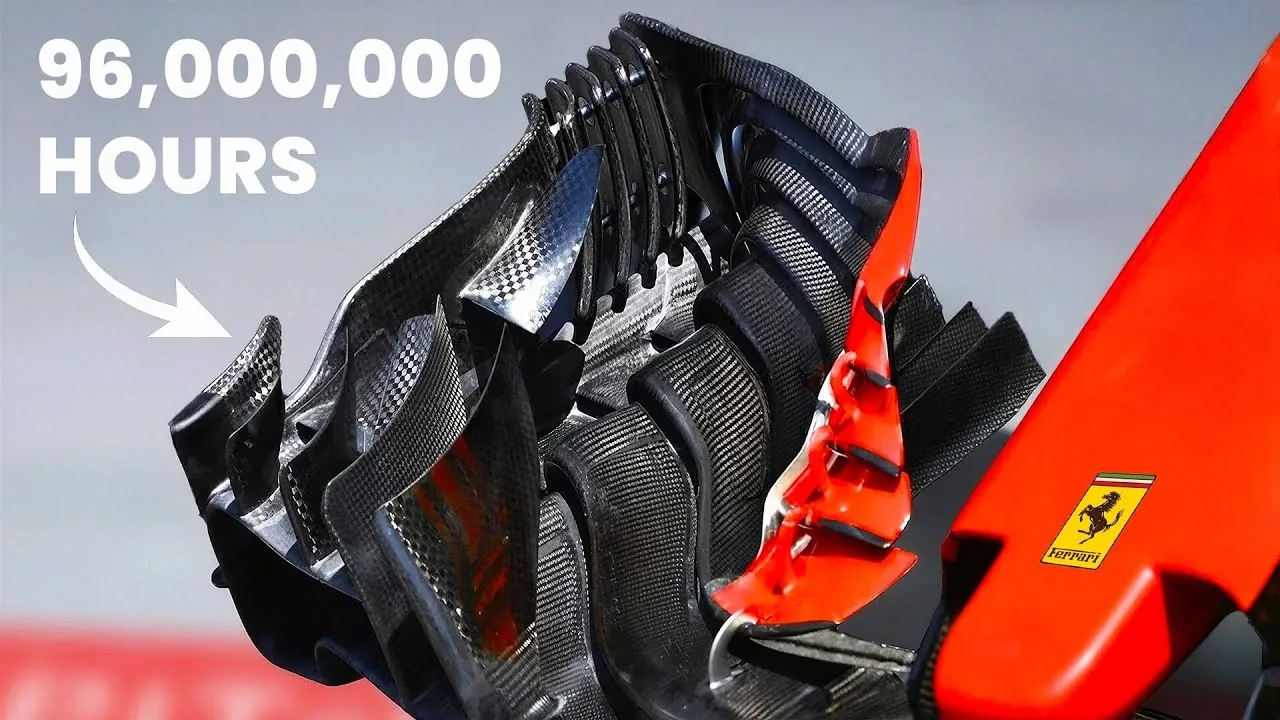
Formula 1 has continually evolved to balance speed, safety and engineering precision, with aerodynamics playing a pivotal role in this progression. One of the most notable developments has been the reinvention of the wing, which transitioned from basic attachments in the 1960s to integral components of modern car design. According to Driver61, the adoption of fixed wings in the 1970s marked a turning point, allowing teams to harness airflow for increased downforce and improved cornering speeds. This advancement also introduced challenges, such as managing the trade-off between aerodynamic efficiency and driver safety.
Explore how Formula 1 refined its approach to aerodynamics through methods like ground effect principles, wind tunnel testing and Computational Fluid Dynamics (CFD). Learn how the 2022 regulations reshaped car designs to reduce turbulence and enhance overtaking and examine the potential role of active aerodynamics in the 2026 season. These topics provide a detailed look at the technical and regulatory factors influencing the sport’s future.
F1 Aerodynamic Design
TL;DR Key Takeaways :
- Formula 1’s evolution from mechanical grip to aerodynamic dominance has redefined the sport, with innovations like wings and ground effect shaping its trajectory.
- The late 1970s introduced ground effect aerodynamics, transforming downforce generation but raising safety concerns, leading to its ban in 1982.
- Technological advancements such as wind tunnels, Computational Fluid Dynamics (CFD), and 3D printing have enabled precise aerodynamic optimization, driving performance gains.
- Regulations addressing “dirty air” and overtaking challenges culminated in the 2022 revival of ground effect principles, improving wheel-to-wheel racing.
- Future innovations, including active aerodynamics and sustainable technologies, aim to enhance performance, energy efficiency and the sport’s competitive edge.
The Early Days: Mechanical Grip and the Birth of Aerodynamics
In its earliest years, Formula 1 cars relied almost entirely on mechanical grip, achieved through tire performance, suspension design and weight distribution. Aerodynamics played a minimal role, with engineers focusing on mechanical solutions to improve lap times. This began to change in the late 1960s when teams started experimenting with wings, inspired by innovations in North American motorsport.
These early wings were mounted high above the cars, redirecting airflow to generate downforce, which improved grip and cornering speeds. However, their movable designs raised significant safety concerns, as failures could lead to catastrophic accidents. This prompted the introduction of regulations banning movable wings, leading to the adoption of fixed designs by the 1970s. This marked the beginning of Formula 1’s aerodynamic era, where the manipulation of airflow became a critical factor in performance.
The Ground Effect Revolution: A New Era of Downforce
The late 1970s saw the advent of ground effect aerodynamics, a innovative concept pioneered by Colin Chapman’s Lotus 78. Instead of relying solely on wings, this approach utilized the car’s floor to create a low-pressure zone beneath the vehicle, effectively “sucking” the car to the track. Sliding skirts along the edges of the car sealed the underfloor area, maximizing the ground effect and allowing for significant downforce without the drag penalty associated with large wings.
While this innovation offered unparalleled performance advantages, it came with inherent risks. A sudden disruption in the ground effect, such as when the car hit a bump or the skirts failed, could result in a dramatic loss of downforce, leading to dangerous high-speed accidents. By 1982, sliding skirts were banned, effectively ending the ground effect era. However, its principles would leave a lasting legacy, influencing future aerodynamic designs and inspiring engineers to explore new ways to harness airflow.

Deep dive into the latest in energy by exploring our other resources and articles.
Technological Advancements and the Rise of Precision Aerodynamics
The 1980s and 1990s marked a period of rapid technological progress in Formula 1 aerodynamics. Teams began using wind tunnels to test and refine their designs with unprecedented precision. This allowed engineers to study airflow patterns and optimize components for maximum efficiency. The emergence of Computational Fluid Dynamics (CFD) further transformed the design process, allowing teams to simulate airflow digitally and make data-driven decisions without relying solely on physical testing.
The introduction of 3D printing further accelerated development cycles, allowing teams to quickly produce and test aerodynamic components. These advancements laid the foundation for dominant performances, such as Ferrari’s success in the early 2000s, where relentless optimization of aerodynamics became a cornerstone of their championship-winning cars.
Complexity, Challenges and the Push for Simplicity
By the late 2000s, Formula 1 cars had become aerodynamically complex, featuring intricate designs such as winglets, barge boards and chimneys. These components were carefully engineered to manipulate airflow and enhance performance. However, this complexity introduced a significant drawback: “dirty air.” The turbulent airflow generated by these designs disrupted trailing cars, making overtaking difficult and reducing the overall quality of racing.
In response, the 2009 regulations aimed to simplify aerodynamics by reducing appendages and modifying wing dimensions. While these changes addressed some issues, they did not fully resolve the problem of dirty air. A more comprehensive solution emerged with the 2022 regulations, which sought to fundamentally reshape the aerodynamic philosophy of Formula 1.
The 2022 Ground Effect Revival
The 2022 regulations marked the return of ground effect principles, reimagined for the modern era. By channeling airflow through underfloor tunnels, teams could generate substantial downforce while minimizing the turbulence experienced by trailing cars. This approach aimed to improve wheel-to-wheel racing and create more overtaking opportunities, addressing one of the sport’s long-standing challenges.
Engineers quickly adapted to the new rules, pushing the boundaries of performance within the constraints of the regulations. The reintroduction of ground effect not only enhanced the spectacle of racing but also demonstrated Formula 1’s ability to innovate while adhering to strict guidelines. This shift underscored the sport’s commitment to balancing performance with competitive fairness.
Active Aerodynamics and the Future of Formula 1
As Formula 1 looks toward 2026 and beyond, the focus is shifting to active aerodynamics, a concept that promises to transform the sport once again. Adjustable wings and other dynamic components will allow cars to adapt to varying track conditions and racing scenarios in real time. These innovations aim to enhance both performance and energy efficiency, aligning with Formula 1’s broader sustainability goals.
Future advancements are likely to involve the integration of new materials, innovative manufacturing techniques and advanced aerodynamic concepts. Engineers will continue to explore the limits of what is possible, making sure that Formula 1 remains at the forefront of technological innovation and competitive excellence.
The Legacy of Aerodynamic Evolution
The evolution of aerodynamics in Formula 1 reflects the sport’s unwavering commitment to progress. Each breakthrough builds on the lessons of the past, with engineers using new tools, technologies and ideas to overcome challenges and seize opportunities. From the introduction of wings to the return of ground effect and the promise of active aerodynamics, Formula 1’s journey is a testament to the philosophy of continuous improvement.
This relentless pursuit of innovation ensures that Formula 1 remains not only a showcase of engineering excellence but also a thrilling spectacle that captivates fans around the world. As the sport continues to evolve, its dedication to pushing boundaries guarantees its place as a leader in both technology and competition.
Media Credit: Driver61
Filed Under: Design News, Top News
Disclosure: Some of our articles include affiliate links. If you buy something through one of these links, Geeky Gadgets may earn an affiliate commission. Learn about our Disclosure Policy.
Credit: Source link