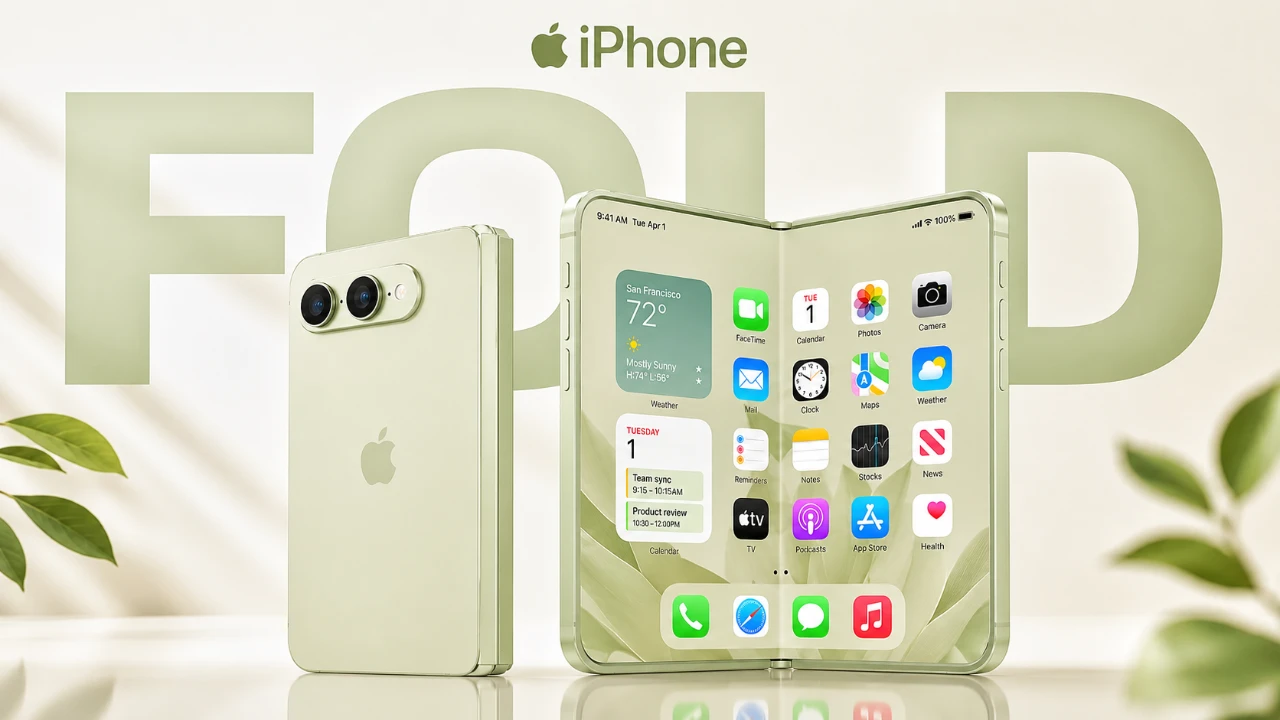
Apple is preparing to make a significant entry into the foldable smartphone market with the highly anticipated iPhone Ultra Fold, expected to launch in September 2026. This innovative device, debuting alongside the iPhone 18 lineup, represents Apple’s commitment to combining its renowned design expertise with innovative technology. Positioned as a premium product, the Ultra Fold is set to challenge established market leaders and establish new benchmarks in the foldable smartphone category. The video below from Tech Town gives us more details about the iPhone Ultra Fold.
Rumored iPhone Ultra Fold Specifications
| Feature | Rumored Specification |
| Expected Launch | September 2026 ( alongside the iPhone 18 Pro series) |
| Form Factor | Book-style horizontal fold (similar to a passport or small tablet) |
| Inner Display | 7.76 to 7.8-inch Foldable LTPO OLED, 120Hz, 4:3 aspect ratio |
| Outer Display | 5.3 to 5.5-inch LTPO OLED, 120Hz, Ceramic Shield |
| Inner Resolution | ~2713 x 1920 pixels (~428 ppi) |
| Outer Resolution | ~2088 x 1422 pixels |
| Unfolded Thickness | Ultra-thin ~4.5mm to 4.8mm |
| Folded Thickness | ~9.0mm to 9.5mm (up to 11mm in early dummy units) |
| Chassis Materials | Titanium alloy (structural core) & aluminum (heat dissipation) |
| Processor | Apple A20 chip (built on TSMC’s advanced 2nm process) |
| Memory (RAM) | 12GB RAM (potentially integrated directly on the SoC wafer) |
| Storage Options | 256GB, 512GB, 1TB |
| Rear Cameras | Dual setup: 48MP Wide + 48MP Ultra-wide (No Telephoto lens due to space restrictions) |
| Selfie Cameras | 24MP under-display camera (internal) + single punch-hole camera (external) |
| Biometrics | Touch ID integrated into the power button (No Face ID/TrueDepth array due to thinness) |
| Battery Capacity | Dual-cell design between 5,400 mAh and 5,800 mAh |
| Estimated Price | Starting around $2,000 / £1,700 (up to $2,900 for 1TB) |
Strategic Launch and Market Positioning
The iPhone Ultra Fold is slated for release during Apple’s annual autumn event, a time traditionally reserved for unveiling its flagship products. By introducing the Ultra Fold alongside the iPhone 18 series, Apple signals its intention to integrate the foldable device into its core product lineup rather than treating it as a niche experiment. This strategic move underscores Apple’s confidence in the device’s potential to appeal to a broad audience.
Unlike competitors who often aim for mass-market adoption, Apple appears focused on delivering a high-end, premium device that addresses critical shortcomings in current foldable smartphones. These include challenges such as durability, visible screen creases and software limitations. By tackling these issues head-on, Apple aims to position the Ultra Fold as a superior alternative, appealing to discerning users who prioritize both innovation and reliability.
Design and Engineering Excellence
The iPhone Ultra Fold is expected to seamlessly transition between a traditional smartphone and a compact tablet, catering to diverse user needs such as productivity, entertainment, and multitasking. With a folded thickness of 9.3 mm (13 mm including the camera bump), the device emphasizes portability and practicality without compromising on functionality. Apple’s engineers have reportedly prioritized weight distribution, making sure the device feels balanced and comfortable to use in both folded and unfolded states.
Durability is a key focus of the Ultra Fold’s design. Foldable devices are often criticized for fragile hinge mechanisms, but Apple is rumored to have developed a robust hinge system capable of withstanding extensive use. Additionally, advancements in display technology aim to significantly reduce crease visibility, addressing a common pain point for users of existing foldable devices. These improvements highlight Apple’s commitment to delivering a product that is not only innovative but also reliable and long-lasting.
Software Innovations and Enhanced Battery Performance
To fully use the unique capabilities of its foldable form factor, Apple is expected to introduce iOS enhancements specifically tailored for the Ultra Fold. These software optimizations could include:
- Advanced multitasking features allow users to run multiple apps side by side with ease
- Seamless app continuity, making sure a smooth transition between folded and unfolded modes
- Refined gesture controls for intuitive navigation and interaction
These enhancements would ensure that the Ultra Fold delivers a user experience that is not only seamless but also distinct from its competitors, further solidifying Apple’s reputation for software excellence.
Battery life, a common concern for foldable devices due to their dual-display setups, is another area where Apple is expected to innovate. By integrating energy-efficient components and optimizing iOS for power management, the Ultra Fold could achieve battery performance comparable to or even better than traditional smartphones. This would address a critical pain point for users and enhance the device’s overall appeal.
Competitive Landscape and Market Dynamics
The foldable smartphone market is currently dominated by Samsung, with Google also making notable strides in the space. These companies have set high standards for design, functionality, and innovation, creating a competitive environment for new entrants. However, Apple’s reputation for delivering polished, user-centric products has raised expectations that the Ultra Fold will surpass existing offerings in terms of quality and usability.
Apple’s decision to limit the Ultra Fold’s color options to black and silver reinforces its premium positioning. This minimalist approach contrasts with the vibrant color palettes offered by competitors, emphasizing a sophisticated and timeless aesthetic that aligns with Apple’s branding. By focusing on quality over quantity, Apple aims to attract consumers who value elegance and refinement.
Potential Impact on the Foldable Smartphone Market
The iPhone Ultra Fold has the potential to significantly influence the foldable smartphone market. By addressing key challenges such as hinge durability, crease reduction and software optimization, Apple could set new industry standards that redefine consumer expectations. This, in turn, may attract users who have been hesitant to adopt foldable technology due to concerns about reliability and usability.
Apple’s entry into the foldable space is also likely to intensify competition, prompting rivals to accelerate their innovation cycles. As a result, the entire industry could benefit from advancements driven by Apple’s influence, ultimately offering consumers a wider range of high-quality options. The Ultra Fold’s success could also encourage other manufacturers to prioritize durability, functionality and user experience, raising the bar for foldable devices across the board.
Shaping the Future of Mobile Technology
The iPhone Ultra Fold represents more than just Apple’s first venture into foldable smartphones; it is a bold statement of the company’s ambition to lead in yet another category of mobile technology. By combining sleek design, robust engineering, and tailored software, Apple aims to redefine what a foldable device can achieve. As the September 2026 launch approaches, the Ultra Fold is already generating significant anticipation within the tech community and beyond. If successful, this device could not only solidify Apple’s dominance in the smartphone market but also shape the future of foldable technology, setting a new standard for innovation and excellence.
Expand your understanding of the Foldable iPhone with additional resources from our extensive library of articles.
Source & Image Credit: Tech Town
Filed Under: Apple iPhone
Disclosure: Some of our articles include affiliate links. If you buy something through one of these links, Geeky Gadgets may earn an affiliate commission. Learn about our Disclosure Policy.
Credit: Source link