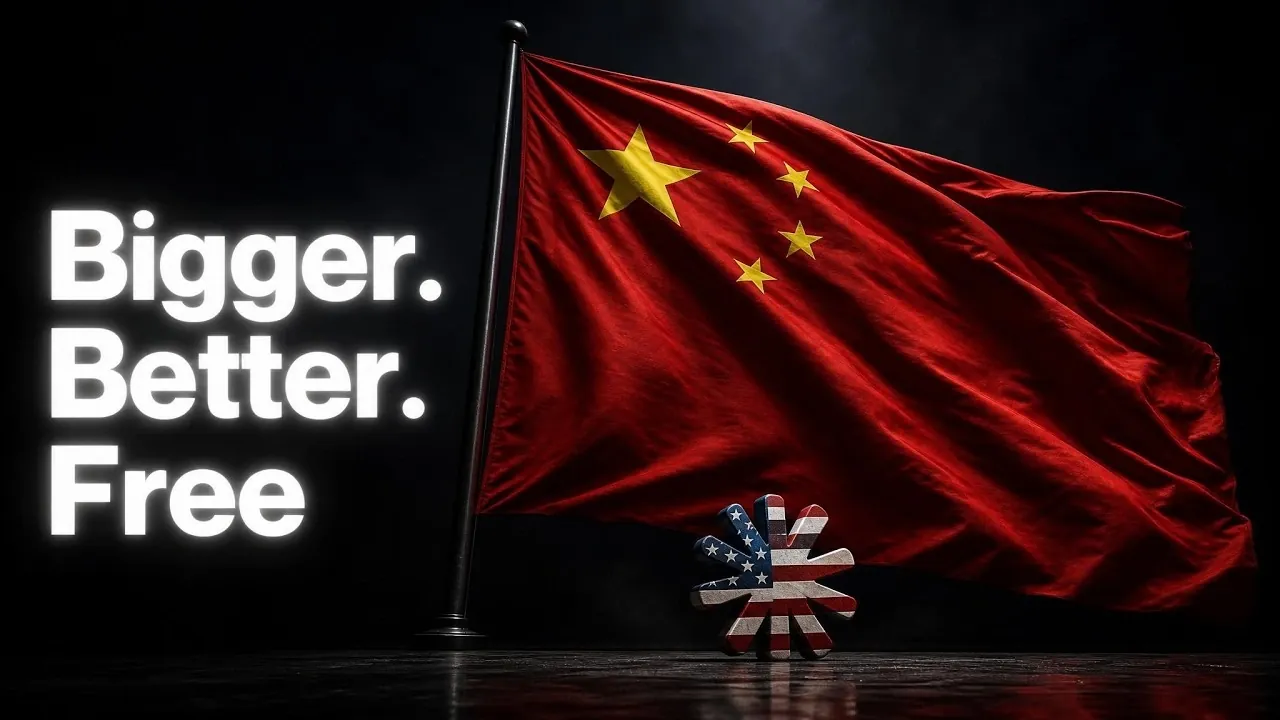
China’s AI models are making significant strides, with the Kimi K3 emerging as a notable example of this progress. As reported by The Stack, the Kimi K3 has surpassed leading U.S. models like GPT 5.6 Sol in benchmarks such as SWE Marathon, which evaluates advanced reasoning and decision-making skills. A standout feature of the Kimi K3 is its use of the Mixture of Experts architecture, a framework that dynamically allocates computational resources to enhance efficiency and accuracy. This design enables the model to perform effectively without relying on the most advanced hardware, addressing cost and resource constraints in a competitive field.
Explore how China’s emphasis on software-driven approaches is shaping the global AI landscape. Gain insight into the methods that allow Chinese models to perform well despite hardware limitations, including their focus on scalability and resource optimization. Understand the broader implications of these advancements, from the growing role of open source frameworks to shifts in the international AI ecosystem.
Kimi K3: Redefining AI Performance?
TL;DR Key Takeaways :
- China’s AI advancements, exemplified by the Kimi K3 model, are surpassing U.S. counterparts in performance and cost-efficiency, despite hardware restrictions imposed by U.S. export controls.
- The Kimi K3 model utilizes an innovative “Mixture of Experts” architecture, allowing high performance with lower hardware requirements, making it more accessible and cost-effective for global developers.
- U.S. hardware restrictions have inadvertently driven China’s strategic pivot toward software innovation, fostering the development of efficient and scalable AI solutions.
- China’s focus on open source AI models, such as Alibaba’s Qwen, is promoting global accessibility and collaboration, reshaping the competitive dynamics of the AI industry.
- The shift toward software-driven AI solutions is disrupting traditional hardware-dominated markets, altering global economic and regulatory landscapes and intensifying the global AI race.
China’s AI progress reflects a broader trend of using software to overcome barriers, signaling a transformation in how nations compete in this critical field. As the global AI race intensifies, China’s focus on efficiency and accessibility is positioning it as a formidable player in shaping the future of AI technology.
The Kimi K3 model stands as a prime example of China’s AI breakthroughs. It has outperformed leading U.S. models, including Claude Fable 5 and GPT 5.6 Sol, in key benchmarks such as SWE Marathon and agentic browsing. These benchmarks assess a model’s ability to handle complex reasoning and autonomous decision-making tasks, areas where Kimi K3 demonstrates exceptional capability.
What sets the Kimi K3 apart is its innovative architecture, which employs the Mixture of Experts model. This design dynamically allocates computational resources, allowing the model to achieve high performance without relying on innovative hardware. As a result, Kimi K3 operates at a significantly lower cost compared to its American counterparts, making it an attractive choice for developers and businesses worldwide.
The success of Kimi K3 underscores China’s ability to innovate in AI architecture, offering solutions that are both efficient and scalable. This approach is reshaping the competitive dynamics of the AI industry, emphasizing the importance of software-driven advancements.
Hardware Restrictions: A Double-Edged Sword
U.S. export controls on advanced chips, such as Nvidia GPUs, have created a significant gap in computational resources between Chinese and American AI ecosystems. These restrictions are designed to limit China’s access to the hardware necessary for training and deploying large-scale AI models. However, these measures have had unintended consequences.
Chinese firms have adopted various strategies to navigate these restrictions. For example, companies like Sharetronic have been implicated in smuggling operations to acquire restricted hardware. This reliance on U.S. technology highlights a paradox: while hardware access remains constrained, China’s software innovation continues to thrive, driving its AI progress forward.
The limitations imposed by hardware restrictions have inadvertently spurred a shift in focus toward software solutions. This shift is allowing China to develop AI models that are not only competitive but also more accessible and cost-effective, further challenging the traditional dominance of hardware-centric approaches.

Explore further guides and articles from our vast library that you may find relevant to your interests in China AI.
Software Innovation: China’s Strategic Response
In response to hardware constraints, China has strategically pivoted toward software innovation. Researchers and developers are concentrating on creating more efficient AI architectures, with open source models like Alibaba’s Qwen gaining global recognition. These models are designed to be highly efficient and widely accessible, allowing developers worldwide to build upon Chinese innovations.
The rise of open source AI models has positioned China as a leader in promoting accessibility and collaboration in the global AI community. By prioritizing efficiency and openness, Chinese models are becoming a preferred choice for developers seeking cost-effective and adaptable solutions.
This emphasis on software innovation is reshaping the global AI landscape. It demonstrates China’s ability to adapt and thrive under challenging circumstances, using its strengths to compete effectively on the international stage.
Economic and Strategic Impacts
The emergence of cost-efficient, open source Chinese AI models is disrupting the global market. Companies like Nvidia, which have traditionally dominated the AI hardware sector, are now facing reduced demand as the industry shifts toward software-driven solutions. This shift is altering the economic dynamics of the AI industry, with significant implications for global competition.
Ironically, U.S. hardware restrictions have accelerated China’s focus on software innovation, creating a new competitive dynamic. This development highlights the unintended consequences of export controls, which have inadvertently spurred advancements in areas where China can compete more effectively.
The rise of Chinese AI models is also influencing global regulatory frameworks. As open source models become more prevalent, governments face increasing challenges in controlling the flow of AI technology. This evolution underscores the growing complexity of managing AI development on a global scale.
A Shifting Global AI Landscape
China’s focus on accessible and efficient AI models is reshaping the global AI ecosystem. The proliferation of open source Chinese models is challenging traditional regulatory frameworks and making it increasingly difficult for governments to control the dissemination of AI technology. This shift is fostering a more balanced and competitive global AI landscape.
The competition between hardware dominance and software innovation is becoming a defining feature of the global AI race. While the U.S. continues to lead in hardware capabilities, China’s advancements in software are narrowing the gap, creating a more dynamic and multifaceted competitive environment.
As the global AI landscape evolves, the interplay between hardware and software innovation will play a pivotal role in shaping the future of technology. China’s strategic focus on software-driven solutions is not only overcoming current limitations but also setting the stage for a new era of AI development. This transformation will have lasting implications for the balance of power in the global technology sector.
Media Credit: The Stack
Filed Under: AI, Top News
Disclosure: Some of our articles include affiliate links. If you buy something through one of these links, Geeky Gadgets may earn an affiliate commission. Learn about our Disclosure Policy.
Credit: Source link