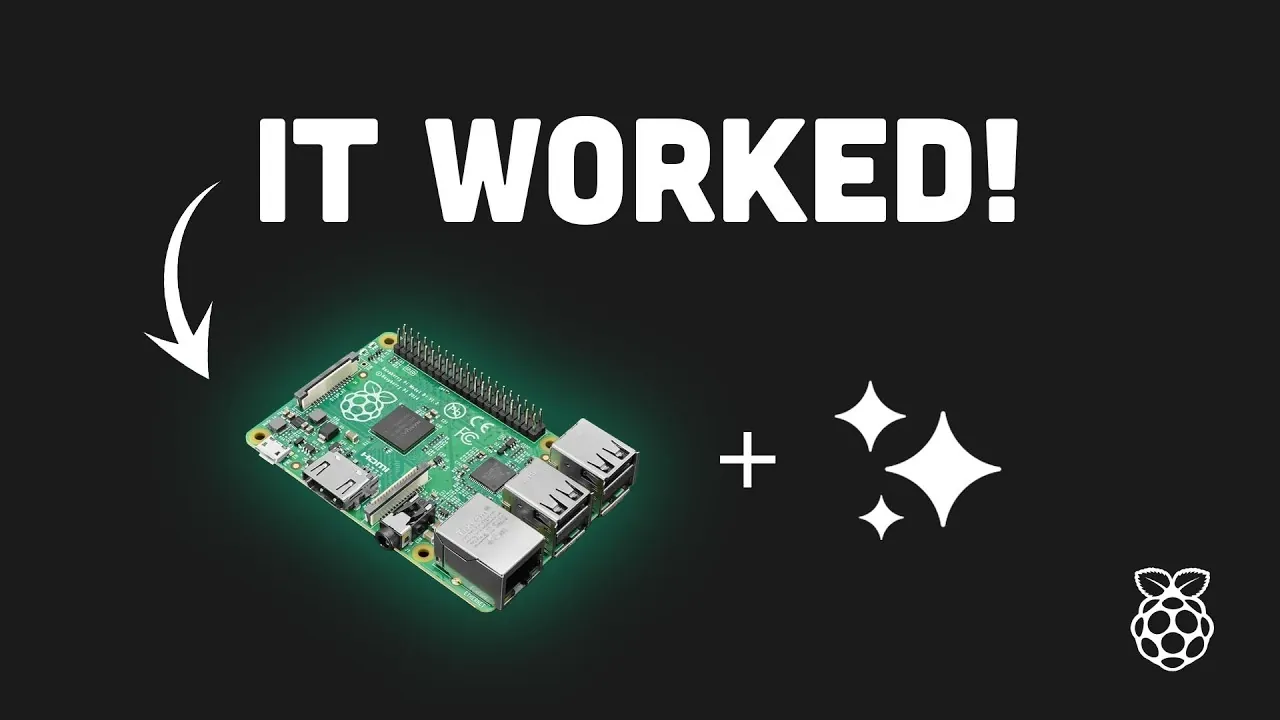
Running a local AI language model on a 12-year-old Raspberry Pi might seem like an impossible task, but Better Stack demonstrates how it can be done. Using the Falcon H1 Tiny model, which features 90 million parameters and is optimized for low-resource environments, the experiment showcases how advanced techniques like 4-bit quantization and cross-compilation can overcome the severe limitations of the Raspberry Pi’s 700 MHz single-core processor and 512 MB of RAM. By pairing the lightweight Raspberry Pi OS Lite with careful memory management strategies, the setup achieved coherent AI outputs, albeit at a slow pace, proving that even outdated hardware can support modern AI frameworks under the right conditions.
In this feature, you’ll explore the specific steps taken to optimize the Raspberry Pi for AI workloads, including the role of quantization in reducing memory demands and how cross-compilation enabled compatibility with the ARMv6 architecture. Gain insight into the trade-offs between model size, processing speed and output quality, as well as the practical limitations of running AI on legacy systems. Whether you’re curious about edge AI applications or interested in the technical ingenuity behind this experiment, this breakdown offers a clear view of what’s possible, and what challenges remain, when deploying AI on constrained devices.
2014 Raspberry Pi
TL;DR Key Takeaways :
- A 12-year-old first-generation Raspberry Pi successfully ran Falcon H1 Tiny, a compact AI language model, showcasing the potential of edge AI on outdated hardware.
- Falcon H1 Tiny, with 90 million parameters, was optimized using a 4-bit quantized version to balance memory efficiency and coherent output generation.
- Key optimizations included cross-compilation, lightweight OS installation and memory management to overcome the Raspberry Pi’s hardware limitations.
- Performance varied by model quantization: the 4-bit version achieved coherent results but with slow token generation, while the 8-bit version exceeded hardware capabilities.
- The experiment highlights the potential for deploying AI on constrained devices, emphasizing the importance of optimization techniques for broader accessibility and future applications.
Hardware Overview
The first-generation Raspberry Pi, released in 2014, features a 700 MHz single-core ARMv6 processor and 512 MB of RAM. It lacks modern CPU features, such as NEON instructions, which are essential for many AI workloads. Despite these limitations, the Raspberry Pi’s enduring versatility made it an intriguing candidate for this experiment. Its design, originally intended for educational purposes, has proven to be remarkably adaptable, pushing the boundaries of what’s possible on outdated hardware. This experiment uses the Pi’s simplicity and durability to explore the feasibility of running AI models on legacy systems.
Choosing the Right Model
Falcon H1 Tiny, a lightweight AI language model with 90 million parameters, was selected for its compatibility with resource-constrained environments. This model is specifically designed to operate efficiently in low-memory and low-power scenarios, making it an ideal candidate for this test. The model is available in quantized formats, 2-bit, 4-bit and 8-bit, each designed to reduce memory usage while maintaining varying levels of output quality. For this experiment, the 4-bit quantized version struck the ideal balance between memory efficiency and coherent output generation. This choice was critical, as it allowed the Raspberry Pi to handle the model’s requirements without exceeding its hardware limitations.

Discover other guides from our vast content that could be of interest on Raspberry Pi 5.
Overcoming Challenges
Running an AI model on such outdated hardware required addressing several technical hurdles. These challenges were met with innovative solutions that maximized the Raspberry Pi’s limited capabilities:
- Quantization: The 4-bit quantized version of Falcon H1 Tiny was used to minimize the model’s memory footprint. This avoided reliance on modern quantization techniques that require advanced CPU instructions unavailable on the ARMv6 architecture. By reducing the precision of the model’s parameters, memory usage was significantly lowered without compromising basic functionality.
- Cross-Compilation: The llama.cpp framework, which powers the model, was cross-compiled on a modern laptop to target the Raspberry Pi’s ARMv6 architecture. This approach bypassed the Pi’s limited processing power, which would have made local compilation impractical. Cross-compilation ensured that the model could run efficiently on the Raspberry Pi without overburdening its processor.
- Operating System Optimization: Raspberry Pi OS Lite (32-bit) was installed to reduce system overhead. This lightweight operating system provided a streamlined environment, conserving precious memory resources. By eliminating unnecessary processes and services, the OS allowed the AI model to use the maximum available resources.
- Memory Management: Memory mapping (Mmap) was disabled to prevent failures caused by the Raspberry Pi’s limited address space. This adjustment ensured the model could load and run without exceeding memory constraints, a critical factor in achieving successful inference on such limited hardware.
Performance Results
The experiment produced varying results depending on the quantization level of the model. Each version of the model presented unique trade-offs between memory efficiency, processing speed and output quality:
- 2-bit Model: This version was highly memory-efficient but produced incoherent outputs due to excessive compression. While it demonstrated the potential for extreme resource conservation, its practical utility was limited.
- 4-bit Model: The 4-bit version delivered coherent responses, though at a slow pace. Each token took several seconds to generate, but the results demonstrated successful local AI inference on the Raspberry Pi. This version struck the best balance between performance and feasibility for the hardware.
- 8-bit Model: While this version offered better accuracy and more detailed outputs, it exceeded the Raspberry Pi’s memory and processing capabilities. As a result, it was impractical for this setup, highlighting the importance of careful model selection for constrained environments.
Key Limitations
Despite its success, the experiment revealed several limitations that underscore the challenges of deploying AI on outdated hardware:
- Slow Processing Speeds: Generating each token took several seconds, making the system impractical for real-time applications. This limitation reflects the inherent trade-off between hardware constraints and processing efficiency.
- Model Size Constraints: The small size of Falcon H1 Tiny limited its knowledge and accuracy, restricting its usefulness for complex tasks. While the model was sufficient for basic inference, it lacked the depth and versatility of larger, more advanced models.
These constraints highlight the trade-offs involved in deploying AI on minimal hardware, especially when using outdated systems. They also emphasize the need for continued innovation in optimization techniques to make AI more accessible across a broader range of devices.
Broader Implications and Future Potential
This experiment demonstrates that running a local AI language model on a 12-year-old Raspberry Pi is not only possible but also a testament to the adaptability of modern AI frameworks. While the setup is far from practical for real-world applications, it underscores the potential for deploying lightweight AI models on edge devices with severe hardware constraints. The project highlights the importance of optimization techniques, such as quantization and cross-compilation, in making AI accessible even on legacy systems.
Looking ahead, this proof of concept opens the door to further exploration of AI deployment on constrained devices. As optimization techniques continue to evolve, it may become increasingly feasible to integrate AI capabilities into low-cost, low-power hardware. This could have significant implications for applications in remote areas, educational tools and IoT devices, where resource constraints are a critical factor. By pushing the boundaries of what’s possible with minimal systems, this experiment serves as a stepping stone toward a future where AI is truly ubiquitous.
Media Credit: Better Stack
Filed Under: AI, Guides
Disclosure: Some of our articles include affiliate links. If you buy something through one of these links, Geeky Gadgets may earn an affiliate commission. Learn about our Disclosure Policy.
Credit: Source link