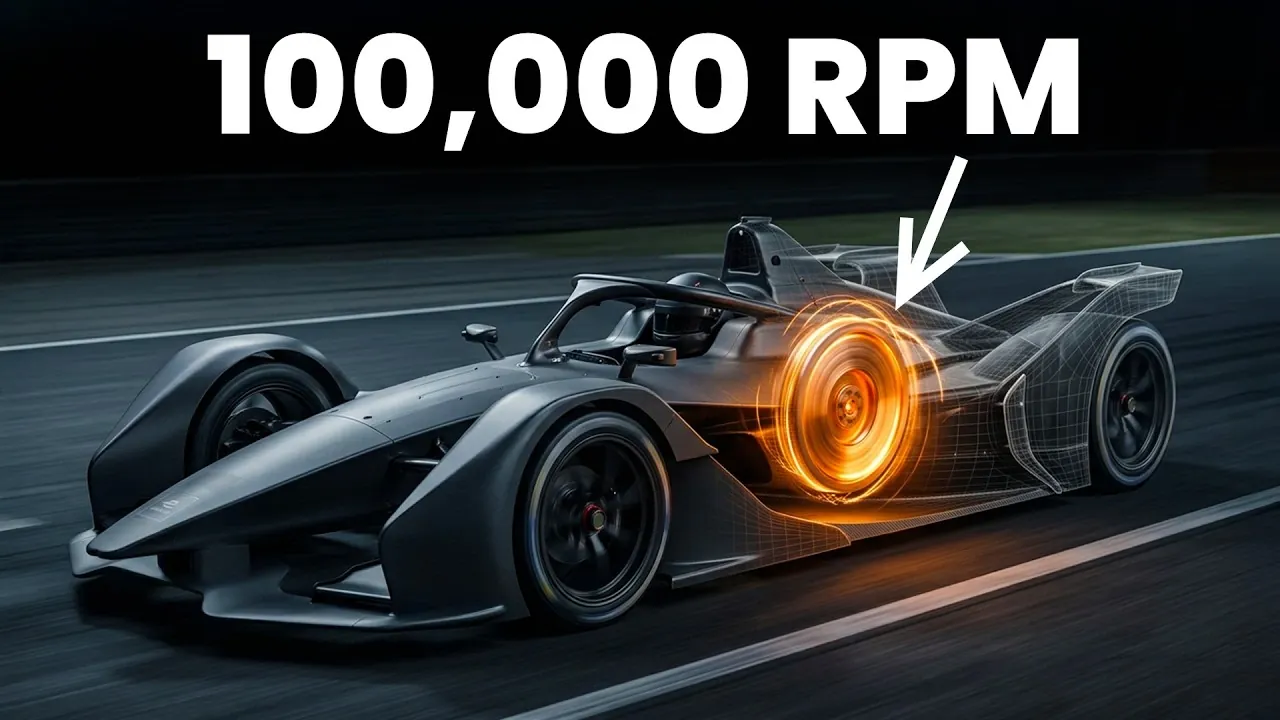
Nissan’s twin-motor system in Formula E was a new innovation that pushed the boundaries of electric racing technology. By using a regulatory loophole, the team developed a design that combined one motor’s traditional propulsion role with another acting as a kinetic energy storage device, similar to a flywheel. This setup allowed the car to recover and redeploy energy with remarkable efficiency, particularly during braking and acceleration. As Driver61 explains, this system gave Nissan a significant edge in qualifying sessions, where peak performance was crucial. However, the FIA ultimately banned the system after just one season, citing concerns about maintaining competitive balance in the sport.
In this breakdown, you’ll explore how Nissan’s flywheel-inspired mechanism worked, including its reliance on an advanced epicyclic gearbox to optimize energy recovery and deployment. Gain insight into the system’s benefits, such as lap time reductions of up to 0.8 seconds, as well as its challenges, including drivability issues and heat management at extreme motor speeds. Finally, understand the FIA’s reasoning behind the ban and how this decision reflects the ongoing tension between innovation and fairness in motorsport.
How Nissan Exploited a Regulatory Loophole
TL;DR Key Takeaways :
- Nissan introduced a new twin-motor system in Formula E, using a regulatory loophole to enhance energy recovery and deployment, particularly excelling in qualifying sessions.
- The system featured a flywheel-inspired mechanism, with one motor acting as a kinetic energy storage device, allowing rapid energy recovery during braking and redeployment during acceleration.
- An epicyclic gearbox was integrated to optimize motor efficiency and ensure smooth energy transfer, minimizing losses and enhancing performance.
- Despite delivering significant performance gains, including up to 0.8-second lap time reductions, the system faced challenges such as drivability issues, heat management and mechanical complexity during races.
- The FIA banned the system after one season to maintain competitive fairness, highlighting the balance between innovation and equal competition in motorsport.
Nissan’s competitive edge stemmed from their innovative interpretation of Formula E’s technical regulations. While the rules allowed teams to use two motors, Nissan’s engineers took this concept further. They designed one motor to function as a kinetic energy storage device, operating similarly to a flywheel. This ingenious setup enabled the system to store surplus energy during braking and redeploy it during acceleration, effectively bypassing traditional energy and power constraints.
This approach not only enhanced energy efficiency but also provided a strategic advantage during critical moments on the track, such as overtaking or exiting tight corners. By exploiting this regulatory gap, Nissan achieved a level of performance that other teams struggled to match.
The Flywheel-Inspired Innovation
At the heart of Nissan’s system was a flywheel-inspired mechanism that set it apart from conventional energy storage solutions. Unlike traditional battery systems, this approach allowed for rapid energy recovery and deployment. The second motor acted as a high-speed energy reservoir, storing kinetic energy during braking and releasing it during acceleration.
This system proved particularly effective in qualifying sessions, where peak power output was essential. By optimizing energy usage at critical moments, Nissan’s cars gained a measurable performance boost, giving them a significant edge over competitors. The innovative design demonstrated how unconventional thinking could unlock new possibilities in electric racing.
Learn more about energy by reading our previous articles, guides and features :
The Role of the Epicyclic Gearbox
To ensure the seamless operation of the twin-motor system, Nissan incorporated an epicyclic gearbox, which functioned similarly to a continuously variable transmission (CVT). This advanced gearbox allowed the two motors to operate at different speeds while maintaining a smooth connection to the drivetrain.
The epicyclic gearbox played a crucial role in maximizing the system’s efficiency. By allowing each motor to operate within its optimal efficiency range, the gearbox ensured that energy recovery and deployment were both effective and reliable. This design not only enhanced performance but also minimized energy losses, making the system a standout innovation in the highly competitive world of Formula E.
Performance Gains and Technical Challenges
The twin-motor system delivered remarkable performance gains, with lap time reductions of up to 0.8 seconds, a significant margin in the tightly contested Formula E championship. By maintaining optimal motor efficiency and strategically deploying energy, Nissan’s cars consistently outperformed rivals in qualifying sessions.
However, the system was not without its challenges. Drivability issues arose due to unpredictable power delivery, making the car difficult to handle during races. Additionally, the mechanical complexity of operating a motor at speeds exceeding 100,000 RPM introduced significant heat management challenges. Advanced simulation tools, such as those provided by Canopy Simulations, were essential in fine-tuning energy deployment strategies and improving the system’s reliability. Despite these efforts, the system’s complexity occasionally hindered its performance during race conditions.
Season Highlights and Limitations
Nissan’s innovative system shone brightest in qualifying sessions, where single-lap performance was critical. The car’s ability to deliver peak power output gave it a clear advantage in this format, often securing front-row starting positions. However, during race conditions, the system’s limitations became apparent. Reliability issues and handling difficulties prevented the team from fully capitalizing on their qualifying success.
Despite these setbacks, Nissan managed to secure one race victory, showcasing the potential of their twin-motor system. However, the overall season performance fell short of expectations, as the challenges of implementing such a complex system outweighed its advantages in race scenarios. This mixed performance highlighted both the promise and the pitfalls of pushing technological boundaries in motorsport.
Why the FIA Banned the System
The FIA’s decision to ban Nissan’s twin-motor system was driven by concerns over competitive balance. Allowing such a system to remain could have led to prolonged domination by a single team, undermining the sport’s commitment to fair competition. The FIA recognized that the regulatory loophole exploited by Nissan had the potential to create an uneven playing field, discouraging other teams from competing on equal terms.
By closing this loophole, the FIA ensured that innovation in Formula E would remain accessible to all teams, preserving the sport’s integrity. This decision reinforced the importance of maintaining a level playing field while encouraging teams to explore new technologies within the framework of the rules.
A Legacy of Innovation
Nissan’s twin-motor system stands as a testament to the ingenuity and creativity of motorsport engineering. By pushing the boundaries of what was possible within the existing regulations, the team demonstrated how innovative thinking could redefine racing technology.
Although the system’s ban marked the end of its competitive use, its legacy endures as a reminder of the relentless pursuit of innovation that drives motorsport forward. Nissan’s efforts not only showcased the potential of advanced energy recovery systems but also highlighted the challenges of balancing technological progress with the principles of fair competition. This episode in Formula E history serves as a valuable lesson for teams and regulators alike, emphasizing the need for collaboration and adaptability in the ever-evolving world of electric racing.
Media Credit: Driver61
Filed Under: Auto News, Top News
Disclosure: Some of our articles include affiliate links. If you buy something through one of these links, Geeky Gadgets may earn an affiliate commission. Learn about our Disclosure Policy.
Credit: Source link