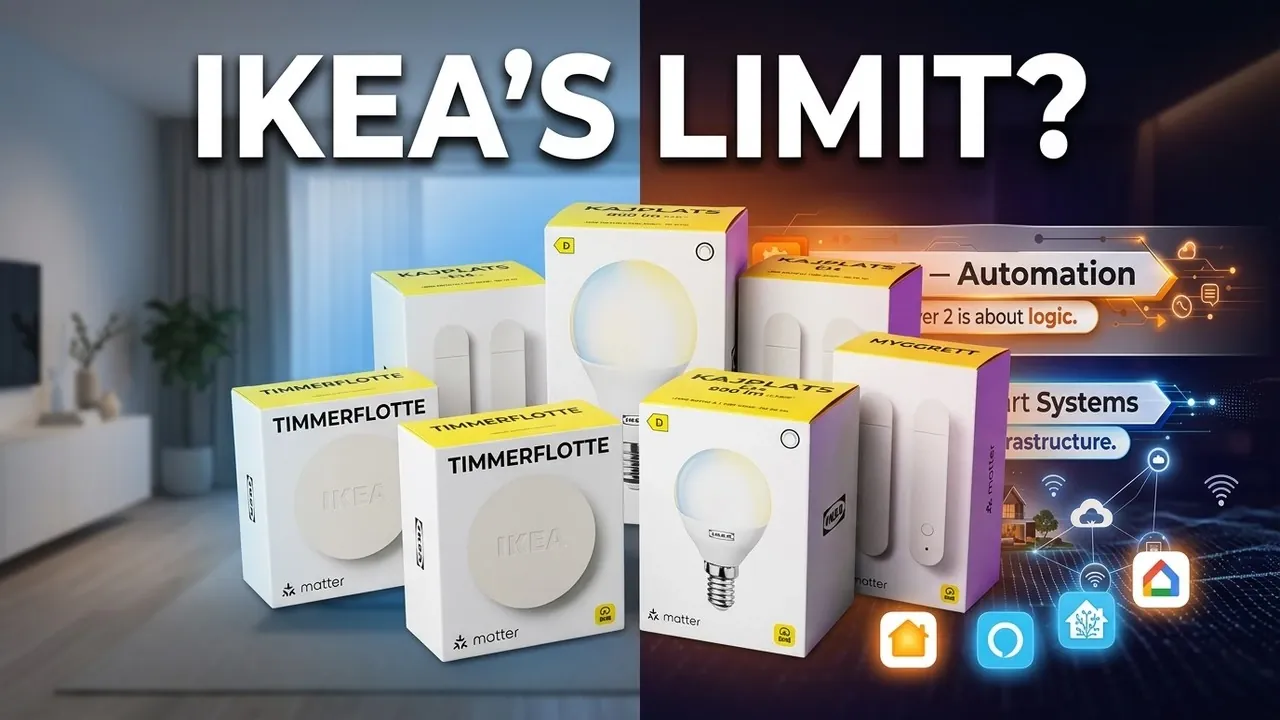
IKEA’s smart home ecosystem in 2026 continues to prioritize simplicity and affordability, making it a practical choice for users seeking accessible automation solutions. As highlighted by Smart Life, IKEA’s devices shine in foundational areas like motion-activated lighting and energy-saving routines, thanks to their Matter compatibility and ease of integration with platforms such as Home Assistant and Apple Home. However, their functionality remains limited to basic automations, lacking the advanced features needed for dynamic, context-aware systems. For example, while IKEA’s smart bulbs and motion sensors are reliable for straightforward tasks, they fall short in supporting advanced security or climate control setups.
Explore how IKEA’s smart devices can fit into your home by understanding their strengths and limitations. You’ll gain insight into practical applications like automating lighting schedules or enhancing home security with motion-triggered alerts. Additionally, discover how combining IKEA products with other Matter-compatible systems can bridge gaps in functionality, allowing more complex automations. Whether you’re starting small or expanding an existing setup, this guide offers a clear look at how IKEA contributes to a balanced smart home ecosystem.
Strengths of IKEA Smart Devices
TL;DR Key Takeaways :
- IKEA offers affordable, Matter-compatible smart home devices that prioritize simplicity, reliability and seamless integration with platforms like Home Assistant and Apple Home.
- The devices are beginner-friendly and practical, making them an excellent entry point for users new to home automation, with features like motion-activated lighting and energy-saving routines.
- While IKEA excels in affordability and basic automation, its products lack advanced features such as smart climate control, detailed security systems and dynamic, context-aware automation.
- Matter compatibility allows IKEA devices to integrate with other brands, allowing users to expand functionality and create more complex smart home setups.
- IKEA’s smart home products are best suited for simple, everyday applications, but combining them with other Matter-compatible systems can enhance their capabilities for advanced automation needs.
IKEA’s smart devices are designed with accessibility and practicality at their core, making them an excellent entry point for those new to home automation. Their affordability allows users to build a smart home without a significant financial burden, while their Matter compatibility ensures interoperability with a wide range of ecosystems. Key strengths of IKEA smart devices include:
- Reliable performance with minimal maintenance, making sure consistent functionality over time.
- Ease of use, making them beginner- and family-friendly, even for those unfamiliar with smart home technology.
- Support for basic automations, such as motion-activated lighting, energy-saving routines and simple security setups.
These devices are particularly effective for straightforward tasks like automating lighting schedules or activating night modes. For example, you can program IKEA smart bulbs to dim at bedtime or turn on automatically when motion is detected. Thanks to Matter compatibility, IKEA devices can be seamlessly integrated with products from other brands, offering flexibility that proprietary systems often lack.
Limitations of IKEA Smart Devices
While IKEA’s smart home products excel in affordability and simplicity, they lack the advanced features necessary for more sophisticated home automation. This limits their appeal for users seeking a fully integrated and reactive smart home experience. Key limitations include:
- No support for advanced security features, such as smart sirens or detailed intrusion alerts.
- Limited climate control options, with no smart radiator valves, thermostats, or HVAC integration available.
- Basic motion sensors that lack the precision and adaptability of advanced presence-detection systems.
These gaps mean that while IKEA devices are excellent for basic setups, achieving more complex automations often requires integrating them with other brands. For instance, users looking to implement dynamic, context-aware systems may need to pair IKEA products with more advanced solutions to bridge these functional gaps.
Check out more relevant guides from our extensive collection on smart home devices that you might find useful.
Understanding IKEA’s Role in the Smart Home Ecosystem
IKEA’s position in the smart home market can be better understood by breaking down smart home functionality into three distinct layers:
- Layer 1: Hardware — IKEA excels in this area by offering reliable, cost-effective devices that form the foundation of a smart home setup.
- Layer 2: Basic Automation — IKEA supports simple automations, such as motion-triggered lighting, energy-saving routines and basic security alerts.
- Layer 3: Advanced Reactive Systems — IKEA lacks the capabilities to support dynamic, context-aware systems that adapt to your needs in real time.
For users seeking advanced functionality, IKEA devices can serve as a solid foundation but will need to be paired with other Matter-compatible systems. For example, combining IKEA lighting with a more sophisticated presence detection system or integrating it with a third-party thermostat can significantly enhance automation capabilities.
Practical Use Cases for IKEA Smart Devices
IKEA’s smart home products are well-suited for practical, everyday applications that prioritize simplicity and reliability. These include:
- Automating lighting schedules to align with your daily routine, such as dimming lights in the evening or turning them on at sunrise.
- Reducing energy consumption through motion-activated lighting and energy-saving modes, helping to lower utility bills.
- Enhancing home security with basic motion sensors that trigger alerts or activate lights when movement is detected.
For instance, a family can easily set up motion-activated lights in hallways to improve nighttime visibility or create a bedtime routine that dims lights and powers down unnecessary appliances. These simple yet effective use cases make IKEA devices appealing for users who value practicality and ease of use over advanced features.
Flexibility Through Matter Integration
One of IKEA’s standout advantages is its support for Matter, a universal standard for smart home devices. This compatibility allows you to integrate IKEA products with other Matter-enabled ecosystems, such as Home Assistant or Apple Home, to expand functionality and create more complex automations.
To fully use this flexibility, you’ll need a Matter controller or hub. This central device facilitates communication between IKEA products and other smart home systems, allowing advanced integrations. For example, you could pair IKEA lighting with a third-party thermostat to adjust brightness based on room temperature or time of day. Similarly, combining IKEA motion sensors with a more advanced security system can enhance your home’s overall safety.
The Role of IKEA in a Multi-Brand Smart Home
IKEA’s smart home devices in 2026 offer a reliable and cost-effective starting point for building a smart home. Their affordability, stability and Matter compatibility make them ideal for users seeking basic automation and cross-platform integration. However, their limited support for advanced features like climate control and reactive systems means they are best suited for simple setups.
For users looking to expand their smart home capabilities, combining IKEA devices with other Matter-compatible brands provides a pathway to more advanced functionality. While IKEA may not deliver a fully reactive smart home experience on its own, it remains a valuable component in a broader, multi-brand ecosystem. By using IKEA’s strengths in hardware and basic automation, alongside the advanced features of other systems, you can create a smart home that balances simplicity, reliability and functionality.
Media Credit: Smart Life
Filed Under: Gadgets News, Top News
Disclosure: Some of our articles include affiliate links. If you buy something through one of these links, Geeky Gadgets may earn an affiliate commission. Learn about our Disclosure Policy.
Credit: Source link