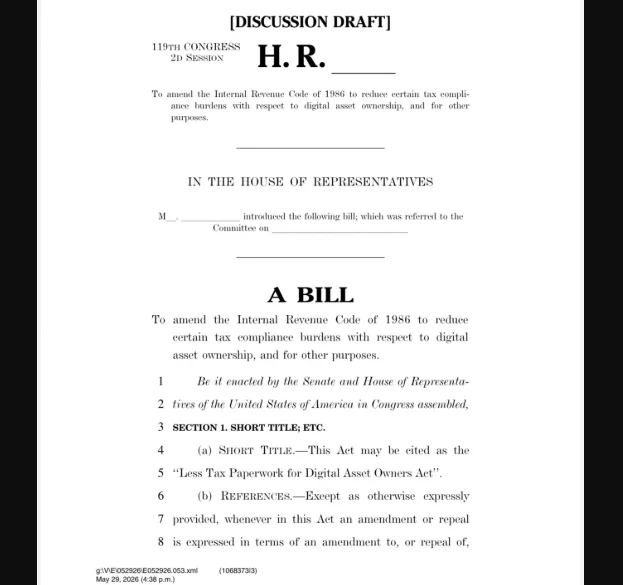
Crypto taxes may finally be getting the congressional spotlight they’ve been waiting for. The House Ways and Means Committee is reportedly circulating seven draft bills that could significantly reshape how digital assets are taxed in the United States, with stablecoins, staking, mining, and crypto lending sitting squarely in the crosshairs.
The timing isn’t accidental. The proposals surfaced just days before a June 9 committee hearing focused entirely on digital asset taxation. Rather than pushing one massive package through Congress, lawmakers have split the broader effort into separate bills, allowing individual measures to advance independently.
Stablecoin Rules Take Center Stage
At the heart of the discussion sits the Digital Asset PARITY Act, a proposal originally introduced on May 19. One of its most notable provisions would prevent routine crypto payments from triggering tax reporting requirements, addressing a longstanding complaint from digital asset users.
Stablecoins appear to be a major priority for lawmakers this session. While regulators continue debating broader crypto oversight, Congress is now focusing on how everyday digital asset transactions should be treated under federal tax rules.

Mining And Staking Get Tax Relief
For years, miners and validators have argued that being taxed on rewards before selling them creates a phantom income problem. The new proposals attempt to address that concern.
Under the draft measures, staking and mining rewards would not be treated as taxable income until they are actually sold. Meanwhile, active traders and dealers could gain access to mark-to-market accounting treatment, bringing crypto taxation closer to traditional securities markets.
Lending Loopholes Face New Scrutiny
Crypto lending is also under review. The proposed framework would extend securities lending rules to digital assets, meaning qualifying loans would no longer be treated as taxable sales.
However, not every change favors investors. The bills would introduce wash sale rules to crypto for the first time, requiring traders to wait 30 days before repurchasing assets after claiming a tax loss. The package would also simplify charitable donation treatment for liquid tokens while targeting potential abuse involving speculative assets.
The debate remains far from settled. Some digital asset advocates have already pushed back against portions of the proposals, particularly mining-related provisions. With lawmakers set to meet on June 9, the real question isn’t whether crypto tax reform is coming but it’s which of these seven bills can gather enough bipartisan support to survive the legislative maze.
Was this writing helpful?
Story Ends Here
Trust with CoinPedia:
CoinPedia has been delivering accurate and timely cryptocurrency and blockchain updates since 2017. All content is created by our expert panel of analysts and journalists, following strict Editorial Guidelines based on E-E-A-T (Experience, Expertise, Authoritativeness, Trustworthiness). Every article is fact-checked against reputable sources to ensure accuracy, transparency, and reliability. Our review policy guarantees unbiased evaluations when recommending exchanges, platforms, or tools. We strive to provide timely updates about everything crypto & blockchain, right from startups to industry majors.
Investment Disclaimer:
All opinions and insights shared represent the author’s own views on current market conditions. Please do your own research before making investment decisions. Neither the writer nor the publication assumes responsibility for your financial choices.
Sponsored and Advertisements:
Sponsored content and affiliate links may appear on our site. Advertisements are marked clearly, and our editorial content remains entirely independent from our ad partners.
Read the Next News
Credit: Source link